Καλαμιές Στον Άνεμο
1913
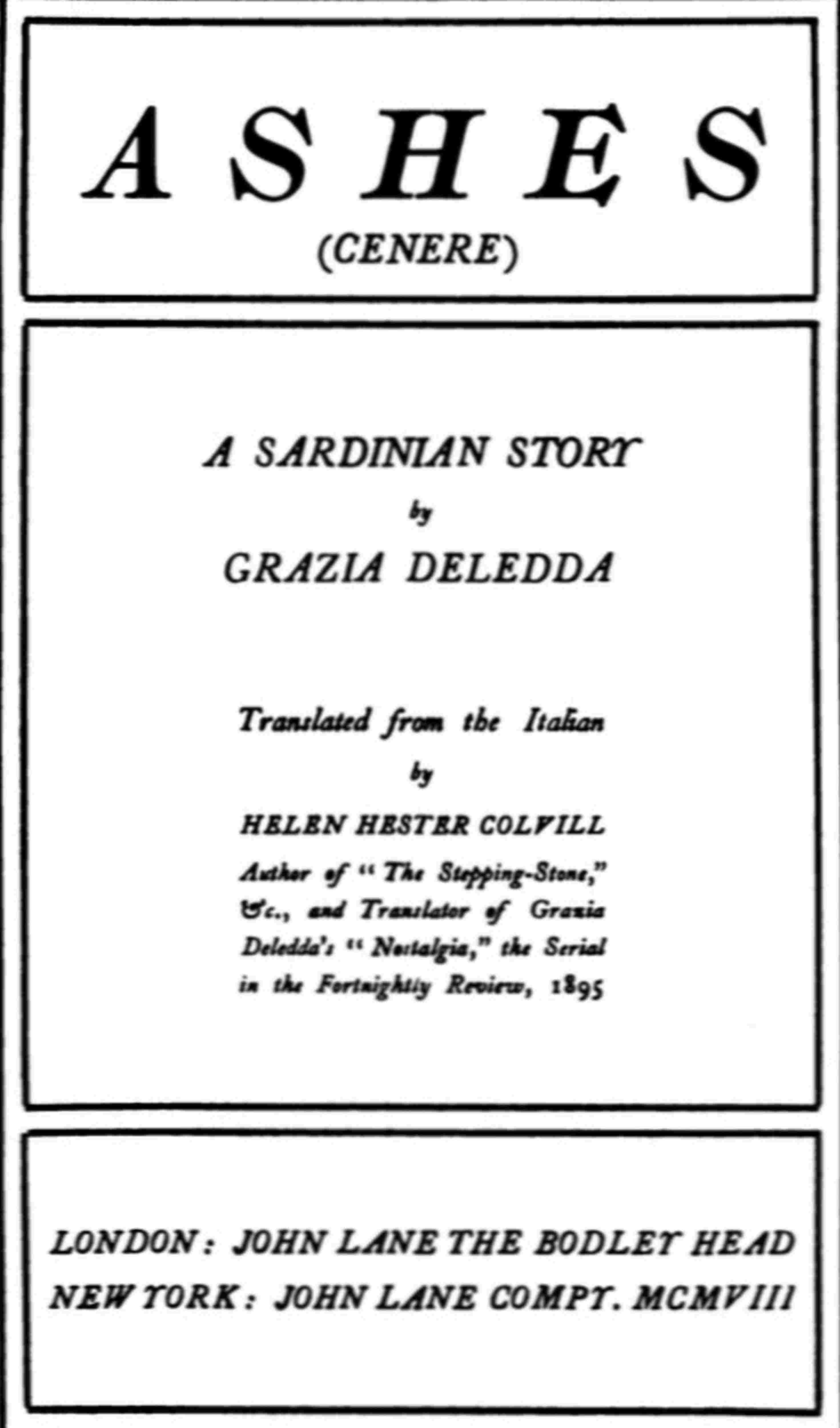
On the rugged highlands of Sardinia, an aging servant named Efix toils to repair a primitive dam by the river, his hands calloused from thirty years of labor on land he did not inherit. As night falls and the Mediterranean storms gather, he is besieged by memories of the Pintor family’s former glory, and the mysterious sin that haunts him. The three remaining sisters, their nephew Giacinto, and the shadow of Lia, the daughter who fled in disgrace, form the remnants of a noble house now in decline. When a young boy arrives with tidings of a letter that could unravel everything, hope and dread collide on this unforgiving slope. Grazia Deledda renders the Sardinian landscape as something almost sentient: jagged mountains, gushing springs, and murmuring forests become a Greek chorus to the tragedy unfolding below. Folklore threads through Catholic ritual, fairies dwell in caves, sprites with seven red caps bother sleep, and ancient beliefs clash with the march of modernity. This is a novel about the weight of the past, the possibility of redemption, and whether a man can outrun the consequences of his choices when the land itself seems to judge him.
Editions
X-Ray
“Ma perché questo, Efix, dimmi, tu che hai girato il mondo: è da per tutto così? Perché la sorte ci stronca così, come canne?– Sì, – egli disse allora, – siamo proprio come le canne al vento, donna Ester mia. Ecco perché! Siamo canne, e la sorte è il vento.””
— Grazia Deledda
“Little by little they all gathered around him, entering through the cracks like moonbeams...[b]ut once the wind of misfortune blows, people disperse like little clouds around the moon when the wind blows off the mountains.””
— Grazia Deledda
“Guarda tu l’acqua: perché dicono che è saggia? Perché prende la forma del vaso ove la si versa.” “Anche il vino, mi pare!””
— Grazia Deledda
“The feast lasted nine days, the last three becoming a continuous circle dance accompanied by songs and music. Noemi always stayed on the belvedere among the banquet remains. ... No, she didn't dance, she didn't laugh, but it was enough for her to see people enjoying themselves, because she too hoped to take part in the festival of life.””
— Grazia Deledda
“Eccola dunque col pensiero laggiù.Le par d’essere ancora fanciulla, arrampicata sul belvedere del prete, in una sera di maggio. Una grande luna di rame sorge dal mare, e tutto il mondo pare d’oro e di perla. La fisarmonica riempie coi suoi gridi lamentosi il cortile illuminato da un fuoco d’alaterni il cui chiarore rossastro fa spiccare sul grigio del muro la figura svelta e bruna del suonatore, i visi violacei delle donne e dei ragazzi che ballano il ballo sardo. Le ombre si muovono fantastiche sull’erba calpestata e sui muri della chiesa; brillano i bottoni d’oro, i galloni argentei dei costumi, i tasti della fisarmonica: il resto si perde nella penombra perlacea della notte lunare. Noemi ricordava di non aver mai preso parte diretta alla festa, mentre le sorelle maggiori ridevano e si divertivano, e Lia accovacciata come una lepre in un angolo erboso del cortile forse fin da quel tempo meditava la fuga.La festa durava nove giorni di cui gli ultimi tre diventavano un ballo tondo continuo accompagnato da suoni e canti: Noemi stava sempre sul belvedere, tra gli avanzi del banchetto; intorno a lei scintillavano le bottiglie vuote, i piatti rotti, qualche mela d’un verde ghiacciato, un vassoio e un cucchiaino dimenticati; anche le stelle oscillavano sopra il cortile come scosse dal ritmo della danza. No, ella non ballava, non rideva, ma le bastava veder la gente a divertirsi perché sperava di poter anche lei prender parte alla festa della vita.Ma gli anni eran passati e la festa della vita s’era svolta lontana dal paesetto, e per poterne prender parte sua sorella Lia era fuggita di casa…Lei, Noemi, era rimasta sul balcone cadente della vecchia dimora come un tempo sul belvedere del prete.””
— Grazia Deledda
“...siamo proprio come le canne al vento, donna Ester mia. Ecco perché! Siamo canne, e la sorte è il vento.””
— Grazia Deledda
Link to this book
Add a free, dofollow link to Lex on your blog, forum, syllabus, or reading list.

<a href="https://lex-books.com/book/-1c618dc1-303e-412d-969f-776629e0570a"><img src="https://lex-books.com/badges/read-on-lex.svg" alt="Read Καλαμιές Στον Άνεμο by Grazia Deledda free on Lex" width="160" height="40"></a>[](https://lex-books.com/book/-1c618dc1-303e-412d-969f-776629e0570a)[url=https://lex-books.com/book/-1c618dc1-303e-412d-969f-776629e0570a][img]https://lex-books.com/badges/read-on-lex.svg[/img][/url]Read Καλαμιές Στον Άνεμο by Grazia Deledda free on Lex: https://lex-books.com/book/-1c618dc1-303e-412d-969f-776629e0570aCite this book
Reading this edition for a paper or guide? Copy a citation.
Deledda, Grazia. Καλαμιές Στον Άνεμο. Lex, lex-books.com/book/-1c618dc1-303e-412d-969f-776629e0570a.Deledda, G. (1913). Καλαμιές Στον Άνεμο. Lex. https://lex-books.com/book/-1c618dc1-303e-412d-969f-776629e0570aDeledda, Grazia. Καλαμιές Στον Άνεμο. Lex. https://lex-books.com/book/-1c618dc1-303e-412d-969f-776629e0570a.