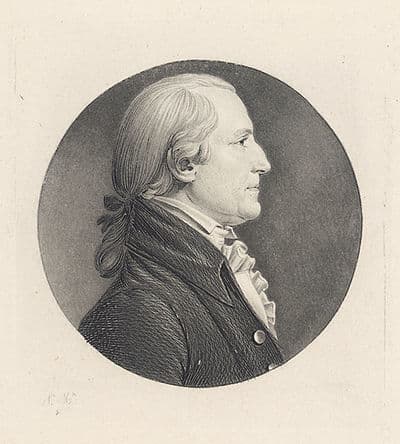
St. George Tucker
St. George Tucker was a prominent Bermudian-born American lawyer, military officer, and educator whose contributions to legal education and reform left a lasting impact on the American legal system. He served as a professor of law at the College of William & Mary, where he advocated for a rigorous legal education, believing that a deep understanding of the law was essential for practitioners. Tucker's legal career included roles as a judge on the General Court of Virginia and later on the Virginia Supreme Court of Appeals, where he influenced the development of legal standards in the early United States. Tucker is perhaps best known for his American edition of 'Blackstone's Commentaries on the Laws of England,' which became a crucial reference for lawyers and law students in the 19th century. His progressive views on slavery, particularly his support for gradual emancipation, were articulated in a pamphlet he published in 1796, highlighting his commitment to social justice. Appointed by President James Madison as a United States district judge, Tucker's legacy continued through his descendants, many of whom became notable figures in law and politics, further cementing his influence on American jurisprudence and education.
Famous Quotes
View all 1 quotes“The purchaser therefore calculated not upon the value of the labour of his slave only, but, if a female, he regarded her as "the fruitful mother of an hundred more:" and many of these unfortunate people have there been in this state, whose descendants even in the compass of two or three generations have gone near to realize the calculation.—The great increase of slavery in the southern, in proportion to the northern states in the union, is therefore not attributable, solely, to the effect of sentiment, but to natural causes; as well as those considerations of profit, which”
Books from the author







Link to this page
Add a free, dofollow link to Lex on your blog, forum, syllabus, or reading list.

<a href="https://lex-books.com/author/st-george-tucker"><img src="https://lex-books.com/badges/read-on-lex.svg" alt="St. George Tucker on Lex" width="160" height="40"></a>[](https://lex-books.com/author/st-george-tucker)[url=https://lex-books.com/author/st-george-tucker][img]https://lex-books.com/badges/read-on-lex.svg[/img][/url]St. George Tucker on Lex: https://lex-books.com/author/st-george-tucker