R. K. Polkinghorne
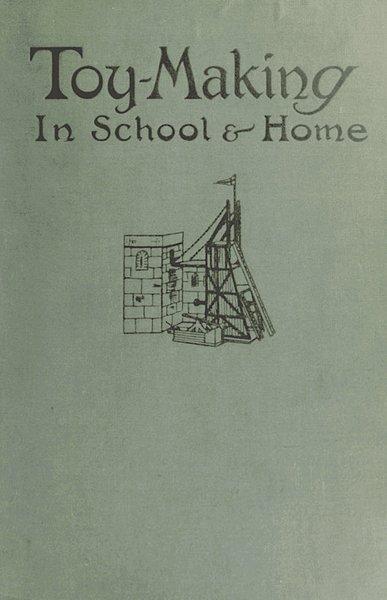
R. K. Polkinghorne was an influential figure in the realm of educational literature, particularly known for his work in promoting hands-on learning through creative activities. His notable book, 'Toy-Making in School and Home,' emphasized the importance of practical skills and creativity in education, encouraging both teachers and parents to engage children in the art of toy-making. This work not only provided practical guidance on crafting toys but also underscored the educational value of play and creativity in childhood development. Polkinghorne's contributions to educational practices were significant during a time when traditional methods were being challenged. His advocacy for experiential learning and the integration of craft into the curriculum resonated with educators seeking to foster a more engaging and holistic approach to teaching. Through his writings, he left a lasting impact on how educational practices could incorporate creativity and hands-on activities, influencing generations of educators and parents alike. His legacy continues to inspire those who value the role of play and creativity in learning environments.
Famous Quotes
View all 1 quotes“Chance’ simply means historical contingency - this happens rather than that. It is not automatically to be given the tendentious adjective “blind”, as if it were an unambiguous sign of meaninglessness. Rather, it may be seen as signifying the shuffling exploration and realization of fertile possibilities, by which creation makes itself. This due independence of process is a good gift, but it has a necessary cost attached to it. Raggednesses and blind alleys, as well as fruitful outcomes, are inescapable accompaniments of this evolving self-realization. Biology even helps theology a little with the deep question of theodicy, the problem of the evil and suffering of the world. Exactly the same biochemical processes that enable some cells to mutate and produce new forms of life - in other words, the very engine that has driven the stupendous four billion year history of life on Earth - these same processes will inevitably allow other cells to mutate and become malignant. In a non-magic world, it could not be different, and the world is not magic because its Creator is not a capricious Magician. I do not pretend for a moment that this insight removes all the perplexities posed by the sufferings of creation. Yet it affords some mild help, in that it suggests that the existence of cancer is not gratuitous, as if it were due to the Creator’s callousness or incompetence. We all tend to think that if we had been in charge of creation we would have made a better job of it. We would have kept the nice things (flowers and sunsets) and got rid of the nasty (disease and disaster). The more science helps us to understand the process of the universe, the more, it seems to me, to cohere into a single ‘package deal’. The light and the dark are two sides of the same coin. John Polkinghorne, “Understanding the Universe”, Cosmic Questions, James. B Miller, ed.””
Books from the author





Link to this page
Add a free, dofollow link to Lex on your blog, forum, syllabus, or reading list.

<a href="https://lex-books.com/author/r-k-polkinghorne"><img src="https://lex-books.com/badges/read-on-lex.svg" alt="R. K. Polkinghorne on Lex" width="160" height="40"></a>[](https://lex-books.com/author/r-k-polkinghorne)[url=https://lex-books.com/author/r-k-polkinghorne][img]https://lex-books.com/badges/read-on-lex.svg[/img][/url]R. K. Polkinghorne on Lex: https://lex-books.com/author/r-k-polkinghorne