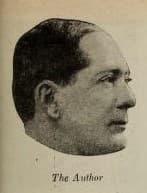
Nathan Banks
Nathan Banks was an influential American entomologist renowned for his extensive research on various insect orders, particularly Neuroptera, Megaloptera, Hymenoptera, and Acarina (mites). His career began in 1880 with the United States Department of Agriculture (USDA), where he made significant contributions to the study of mites. In 1909, Banks reported numerous species from Costa Rica, identifying several new species and establishing himself as a leading figure in entomological research. His landmark publication, 'A Treatise on the Acarina, Or Mites,' published in 1915, was the first comprehensive English handbook on mites, solidifying his reputation in the field. After leaving the USDA in 1916, Banks continued his research at the Museum of Comparative Zoology, where he expanded his studies to include Hymenoptera and Arachnida. His work earned him recognition, and he was elected a Fellow of the American Academy of Arts and Sciences in 1922. In 1924, he conducted field research in Panama, further enriching his contributions to entomology. Banks's meticulous studies and publications have had a lasting impact on the understanding of insect taxonomy and ecology, making him a pivotal figure in the field of entomology during his lifetime.
Famous Quotes
View all 2 quotes“Out here in the wilds," Leon begins, his tone calm and thoughtful, "the isolation from civilization can have a strange effect on people. Some become almost as feral as the animals that roam these lands, or things even worse—mutants, cannibals, any number of fatal foes. My point is, it makes you vicious, lawless, and the mind becomes twisted. Bestial.”
“Out here in the wilds,' Leon begins, his tone calm and thoughtful, 'the isolation from civilization can have a strange effect on people. Some become almost as feral as the animals that roam these lands, or things even worse—mutants, cannibals, any number of fatal foes. My point is, it makes you vicious, lawless, and the mind becomes twisted. Bestial.”