John Bate
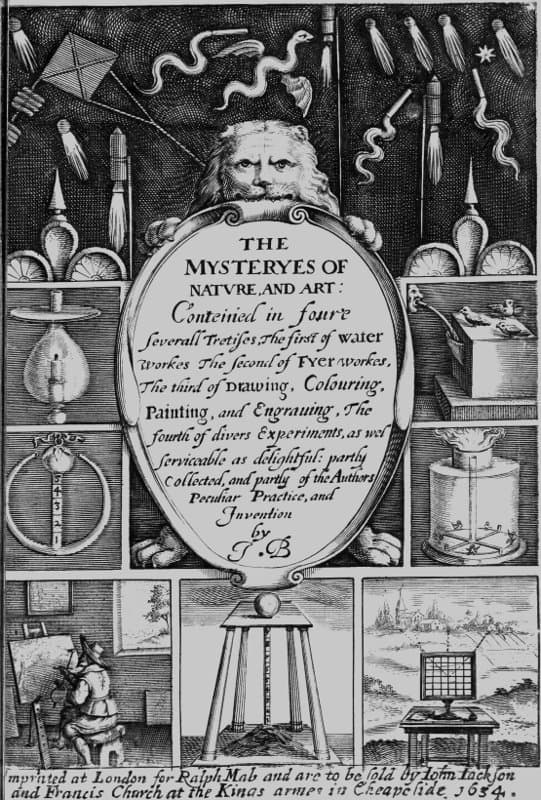
John Bate was a 17th-century English author and inventor, best known for his contributions to the fields of natural philosophy and the arts. His most notable work, 'The Mysteryes of Nature and Art,' is a comprehensive treatise that explores various scientific and artistic techniques, divided into four sections covering water works, fire works, drawing, coloring, painting, and engraving. This work not only reflects the curiosity of the era but also serves as a practical guide, blending theoretical knowledge with practical application, showcasing Bate's own experiments and inventions. In addition to his major treatise, Bate authored 'Talkers: With Illustrations,' which further demonstrates his interest in the intersection of art and science. His writings are significant for their detailed exploration of the methods and materials used in artistic creation, as well as their influence on subsequent generations of artists and scientists. Bate's work is emblematic of the Renaissance spirit of inquiry, bridging the gap between art and science, and his legacy continues to inspire those interested in the practical aspects of artistic creation and experimentation.
Famous Quotes
View all 7 quotes“TO MR. CYRIACK SKINNER UPON HIS BLINDNESS"Cyriack, this three years day these eys, though clearTo outward view, of blemish or of spot;Bereft of light thir seeing have forgot,Nor to thir idle orbs doth sight appearOf Sun or Moon or Starre throughout the year,Or man or woman. Yet I argue notAgainst heavns hand or will, nor bate a jotOf heart or hope; but still bear vp and steerRight onward. What supports me, dost thou ask?The conscience, Friend, to have lost them overply’dIn libertyes defence, my noble task,Of which all Europe talks from side to side.This thought might lead me through the world’s vain maskContent though blind, had I no better guide.””
“I'm gonna tell you some stories, and some of them might be true."Jack Bates””
“cuando oscuros pensares amortajen mi espíritu,dulce Esperanza, vierte tus dones celestiales,y bate sobre mí alas de plata””
Books from the author

Link to this page
Add a free, dofollow link to Lex on your blog, forum, syllabus, or reading list.

<a href="https://lex-books.com/author/john-bate"><img src="https://lex-books.com/badges/read-on-lex.svg" alt="John Bate on Lex" width="160" height="40"></a>[](https://lex-books.com/author/john-bate)[url=https://lex-books.com/author/john-bate][img]https://lex-books.com/badges/read-on-lex.svg[/img][/url]John Bate on Lex: https://lex-books.com/author/john-bate