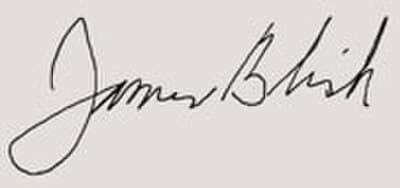
James Blish
James Blish was an influential American science fiction and fantasy writer, renowned for his innovative contributions to the genre. His most notable works include the 'Cities in Flight' series, which explored themes of space travel and human civilization, and his collaborations with his wife, J. A. Lawrence, on the 'Star Trek' novelizations that expanded the universe of the beloved television series. Blish's novel 'A Case of Conscience' garnered the prestigious Hugo Award, highlighting his ability to blend complex moral questions with speculative fiction. In addition to his fiction, Blish was a prominent literary critic, writing under the pen name William Atheling Jr., where he examined the evolving landscape of science fiction. He is credited with coining the term 'gas giant' to describe large planetary bodies, showcasing his impact on both scientific and literary discourse. Blish's work not only entertained but also challenged readers to consider the philosophical implications of science and technology, solidifying his legacy as a key figure in the development of modern science fiction.
Famous Quotes
View all 3 quotes“She was right. Peace was the way. She was right. But at the wrong time.”
“I will be the first. As of tonight, I renounce my citizenship in the United Nations, and my allegiance to the Shelter state. From now on I will be a citizen--a citizen of no country but that bounded by the limits of my own mind. I do not know what those limits are, and I may never find out, but I shall devote my life to searching for them, in whatever manner seems good to me, and in no other manner whatsoever. You must do the same. Tear up your registration cards. If you are asked your serial number, tell them you never had one. Never fill in another form. Stay above ground when the siren sounds. Stake out plots; grow crops; abandon the corridors. Do not commit any violence; simply refuse to obey. Nobody has the. right to compel you, as non-citizens. Passivity is the key. Renounce, resist, deny!”
“[T]he end cannot justify the means; but if there are no other means, and the end is necessary...”
Books from the author











Link to this page
Add a free, dofollow link to Lex on your blog, forum, syllabus, or reading list.

<a href="https://lex-books.com/author/james-blish"><img src="https://lex-books.com/badges/read-on-lex.svg" alt="James Blish on Lex" width="160" height="40"></a>[](https://lex-books.com/author/james-blish)[url=https://lex-books.com/author/james-blish][img]https://lex-books.com/badges/read-on-lex.svg[/img][/url]James Blish on Lex: https://lex-books.com/author/james-blish