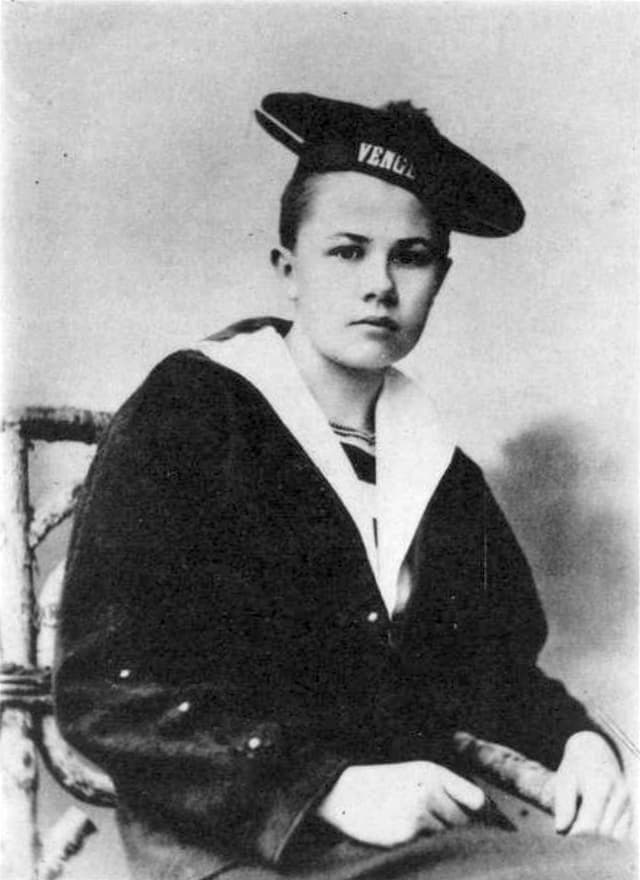
Isabelle Eberhardt
Isabelle Eberhardt was a Swiss explorer and author known for her unconventional life and writings about North Africa. Educated in Switzerland, she began publishing short stories under a male pseudonym as a teenager, showcasing her literary talent early on. Eberhardt's fascination with North Africa led her to move to Algeria in 1897, where she adopted the male persona Si Mahmoud Saadi and converted to Islam. Her bold lifestyle and choice to dress as a man alienated her from European settlers and the French authorities, who suspected her of espionage due to her close ties with the local Islamic community. Despite these challenges, she continued to write and engage with the culture around her, contributing to a newspaper and working with military officials after marrying an Algerian soldier. Tragically, Eberhardt's life was cut short at the age of 27 when she died in a flash flood in Aïn Séfra. Her posthumous legacy grew as her manuscripts were published, revealing her unique perspective on colonialism and identity. Eberhardt is now recognized as a significant figure in literature and a voice for decolonization, with her life inspiring various artistic interpretations, including films and operas. Streets in Algeria have been named in her honor, reflecting her lasting impact on both literature and the cultural landscape of North Africa.
Famous Quotes
View all 3 quotes“Now more than ever do I realize that I will never be content with a sedentary life, that I will always be haunted by thoughts of a sun-drenched elsewhere.”
“For those who know the value of and exquisite taste of solitary freedom (for one is only free when alone), the act of leaving is the bravest and most beautiful of all.”
“A nomad I will remain for life, in love with distant and uncharted places.”
Books from the author







Link to this page
Add a free, dofollow link to Lex on your blog, forum, syllabus, or reading list.

<a href="https://lex-books.com/author/isabelle-eberhardt"><img src="https://lex-books.com/badges/read-on-lex.svg" alt="Isabelle Eberhardt on Lex" width="160" height="40"></a>[](https://lex-books.com/author/isabelle-eberhardt)[url=https://lex-books.com/author/isabelle-eberhardt][img]https://lex-books.com/badges/read-on-lex.svg[/img][/url]Isabelle Eberhardt on Lex: https://lex-books.com/author/isabelle-eberhardt