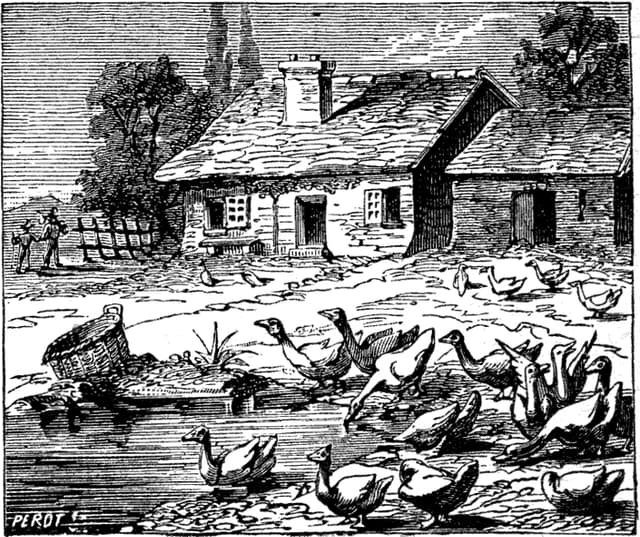
G. Bruno
G. Bruno, the pseudonym of Augustine Tuillerie, was a prominent French writer whose work primarily focused on children's literature during the era of the Third Republic. Born in 1833, she dedicated her career to creating instructional and educational books that aimed to enrich the minds of young readers. Her writings were characterized by a commitment to moral education and the promotion of civic values, reflecting the social and political climate of her time. Bruno's contributions to children's literature were significant, as she sought to provide not only entertainment but also valuable lessons that would shape the character of the youth. Her books often blended storytelling with educational content, making learning accessible and enjoyable for children. Through her efforts, she played a vital role in the development of educational literature in France, influencing both her contemporaries and future generations of writers in the genre. G. Bruno's legacy endures as a pioneer in children's educational literature, emphasizing the importance of nurturing young minds in a rapidly changing society.
Famous Quotes
View all 9 quotes“With regard to earning interest from a bank, recall in that time there were no “banks” as there are today. The reference literally means to place the money “on a (moneylenders’) table” (compare Matt. 21:12; Mark 11:15; Luke 19:45; John 2:15). Recall also that charging interest was permissible only when Jews lent to non-Jews (e.g., Deut. 23:19–21) (Fitzmyer, 1985: 1237). At a more fundamental level, earning interest also seems to go against the Creation story, where God desires work to be inherently meaningful and for people to work as God worked. Does the desire to use money to make money reflect an attempt to avoid working by the sweat of our brow (Gen. 3:19)? In this light, perhaps it is no coincidence that the third manager had wrapped his pound inside in a soudarion (literally, “a cloth for perspiration”), which refers to a sweat cloth used for face or neck for protection from the sun (Fitzmyer, 1985: 1236; Marshall, 1978: 706). By using “money to make money” the managers in the parable were likely increasing the amount of literal and metaphorical sweat on the brows of the relatively poor.””
“Ce qu’il y a de plus heureux dans la richesse, c’est qu’elle permet de soulager la misère d’autrui.””
“Le courage ne consiste pas à ne point être ému en face d'un danger, mais à surmonter son émotion: c'est pour cela qu'un enfant peut être aussi courageux qu'un homme.””
Books from the author

Link to this page
Add a free, dofollow link to Lex on your blog, forum, syllabus, or reading list.

<a href="https://lex-books.com/author/g-bruno"><img src="https://lex-books.com/badges/read-on-lex.svg" alt="G. Bruno on Lex" width="160" height="40"></a>[](https://lex-books.com/author/g-bruno)[url=https://lex-books.com/author/g-bruno][img]https://lex-books.com/badges/read-on-lex.svg[/img][/url]G. Bruno on Lex: https://lex-books.com/author/g-bruno