Lex

Browse

GenresShelvesPremiumBlog

Company

AboutJobsPartnersSell on LexAffiliates

Audio

Lex StudioVoicesFirst chapter freeAudiobook pricingAudiobook samplesAudiobook guidesAudio blog

Resources

DocsInvite FriendsFAQ

Legal

Terms of ServicePrivacy Policygeneral@lex-books.com+1 951-551-2243WhatsApp (international)

© 2026 LexBooks, Inc. All rights reserved.

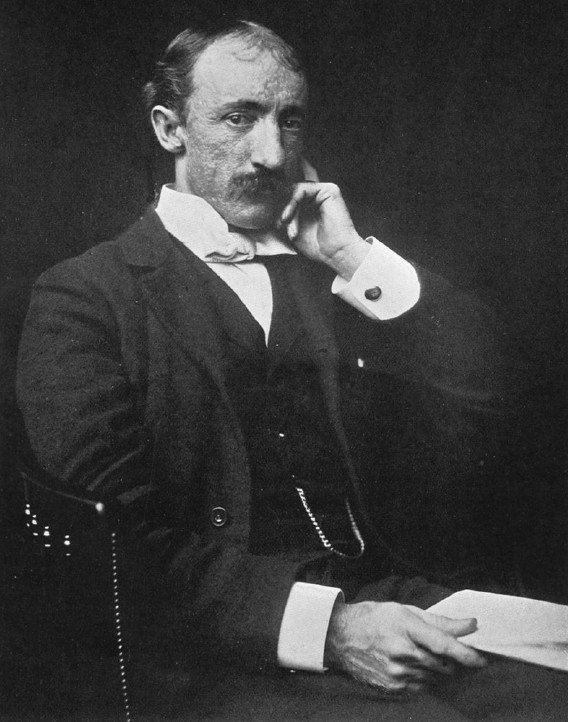
Frank Stevens

Famous Quotes

View all 4 quotes

“Two little mice fell into a bucket of cream. The first mouse quickly gave up and drowned, but the second mouse, he struggled so hard that he eventually churned that cream into butter and he walked out. Amen.””

“my purpose here is to scrutinize the tacit Democratic boast about always being better than those crazy Republicans. In truth, what Bill Clinton accomplished were things that no Republican could have done. Thanks to our two-party system, Democratic politicians carry a brand identity that inhibits them in some ways but allows them remarkable latitude in others. They are forever seen as weaklings in the face of the country’s enemies, for example; but on basic economic questions they are trusted to do the right thing for average people. That a Democrat might be the one to pick apart the safety net is a violation of this basic brand identity, but by the very structure of the system it is extremely difficult to hold the party accountable for such a deed. This, in turn, is why only a Democrat was able to do that job and get away with it. Only a Democrat was capable of getting bank deregulation passed; only a Democrat could have rammed NAFTA through Congress; and only a Democrat would be capable of privatizing Social Security, as George W. Bush found out in 2005. “It’s kind of the Nixon-goes-to-China theory,” the conservative Democrat Charles Stenholm told the historian Steven Gillon on this last subject. “It takes a Democrat to do some of the hard choices in social programs.”19””

Listen, Liberal: Or, What Ever Happened to the Party of the People?

“But that there is a simple relation between literary and other fictions seems, if one attends to it, more obvious than has appeared. If we think first of modern fictions, it can hardly be an accident that ever since Nietzsche generalized and developed the Kantian insights, literature has increasingly asserted its right to an arbitrary and private choice of fictional norms, just as historiography has become a discipline more devious and dubious because of our recognition that its methods depend to an unsuspected degree on myths and fictions. After Nietzsche it was possible to say, as Stevens did, that 'the final belief must be in a fiction.' This poet, to whom the whole question was of perpetual interest, saw that to think in this way was to postpone the End--when the fiction might be said to coincide with reality--for ever; to make of it a fiction, an imaginary moment when 'at last' the world of fact and the mundo of fiction shall be one. Such a fiction--the last section of Notes toward a Supreme Fiction is, appropriately, the place where Stevens gives it his fullest attention--such a fiction of the end is like infinity plus one and imaginary numbers in mathematics, something we know does not exist, but which helps us to make sense of and to move in the world. Mundo is itself such a fiction. I think Stevens, who certainly thought we have to make our sense out of whatever materials we find to hand, borrowed it from Ortega. His general doctrine of fictions he took from Vaihinger, from Nietzsche, perhaps also from American pragmatism.””

The Sense of an Ending: Studies in the Theory of Fiction

Books from the author

right arrow

Stonehenge,Today andYesterday

1916

Frank Stevens

More authors like this

right arrow
Arthur Thomas Malkin
Unknown
Landesverein Sächsischer Heimatschutz
Unknown
Procopius
Unknown
Robert J. Russell
Unknown
Sunzi
Sunzi
Unknown
Ying, active 150 B.C. Han
Unknown
A. H. Sayce
A. H. Sayce
1845-1933
Arthur E. P. Brome Weigall
1880-1934
Charles P. Bowditch
Charles P. Bowditch
1842-1921
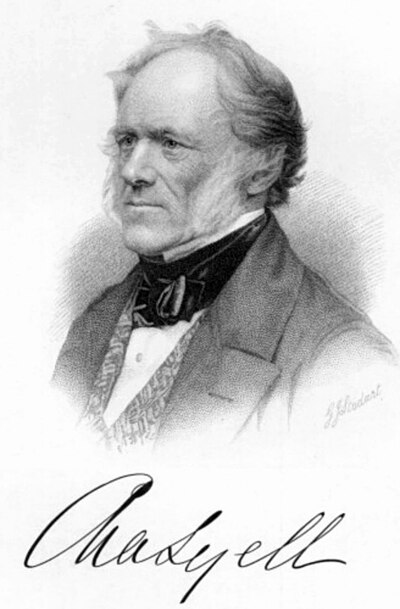
Charles, Sir Lyell
Charles, Sir Lyell
1797-1875
Cyrus Thomas
Cyrus Thomas
1825-1910
Daniel, Sir Wilson
Daniel, Sir Wilson
1816-1892
Donald A. Mackenzie
1873-1936
E. A. Wallis , Sir Budge
1857-1934
Frank Hamilton Cushing
1857-1900
G. Maspero
G. Maspero
1846-1916

Link to this page

Add a free, dofollow link to Lex on your blog, forum, syllabus, or reading list.

Frank Stevens on Lex
HTML
<a href="https://lex-books.com/author/frank-stevens"><img src="https://lex-books.com/badges/read-on-lex.svg" alt="Frank Stevens on Lex" width="160" height="40"></a>
Markdown
[![Frank Stevens on Lex](https://lex-books.com/badges/read-on-lex.svg)](https://lex-books.com/author/frank-stevens)
BBCode
[url=https://lex-books.com/author/frank-stevens][img]https://lex-books.com/badges/read-on-lex.svg[/img][/url]
Plain link
Frank Stevens on Lex: https://lex-books.com/author/frank-stevens