Frank Bird Linderman
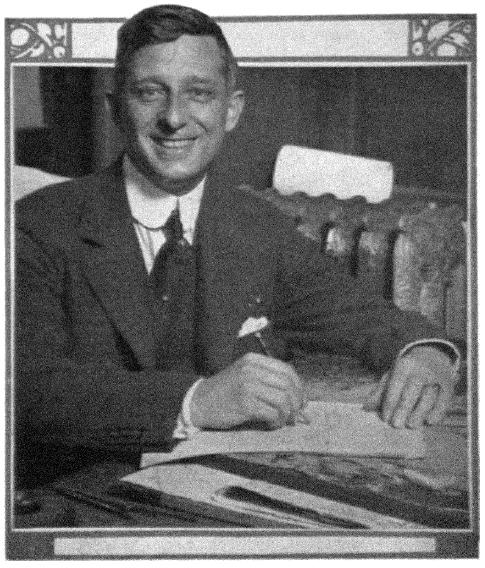
Frank Bird Linderman was a prominent Montana writer, politician, and ethnographer known for his deep commitment to Native American cultures. Born in Cleveland, Ohio, he ventured westward in his youth, where he became captivated by the life and traditions of the Montana frontier. His experiences as a trapper allowed him to immerse himself in the lives of the Salish and Blackfeet tribes, fostering a profound understanding and respect for their cultures. Linderman emerged as a vocal advocate for Native Americans, working tirelessly to support their rights and welfare, including the establishment of the Rocky Boy Indian Reservation for landless Ojibwe and Cree in 1916. Throughout his life, Linderman pursued various occupations, including serving in the Montana Legislature and publishing a local newspaper. His literary career began with the publication of a collection of Native American tribal stories in 1915, followed by an impressive output of twenty additional works over the next two decades. His writings, often illustrated by his friend Charles Marion Russell, aimed to preserve and share the rich traditions and narratives of Native American life. Linderman's dedication to documenting and advocating for these cultures has left a lasting legacy, highlighting the importance of understanding and respecting Indigenous histories and perspectives.
Famous Quotes
View all 3 quotes“May her moccasins make tracks in many snows that are yet to come”
“The men were thorough sportsmen, loving horse-racing, foot-racing, and gambling. They were graceful winners, and good losers in games of chance. And they were firm believers in luck, and in the medicine conferred in dreams. Men often starved, and even tortured themselves, in preparation for desired medicine-dreams . Then, weakened both physically and mentally by enervating sweat-baths and fatigue, they slipped away alone to some dangerous spot, usually a high mountain-peak, a sheer cliff or a well-worn buffalo-trail that might be traveled at any hour by a vast herd of buffalo; and here, without food, or water, they spent four days and nights (if necessary) trying to dream, appealing to invisible “helpers,” crying aloud to the winds until utter exhaustion brought them sleep, or unconsciousness—and perhaps a medicine-dream . If lucky, some animal or bird appeared to the dreamer, offering counsel and help, nearly always prescribing rules which if followed would lead the dreamer to success in war. Thereafter the bird or animal appearing in the medicine-dream was the dreamer’s medicine . He believed that all the power, the cunning, and the instinctive wisdom, possessed by the appearing bird or animal would forever afterward be his own in time of need. And always thereafter the dreamer carried with him some part of such bird or animal. It was his lucky-piece, a talisman, and he would undertake nothing without it upon his person.”
“Smoking was a sacred ceremony. Old plains Indians sealed oaths and agreements with the pipe. In smoking, the host or master of ceremonies, filled and lighted the stone pipe, offering its stem first to the sun (the father) and then to the earth (the mother) before smoking, himself. Next he passed the pipe to the guest on his left , "as the sun travels." After smoking, usually taking three deep draughts, this guest handed the pipe to the man on his left, the pipe's stem being kept pointed at the lodge-wall in its movements. And the pipe must not be handed across the doorway. When the man nearest the door on the host's left hand had smoked, the pipe must go back to the "head" of the lodge where the host passed it to the guest on his right , the pipe going, unsmoked to the guest nearest the door on that side. When this guest had smoked he passed the pipe to the guest on his left , so that the pipe again began to move "as the sun travels." If the pipe needed refilling it was handed back to the host who replenished it, the guests passing it along, unsmoked, to the man who had discovered its emptiness. Nobody might properly pass between smokers and the lodge-fire.”
Books from the author




Link to this page
Add a free, dofollow link to Lex on your blog, forum, syllabus, or reading list.

<a href="https://lex-books.com/author/frank-bird-linderman"><img src="https://lex-books.com/badges/read-on-lex.svg" alt="Frank Bird Linderman on Lex" width="160" height="40"></a>[](https://lex-books.com/author/frank-bird-linderman)[url=https://lex-books.com/author/frank-bird-linderman][img]https://lex-books.com/badges/read-on-lex.svg[/img][/url]Frank Bird Linderman on Lex: https://lex-books.com/author/frank-bird-linderman