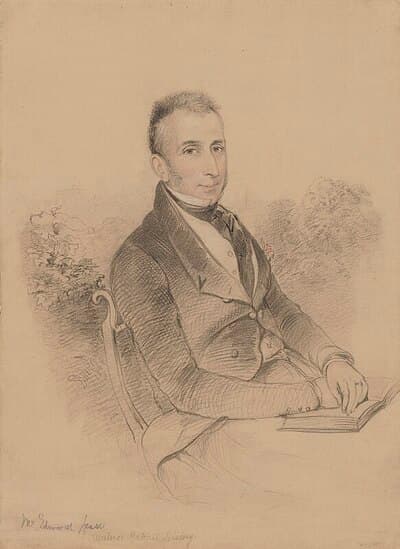
Edward Jesse
Edward Jesse was an English writer and natural historian known for his contributions to the field of natural history during the 19th century. He served as a surveyor for the Office of Works, where he played a significant role in the restoration and presentation of Hampton Court Palace after its opening to the public in 1838. Jesse's work in this capacity not only showcased his architectural skills but also his deep appreciation for the natural world, which permeated his writings. Jesse authored several notable works, including 'Gleanings in Natural History' and 'The Life of the Rev. William Gilpin,' which reflect his keen observations and insights into the natural environment. His writings often blended scientific inquiry with literary elegance, making complex subjects accessible to a broader audience. Jesse's legacy lies in his ability to bridge the gap between natural history and literature, influencing future generations of naturalists and writers alike, and contributing to the popularization of natural history in the Victorian era.
Famous Quotes
View all 1 quotes“Records show that slaves who lived in the Washington, D.C., area made up a good portion of the labor pool that worked on the Capitol. More than four hundred slaves, or more than half of the documented workforce that constructed the Capitol, cleared trees from Jenkins Hill and dug up stumps for the wide avenues that radiate out into the city, according to research first publicized by NBC reporter Edward Hotaling in 2000. We now know that slaves baked the bricks used for the building’s foundation and walls, sawed lumber for the interior walls and floors, dug the trenches for the foundation, worked the Virginia quarries where the sandstone was cut, and laid the stones that hold up the Capitol to this day.””
Books from the author




Link to this page
Add a free, dofollow link to Lex on your blog, forum, syllabus, or reading list.

<a href="https://lex-books.com/author/edward-jesse"><img src="https://lex-books.com/badges/read-on-lex.svg" alt="Edward Jesse on Lex" width="160" height="40"></a>[](https://lex-books.com/author/edward-jesse)[url=https://lex-books.com/author/edward-jesse][img]https://lex-books.com/badges/read-on-lex.svg[/img][/url]Edward Jesse on Lex: https://lex-books.com/author/edward-jesse