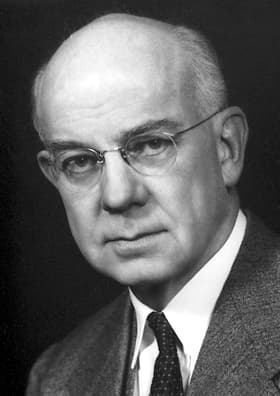
Edward C. Kendall
Edward C. Kendall was an influential American biochemist renowned for his groundbreaking research on adrenal hormones. He shared the 1950 Nobel Prize in Physiology or Medicine with Tadeusz Reichstein and Philip S. Hench for their collective work on the hormones of the adrenal glands, which significantly advanced the understanding of endocrine functions. Kendall's contributions extended beyond adrenal hormones; he was instrumental in isolating thyroxine, a crucial thyroid hormone, and played a key role in the crystallization and structural identification of glutathione, a vital antioxidant in cellular processes. Educated at Columbia University, Kendall's career flourished at the Mayo Foundation, where he conducted much of his pivotal research. After his retirement from the Mayo Clinic, he joined the faculty at Princeton University, further influencing the field of biochemistry until his passing in 1972. His legacy is honored through institutions like Kendall Elementary School in Norwalk, reflecting his lasting impact on both science and education.
Books from the author








Link to this page
Add a free, dofollow link to Lex on your blog, forum, syllabus, or reading list.

<a href="https://lex-books.com/author/edward-c-kendall"><img src="https://lex-books.com/badges/read-on-lex.svg" alt="Edward C. Kendall on Lex" width="160" height="40"></a>[](https://lex-books.com/author/edward-c-kendall)[url=https://lex-books.com/author/edward-c-kendall][img]https://lex-books.com/badges/read-on-lex.svg[/img][/url]Edward C. Kendall on Lex: https://lex-books.com/author/edward-c-kendall