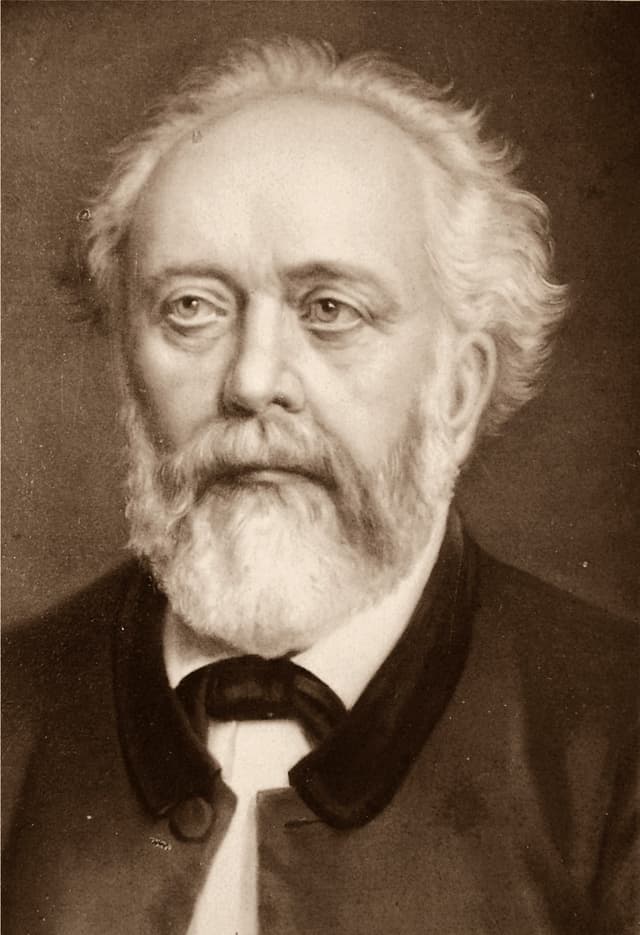
Berthold Auerbach
Berthold Auerbach was a German poet and author renowned for founding the 'tendency novel,' a literary genre that sought to influence public opinion on pressing social, political, moral, and religious issues. Born in 1812, Auerbach's early life in the Black Forest region of Germany shaped his appreciation for rural life, which became a recurring theme in his works. He gained prominence with his collections of stories, particularly 'On the Heights' (1857), which depicted the lives and struggles of the Jewish community in Germany, and 'The Village Tales' (1850), reflecting the moral dilemmas faced by ordinary people. His writing often blended realism with a deep moral consciousness, making his narratives both engaging and thought-provoking. Auerbach's literary significance lies in his pioneering approach to the novel as a vehicle for social change. By addressing contemporary issues through his storytelling, he not only entertained readers but also encouraged them to reflect on their societal responsibilities. His works were instrumental in the development of the social novel in Germany, influencing later writers who sought to address similar themes. Auerbach's legacy endures as a key figure in 19th-century literature, whose efforts to merge art with advocacy laid the groundwork for future generations of writers committed to social reform.
Famous Quotes
View all 3 quotes“Music washes away from the soul the dust of everyday life.”
“Years teach us more than books.”
“Wer nicht zufrieden ist mit dem, was er hat, der waere auch nicht zufrieden mit dem, was er haben moechte.”
Books from the author







Link to this page
Add a free, dofollow link to Lex on your blog, forum, syllabus, or reading list.

<a href="https://lex-books.com/author/berthold-auerbach"><img src="https://lex-books.com/badges/read-on-lex.svg" alt="Berthold Auerbach on Lex" width="160" height="40"></a>[](https://lex-books.com/author/berthold-auerbach)[url=https://lex-books.com/author/berthold-auerbach][img]https://lex-books.com/badges/read-on-lex.svg[/img][/url]Berthold Auerbach on Lex: https://lex-books.com/author/berthold-auerbach