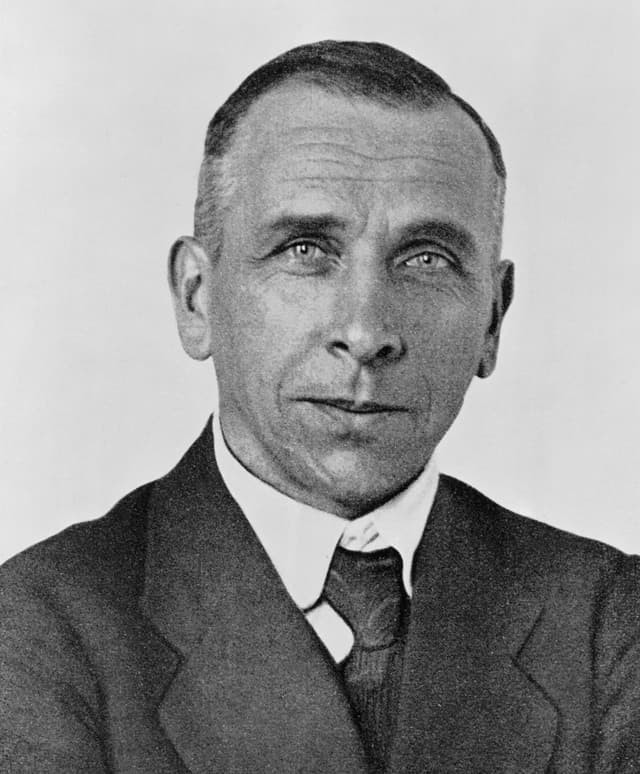
Alfred Wegener
Alfred Wegener was a multifaceted German scientist whose contributions spanned climatology, geology, geophysics, meteorology, and polar research. He is best known for proposing the continental drift hypothesis in 1912, which posited that continents are not fixed but instead drift across the Earth's surface. This groundbreaking idea, though initially met with skepticism and resistance from the scientific community, laid the groundwork for the modern understanding of plate tectonics. Wegener's work was pivotal in shifting the paradigm of geology, as it challenged long-held beliefs about the immobility of continents. In addition to his theoretical contributions, Wegener was an accomplished polar researcher, participating in several expeditions to Greenland, where he conducted significant meteorological studies. His dedication to understanding Earth's processes and climate was evident in his meticulous research and publications. Although Wegener's ideas were not widely accepted during his lifetime, they gained recognition in the 1950s with advancements in geological science, particularly through the study of paleomagnetism. Today, Wegener is celebrated not only for his revolutionary hypothesis but also for his role in advancing the fields of climatology and geology, leaving a lasting legacy that continues to influence scientific thought.
Famous Quotes
View all 1 quotes“Scientists still do not appear to understand sufficiently that all earth sciences must contribute evidence toward unveiling the state of our planet in earlier times, and that the truth of the matter can only be reached by combing all this evidence. ... It is only by combing the information furnished by all the earth sciences that we can hope to determine 'truth' here, that is to say, to find the picture that sets out all the known facts in the best arrangement and that therefore has the highest degree of probability. Further, we have to be prepared always for the possibility that each new discovery, no matter what science furnishes it, may modify the conclusions we draw.”
Books from the author
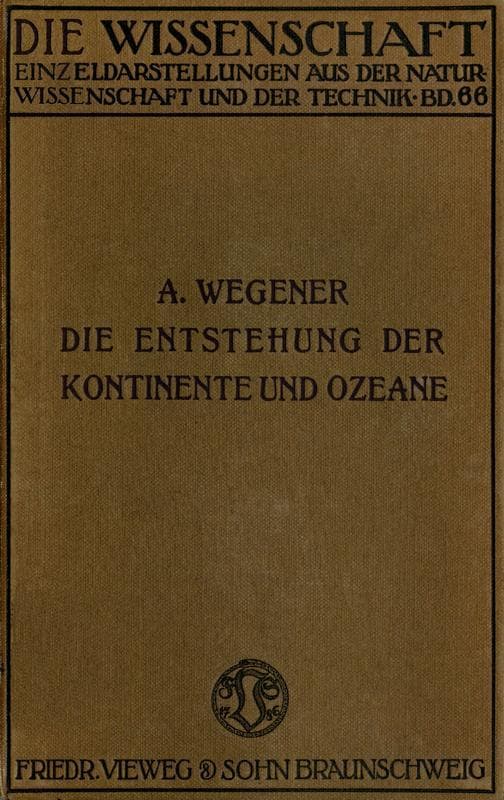






Link to this page
Add a free, dofollow link to Lex on your blog, forum, syllabus, or reading list.

<a href="https://lex-books.com/author/alfred-wegener"><img src="https://lex-books.com/badges/read-on-lex.svg" alt="Alfred Wegener on Lex" width="160" height="40"></a>[](https://lex-books.com/author/alfred-wegener)[url=https://lex-books.com/author/alfred-wegener][img]https://lex-books.com/badges/read-on-lex.svg[/img][/url]Alfred Wegener on Lex: https://lex-books.com/author/alfred-wegener