
A. R. Orage
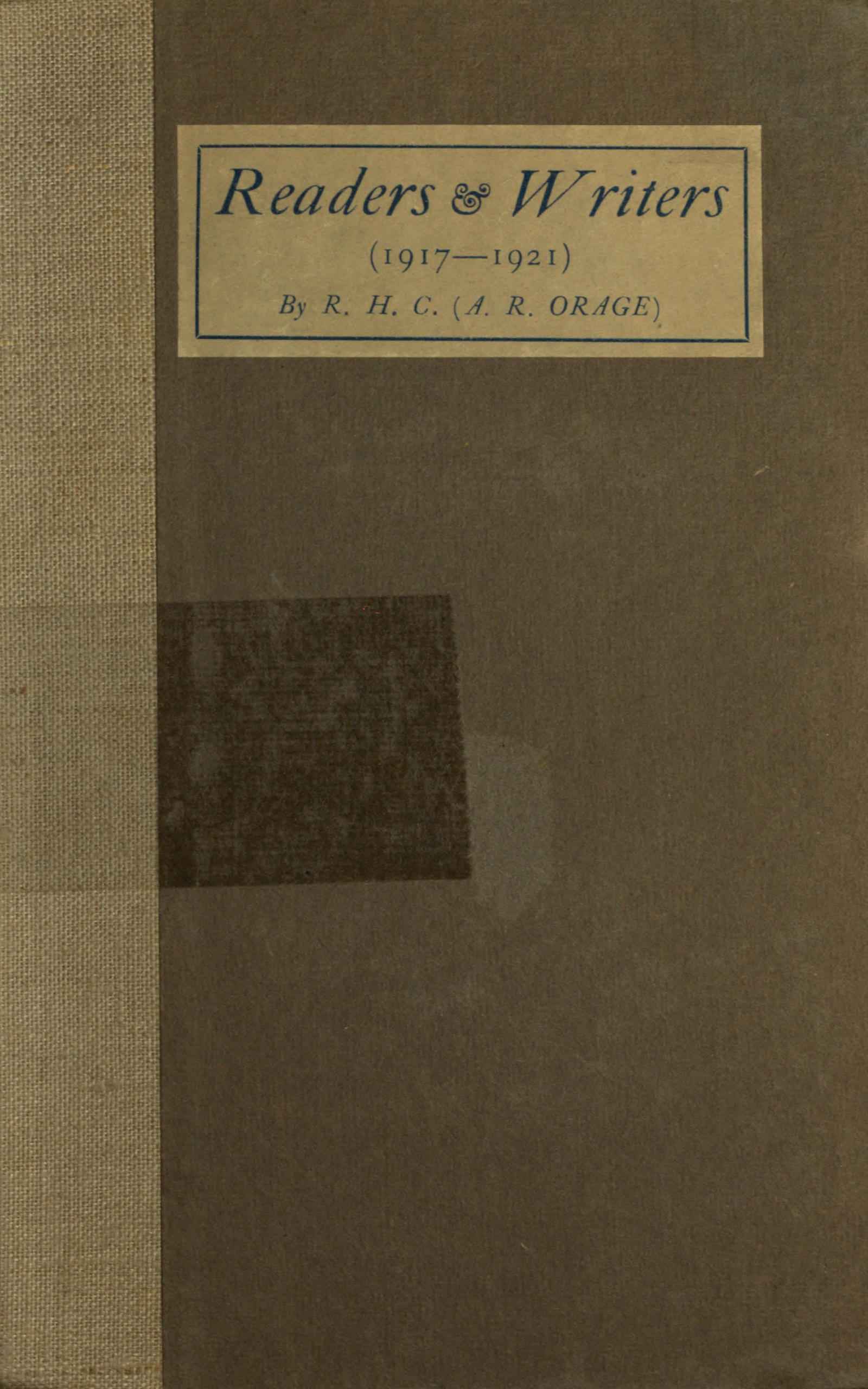
A. R. Orage was a prominent British writer, editor, and cultural figure known for his influential role in the early 20th-century literary and philosophical movements. Born in 1873 in Yorkshire, he began his career as a journalist and quickly became involved in the burgeoning modernist scene. Orage was the editor of the influential literary magazine 'The New Age,' which he transformed into a platform for avant-garde ideas and radical thought, championing the works of contemporary writers and thinkers such as T.E. Hulme and Ezra Pound. His editorial vision helped to shape the discourse around modernism and socialism during a time of significant social change in Britain. Orage's literary contributions extended beyond journalism; he was also a writer of essays and philosophical works that explored the intersections of art, politics, and society. His notable works include 'The Meaning of Life' and 'The New Age Movement,' where he articulated his views on the necessity of a new cultural consciousness. Orage's ideas were often controversial, as he sought to challenge conventional norms and provoke critical thought among his readers. His legacy is marked by his commitment to fostering a dialogue about the role of art in society and his influence on subsequent generations of writers and thinkers, making him a key figure in the evolution of modernist thought in Britain.
Famous Quotes
View all 1 quotes“man has two wings: one wing is his own will and the other wing is the will of God. Man has to learn to fly using both of them. Without using the wing of God’s will, his flight is erroneous, erratic, it has no momentum.””
Books from the author






Link to this page
Add a free, dofollow link to Lex on your blog, forum, syllabus, or reading list.

<a href="https://lex-books.com/author/a-r-orage"><img src="https://lex-books.com/badges/read-on-lex.svg" alt="A. R. Orage on Lex" width="160" height="40"></a>[](https://lex-books.com/author/a-r-orage)[url=https://lex-books.com/author/a-r-orage][img]https://lex-books.com/badges/read-on-lex.svg[/img][/url]A. R. Orage on Lex: https://lex-books.com/author/a-r-orage