Waste Land (version 2)
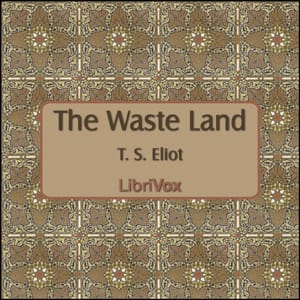
Published in 1922, The Waste Land shattered every convention of English poetry and announced the arrival of modernism's most radical voice. T. S. Eliot crafted a fragmentary, collaged epic that moves through the ruins of post-WWI Europe: a world of spiritual emptiness, failed communication, and sexual desperation. The poem leaps between the mundane and the mythic, from a woman combing her hair in a dingy apartment to the Fisher King wounded in his waste land, from cheap jazz in a London pub to the sacred Upanishads. It demands multiple readings, offers no easy answers, and ends not with resolution but with the enigmatic Sanskrit chant 'Shantih shantih shantih', the peace that passes understanding. This is poetry as archaeology: Eliot digs through the rubble of civilization and finds not gold but the possibility of rebirth beneath the wreckage. For readers willing to surrender to its difficulty, the poem reveals ever-deepening layers of meaning.
Editions


Read by
Group Narration
5 readers
Michael Dalling, Mark F. Smith, Karen Savage, Corey M. Snow +1 more
Link to this book
Add a free, dofollow link to Lex on your blog, forum, syllabus, or reading list.

<a href="https://lex-books.com/book/waste-land-version-2-2e711d79-9d38-4616-95ab-146ff4295f89"><img src="https://lex-books.com/badges/read-on-lex.svg" alt="Read Waste Land (version 2) by T. S. Eliot free on Lex" width="160" height="40"></a>[](https://lex-books.com/book/waste-land-version-2-2e711d79-9d38-4616-95ab-146ff4295f89)[url=https://lex-books.com/book/waste-land-version-2-2e711d79-9d38-4616-95ab-146ff4295f89][img]https://lex-books.com/badges/read-on-lex.svg[/img][/url]Read Waste Land (version 2) by T. S. Eliot free on Lex: https://lex-books.com/book/waste-land-version-2-2e711d79-9d38-4616-95ab-146ff4295f89Cite this book
Reading this edition for a paper or guide? Copy a citation.
Eliot, T. S.. Waste Land (version 2). Lex, lex-books.com/book/waste-land-version-2-2e711d79-9d38-4616-95ab-146ff4295f89.Eliot, T. S. (n.d.). Waste Land (version 2). Lex. https://lex-books.com/book/waste-land-version-2-2e711d79-9d38-4616-95ab-146ff4295f89Eliot, T. S.. Waste Land (version 2). Lex. https://lex-books.com/book/waste-land-version-2-2e711d79-9d38-4616-95ab-146ff4295f89.

![Birds and Nature, Vol. 12 No. 1 [June 1902]illustrated by Color Photography](/_next/image?url=https%3A%2F%2Fd3b2n8gj62qnwr.cloudfront.net%2FCOVERS%2Fgutenberg_covers75k%2Febook-47881.png&w=3840&q=75)