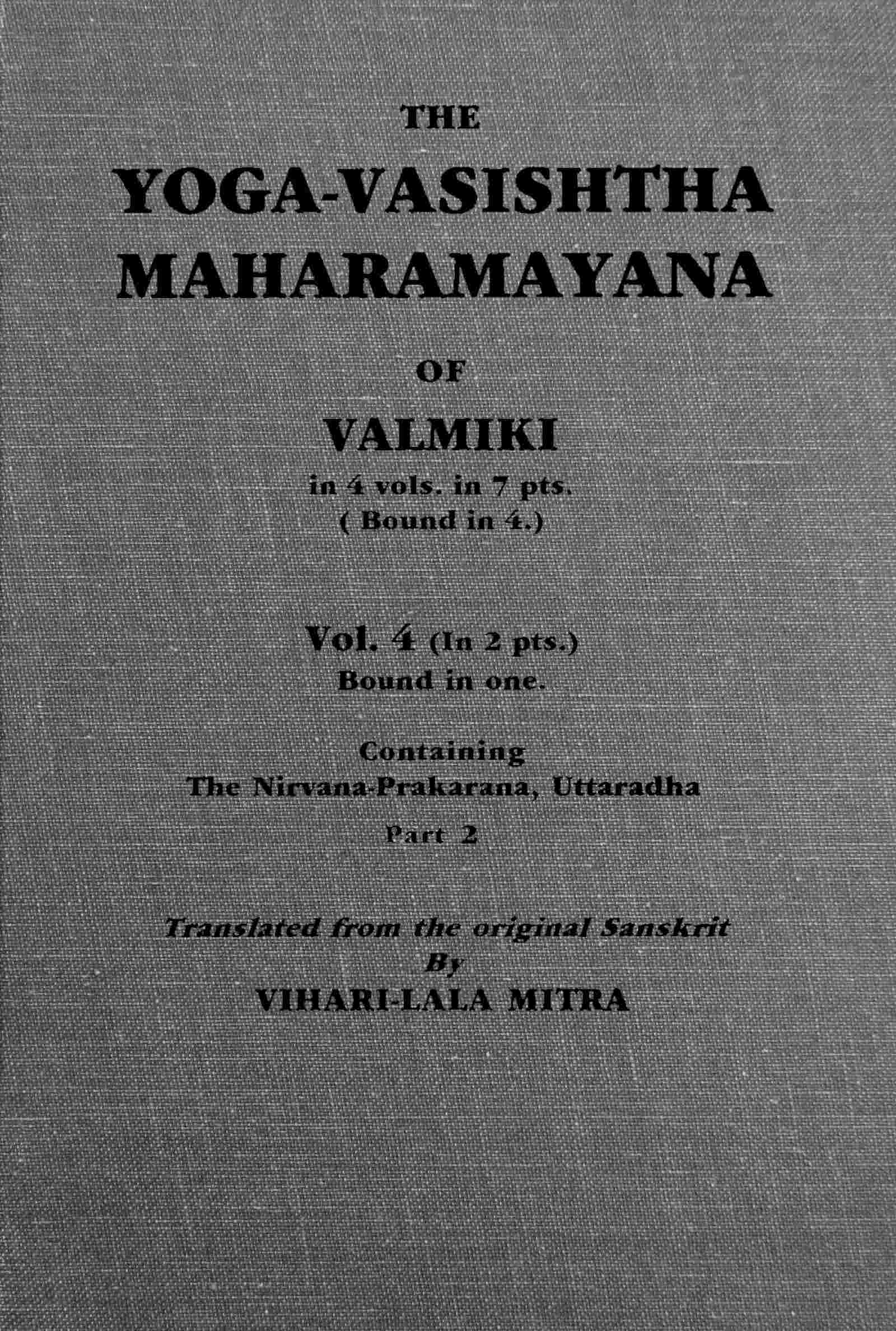
The Yoga-Vasishtha Maharamayana of Valmiki, Vol. 3 (of 4), Part 2 (of 2)
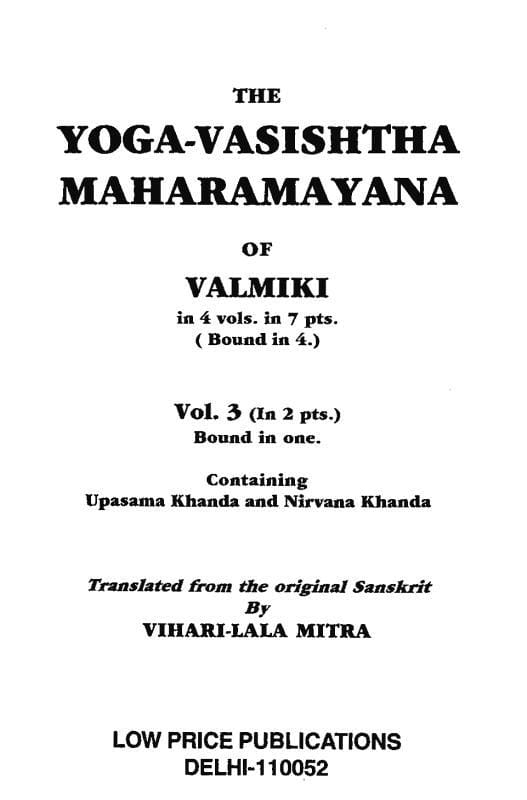
The Yoga-Vasishtha Maharamayana of Valmiki, Vol. 3 (of 4), Part 2 (of 2)
Translated by Viharilala Mitra
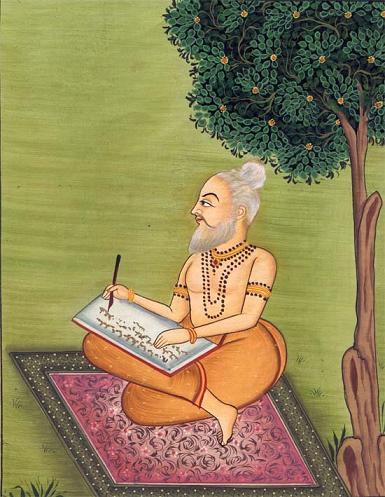
The Yoga-Vasishtha is one of the most radical philosophical works in Sanskrit literature, a sweeping non-dualist text that uses the framework of the Ramayana to explore the nature of consciousness, reality, and liberation. This volume finds the young prince Rama seated among princes and sages at dusk, troubled by the great questions of existence, as the sage Vasishtha begins to unfold teachings that will dismantle everything Rama believes about himself and the world. The evening setting is deliberate: the transition from light to darkness mirrors the journey from ignorance to awakening. Vasishtha speaks of the nature of Brahman, the illusion of duality, and the futility of seeking liberation through external means when the answer lies buried in the questioner himself. The assembly listens in growing stillness, their internal turbulence quieted by words that point beyond words. This is not casual reading. It is a systematic deconstruction of the familiar self, offered through dialogue that has shaped Indian spiritual thought for centuries. For the serious seeker who has outgrown easy answers, here is a text that demands everything and offers, in return, the view from the far side of suffering.
Editions

Link to this book
Add a free, dofollow link to Lex on your blog, forum, syllabus, or reading list.

<a href="https://lex-books.com/book/the-yoga-vasishtha-maharamayana-of-valmiki-vol-3-of-4-part-2-of-2-3fe2f3cc-200e-4247-821e-5d4b3b67a374"><img src="https://lex-books.com/badges/read-on-lex.svg" alt="Read The Yoga-Vasishtha Maharamayana of Valmiki, Vol. 3 (of 4), Part 2 (of 2) by Valmiki free on Lex" width="160" height="40"></a>[](https://lex-books.com/book/the-yoga-vasishtha-maharamayana-of-valmiki-vol-3-of-4-part-2-of-2-3fe2f3cc-200e-4247-821e-5d4b3b67a374)[url=https://lex-books.com/book/the-yoga-vasishtha-maharamayana-of-valmiki-vol-3-of-4-part-2-of-2-3fe2f3cc-200e-4247-821e-5d4b3b67a374][img]https://lex-books.com/badges/read-on-lex.svg[/img][/url]Read The Yoga-Vasishtha Maharamayana of Valmiki, Vol. 3 (of 4), Part 2 (of 2) by Valmiki free on Lex: https://lex-books.com/book/the-yoga-vasishtha-maharamayana-of-valmiki-vol-3-of-4-part-2-of-2-3fe2f3cc-200e-4247-821e-5d4b3b67a374Cite this book
Reading this edition for a paper or guide? Copy a citation.
Valmiki. The Yoga-Vasishtha Maharamayana of Valmiki, Vol. 3 (of 4), Part 2 (of 2). Lex, lex-books.com/book/the-yoga-vasishtha-maharamayana-of-valmiki-vol-3-of-4-part-2-of-2-3fe2f3cc-200e-4247-821e-5d4b3b67a374.Valmiki (n.d.). The Yoga-Vasishtha Maharamayana of Valmiki, Vol. 3 (of 4), Part 2 (of 2). Lex. https://lex-books.com/book/the-yoga-vasishtha-maharamayana-of-valmiki-vol-3-of-4-part-2-of-2-3fe2f3cc-200e-4247-821e-5d4b3b67a374Valmiki. The Yoga-Vasishtha Maharamayana of Valmiki, Vol. 3 (of 4), Part 2 (of 2). Lex. https://lex-books.com/book/the-yoga-vasishtha-maharamayana-of-valmiki-vol-3-of-4-part-2-of-2-3fe2f3cc-200e-4247-821e-5d4b3b67a374.