The Writings of Clement of Alexandria, Vol. 2 (of 2)
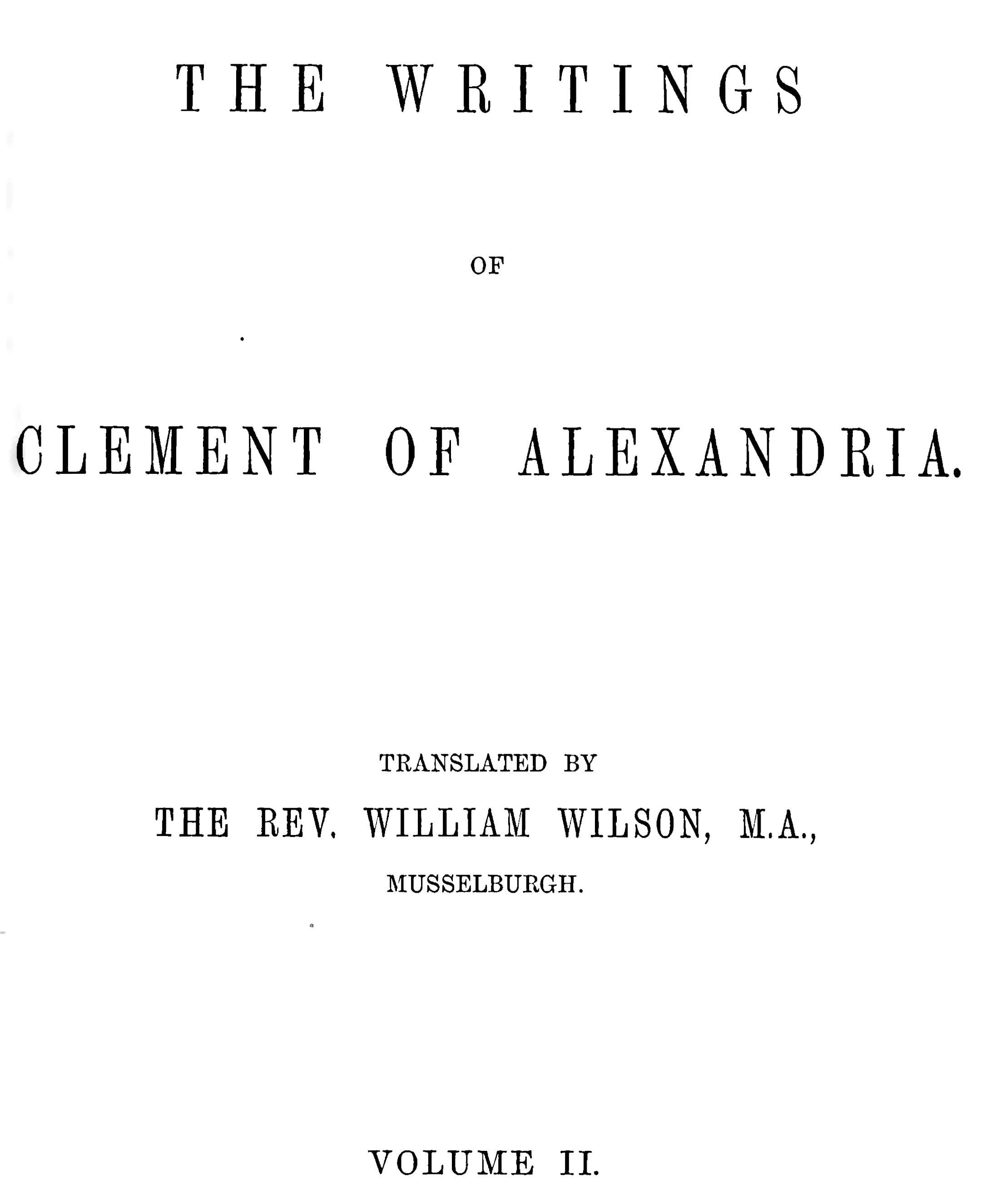
The Writings of Clement of Alexandria, Vol. 2 (of 2)
Translated by William Wilson
One of the earliest sustained attempts to harmonize Christian faith with Greek philosophical tradition, this volume captures Clement of Alexandria at his most ambitious. Writing in the late second and early third centuries, he undertook the radical project of demonstrating that true knowledge flows from faith, not the reverse, and that the great Greek philosophers, for all their intellectual rigor, had merely borrowed and distorted insights from older sacred traditions. The argument unfolds through careful critique of competing schools of thought, scriptural exposition, and sustained reflection on the relationship between divine wisdom and human reason. Clement's central claim remains provocative: that those who seek knowledge apart from faith build houses on sand, while the faithful possess the only firm foundation for understanding. This is essential reading for anyone interested in how early Christianity engaged with the intellectual currents of the ancient world, and how the foundations of Western theological tradition were laid.
Editions
Link to this book
Add a free, dofollow link to Lex on your blog, forum, syllabus, or reading list.

<a href="https://lex-books.com/book/the-writings-of-clement-of-alexandria-vol-2-of-2-12febc8b-bff2-4457-8f6e-e2ed61d4ecbc"><img src="https://lex-books.com/badges/read-on-lex.svg" alt="Read The Writings of Clement of Alexandria, Vol. 2 (of 2) by Saint Clement of Alexandria free on Lex" width="160" height="40"></a>[](https://lex-books.com/book/the-writings-of-clement-of-alexandria-vol-2-of-2-12febc8b-bff2-4457-8f6e-e2ed61d4ecbc)[url=https://lex-books.com/book/the-writings-of-clement-of-alexandria-vol-2-of-2-12febc8b-bff2-4457-8f6e-e2ed61d4ecbc][img]https://lex-books.com/badges/read-on-lex.svg[/img][/url]Read The Writings of Clement of Alexandria, Vol. 2 (of 2) by Saint Clement of Alexandria free on Lex: https://lex-books.com/book/the-writings-of-clement-of-alexandria-vol-2-of-2-12febc8b-bff2-4457-8f6e-e2ed61d4ecbcCite this book
Reading this edition for a paper or guide? Copy a citation.
Alexandria, Saint Clement of. The Writings of Clement of Alexandria, Vol. 2 (of 2). Lex, lex-books.com/book/the-writings-of-clement-of-alexandria-vol-2-of-2-12febc8b-bff2-4457-8f6e-e2ed61d4ecbc.Alexandria, S. C. O. (n.d.). The Writings of Clement of Alexandria, Vol. 2 (of 2). Lex. https://lex-books.com/book/the-writings-of-clement-of-alexandria-vol-2-of-2-12febc8b-bff2-4457-8f6e-e2ed61d4ecbcAlexandria, Saint Clement of. The Writings of Clement of Alexandria, Vol. 2 (of 2). Lex. https://lex-books.com/book/the-writings-of-clement-of-alexandria-vol-2-of-2-12febc8b-bff2-4457-8f6e-e2ed61d4ecbc.