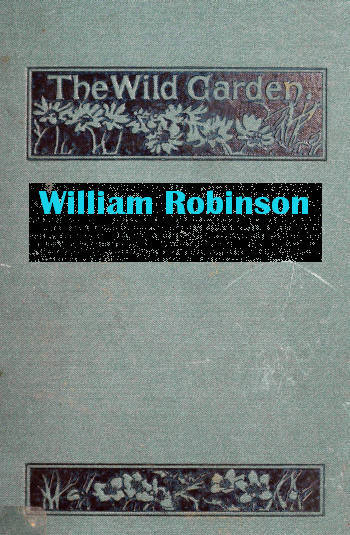
The Wild Garden: Or Our Groves and Gardens Made Beautiful by the Naturalisation of Hardy Exotic Plants; Being One Way Onwards from the Dark Ages
1870
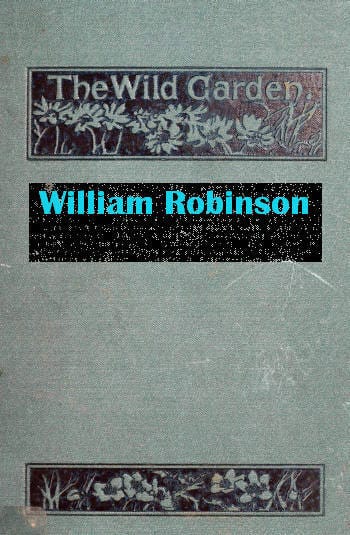
The Wild Garden: Or Our Groves and Gardens Made Beautiful by the Naturalisation of Hardy Exotic Plants; Being One Way Onwards from the Dark Ages
1870
In 1870, a Victorian horticulturist dared to declare war on the manicured flowerbed. W. Robinson's radical manifesto argues that gardens need not be battlegrounds of constant toil, but instead sanctuary where hardy exotic plants and native species intermingle freely, left to naturalise and flourish with minimal human interference. He mocks the era's obsession with tender tropical showpieces requiring armies of gardeners, instead championing what he calls the "wild garden": plantings that echo the unplanned beauty of meadows, woodland edges, and hedgerows. Robinson's argument is both practical and philosophical. Why struggle against nature when thoughtful design can work with it? Why demand perfection from rigid beds when chaos itself can be beautiful? The book sparked a revolution. Robinson's naturalistic approach eventually triumphed over the formal Victorian style, fundamentally reshaping how we think about designed landscapes. More than a century later, his vision feels almost prophetic: the wild garden anticipates our contemporary obsession with ecology, sustainability, and gardens that breathe. This is the book that taught gardeners to stop fighting nature and start collaborating with it.
Editions
Link to this book
Add a free, dofollow link to Lex on your blog, forum, syllabus, or reading list.

<a href="https://lex-books.com/book/the-wild-garden-or-our-groves-and-gardens-made-beautiful-by-the-naturalisation-o-4ac441a1-c3ea-4bf1-ad6e-b1b3b22ba4df"><img src="https://lex-books.com/badges/read-on-lex.svg" alt="Read The Wild Garden: Or Our Groves and Gardens Made Beautiful by the Naturalisation of Hardy Exotic Plants; Being One Way Onwards from the Dark Ages by W. Robinson free on Lex" width="160" height="40"></a>[](https://lex-books.com/book/the-wild-garden-or-our-groves-and-gardens-made-beautiful-by-the-naturalisation-o-4ac441a1-c3ea-4bf1-ad6e-b1b3b22ba4df)[url=https://lex-books.com/book/the-wild-garden-or-our-groves-and-gardens-made-beautiful-by-the-naturalisation-o-4ac441a1-c3ea-4bf1-ad6e-b1b3b22ba4df][img]https://lex-books.com/badges/read-on-lex.svg[/img][/url]Read The Wild Garden: Or Our Groves and Gardens Made Beautiful by the Naturalisation of Hardy Exotic Plants; Being One Way Onwards from the Dark Ages by W. Robinson free on Lex: https://lex-books.com/book/the-wild-garden-or-our-groves-and-gardens-made-beautiful-by-the-naturalisation-o-4ac441a1-c3ea-4bf1-ad6e-b1b3b22ba4dfCite this book
Reading this edition for a paper or guide? Copy a citation.
Robinson, W.. The Wild Garden: Or Our Groves and Gardens Made Beautiful by the Naturalisation of Hardy Exotic Plants; Being One Way Onwards from the Dark Ages. Lex, lex-books.com/book/the-wild-garden-or-our-groves-and-gardens-made-beautiful-by-the-naturalisation-o-4ac441a1-c3ea-4bf1-ad6e-b1b3b22ba4df.Robinson, W. (1870). The Wild Garden: Or Our Groves and Gardens Made Beautiful by the Naturalisation of Hardy Exotic Plants; Being One Way Onwards from the Dark Ages. Lex. https://lex-books.com/book/the-wild-garden-or-our-groves-and-gardens-made-beautiful-by-the-naturalisation-o-4ac441a1-c3ea-4bf1-ad6e-b1b3b22ba4dfRobinson, W.. The Wild Garden: Or Our Groves and Gardens Made Beautiful by the Naturalisation of Hardy Exotic Plants; Being One Way Onwards from the Dark Ages. Lex. https://lex-books.com/book/the-wild-garden-or-our-groves-and-gardens-made-beautiful-by-the-naturalisation-o-4ac441a1-c3ea-4bf1-ad6e-b1b3b22ba4df.