The Subtropical Garden; Or, Beauty of Form in the Flower Garden.
1871
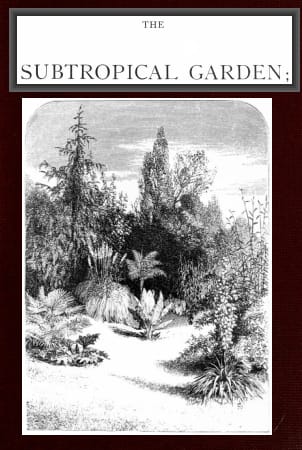
The Subtropical Garden; Or, Beauty of Form in the Flower Garden.
1871
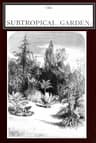
William Robinson's 1871 treatise reads less like a gardening manual and more like an artistic manifesto. He believed Victorian gardens had become numbingly repetitive - vast beds of color poured like paint across the landscape, uniform and lifeless. What if, he asks, you considered plants as sculptures? This book champions leaf shape, silhouette, and the interplay of textures over mere bloom. Robinson argues for the "subtropical effect": bold foliage, graceful grasses, and architectural plants arranged to evoke the lushness of warmer climates, even in England's cooler air. His central provocation is simple yet radical: gardens should please through variety and harmony, not just chromatic intensity. Most surprisingly, he demonstrates that you need not live in the tropics to achieve this beauty - hardy plants thoughtfully selected can create stunning subtropical effects anywhere. A book that transformed gardening from planting into art.
Editions
Link to this book
Add a free, dofollow link to Lex on your blog, forum, syllabus, or reading list.

<a href="https://lex-books.com/book/the-subtropical-garden-or-beauty-of-form-in-the-flower-garden-1925064d-f294-4044-af3d-b48468777745"><img src="https://lex-books.com/badges/read-on-lex.svg" alt="Read The Subtropical Garden; Or, Beauty of Form in the Flower Garden. by W. Robinson free on Lex" width="160" height="40"></a>[](https://lex-books.com/book/the-subtropical-garden-or-beauty-of-form-in-the-flower-garden-1925064d-f294-4044-af3d-b48468777745)[url=https://lex-books.com/book/the-subtropical-garden-or-beauty-of-form-in-the-flower-garden-1925064d-f294-4044-af3d-b48468777745][img]https://lex-books.com/badges/read-on-lex.svg[/img][/url]Read The Subtropical Garden; Or, Beauty of Form in the Flower Garden. by W. Robinson free on Lex: https://lex-books.com/book/the-subtropical-garden-or-beauty-of-form-in-the-flower-garden-1925064d-f294-4044-af3d-b48468777745Cite this book
Reading this edition for a paper or guide? Copy a citation.
Robinson, W.. The Subtropical Garden; Or, Beauty of Form in the Flower Garden.. Lex, lex-books.com/book/the-subtropical-garden-or-beauty-of-form-in-the-flower-garden-1925064d-f294-4044-af3d-b48468777745.Robinson, W. (1871). The Subtropical Garden; Or, Beauty of Form in the Flower Garden.. Lex. https://lex-books.com/book/the-subtropical-garden-or-beauty-of-form-in-the-flower-garden-1925064d-f294-4044-af3d-b48468777745Robinson, W.. The Subtropical Garden; Or, Beauty of Form in the Flower Garden.. Lex. https://lex-books.com/book/the-subtropical-garden-or-beauty-of-form-in-the-flower-garden-1925064d-f294-4044-af3d-b48468777745.