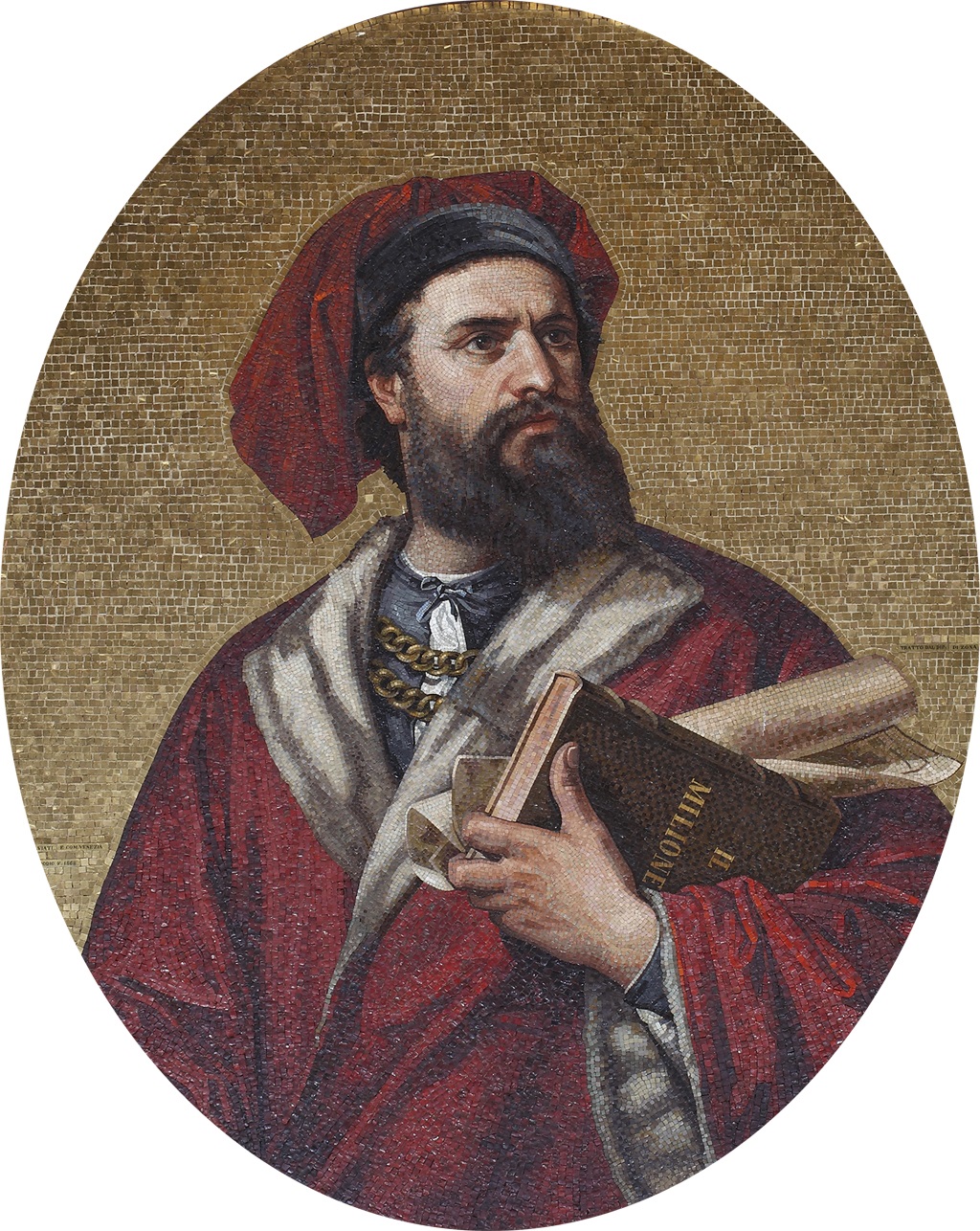
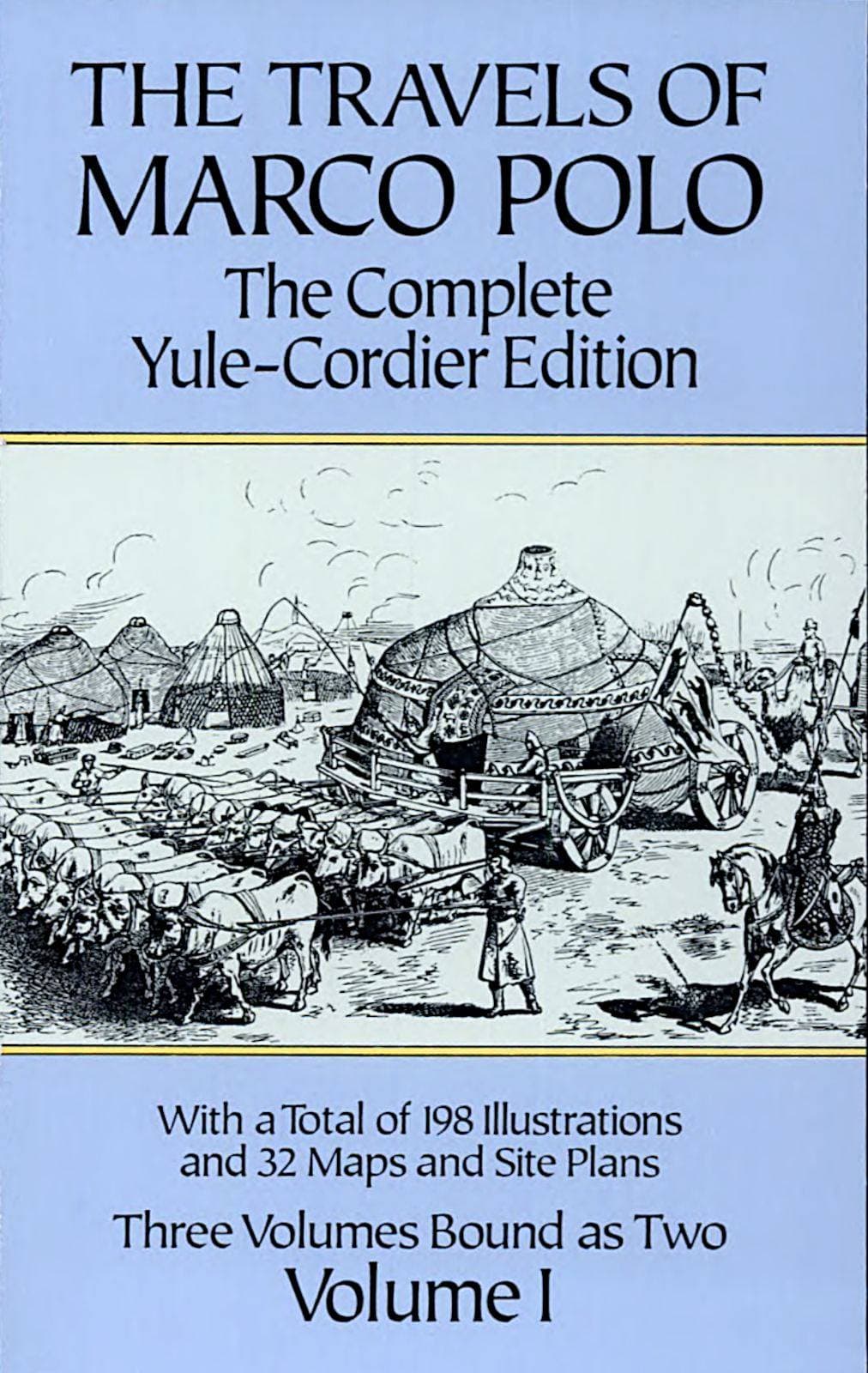
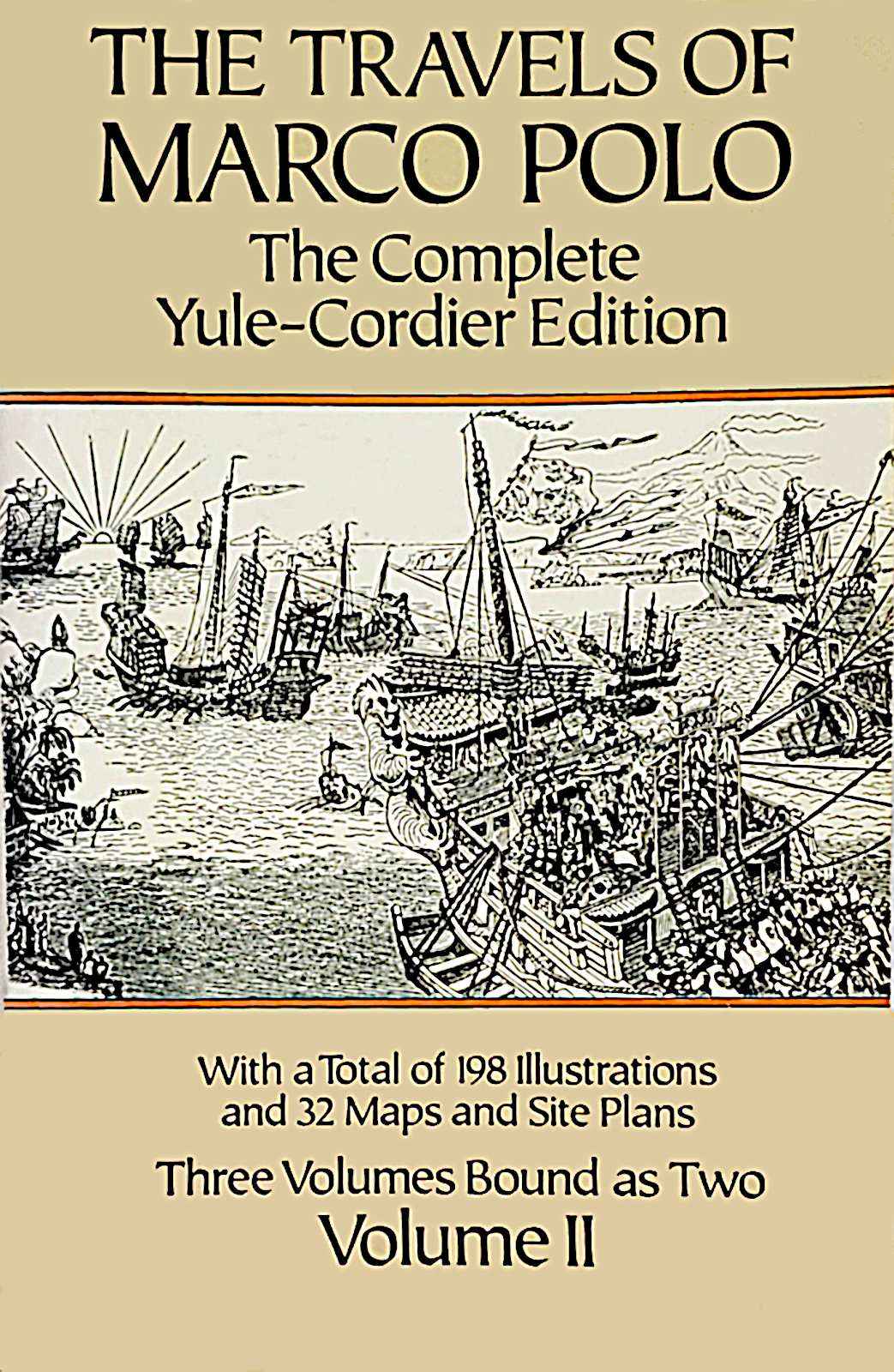
The Travels of Marco Polo — Volume 2
1298
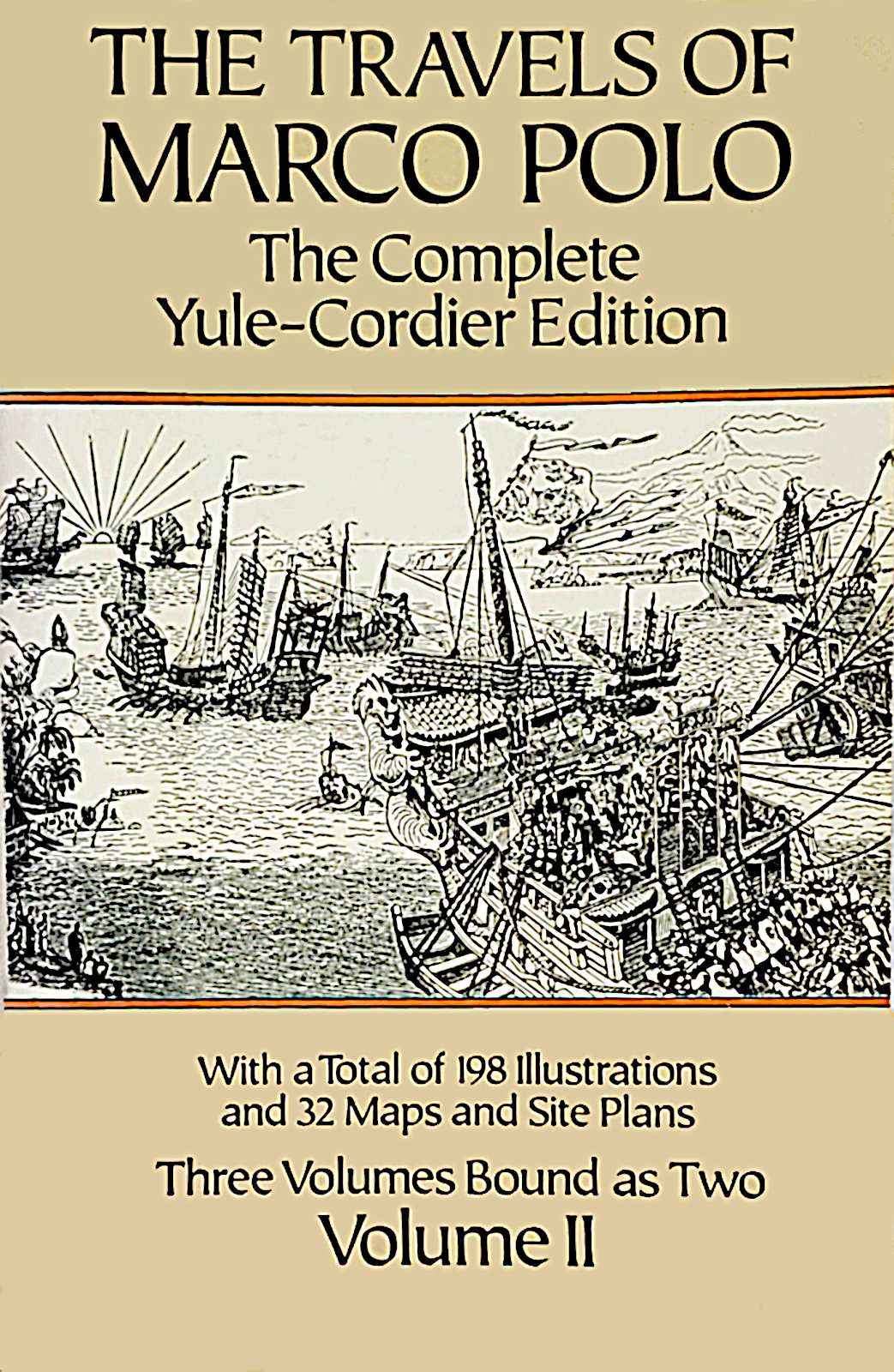
The Travels of Marco Polo — Volume 2
1298
Translated by Henry, Sir Yule
The second volume of Marco Polo's legendary account carries readers deeper into the Mongol empire's western reaches, where the Silk Road dissolved into a mosaic of sultanates, city-states, and territories no European had mapped. Polo departs from Cambaluc (modern Beijing) and pushes toward regions that would remain largely invisible to Western eyes for centuries. Here he catalogues Juju's silk workshops, the astonishing marble bridge spanning the Pulisanghin River, and trading practices that seemed to belong to another world. The prose alternates between sharp merchant's eye and medieval wonder: descriptions of spices, textiles, and wealth so vast they strain credulity. Polo insists he is telling the truth, yet some passages read as much as fantasy as fact. That tension is precisely where the book's power lies. This is the document that taught medieval Europe to dream of Cathay, the text that fired Columbus's imagination centuries later. It remains essential reading for anyone curious about how the West first learned to conceive of the East.
Editions
X-Ray
“We go naked because we want nothing of this world; for we came into the world naked and unclothed. As for not being ashamed to show our members, the fact is that we do no sin with them and therefore have no more shame in them than you have when you show your hand or face or the other parts of your body that do not lead you into carnal sin; whereas you use your members to commit sin and lechery, and so you cover them up and are ashamed of them. But we are no more ashamed of showing them than we are of showing our fingers, because we do not sin with them.””
— Marco Polo
“You will hear it for yourself, and it will surely fill you with wonder.””
— Marco Polo
“The personal appearance of the Great Kaan, Lord of Lords, whose name is Cublay, is such as I shall now tell you.””
— Marco Polo
“The inhabitants are all Idolaters. And I may as well remind you again [implied sigh?] that all the people of Cathay are Idolaters.””
— Marco Polo
“Moreover, no public woman resides inside the city, but all such abide outside in the suburbs. And 'tis wonderful what a vast number of these are for the foreigners; ...””
— Marco Polo
“If it be questioned how the population of the country can supply sufficient numbers of these duties, and by what means they can be supported, we may answer, that all the idolaters, and likewise the Saracens, keep six, eight, or ten women, according to their circumstances, by whom they have a prodigious number of children. Some of them have as many as thirty sons capable of following their fathers in arms; whereas with us a man has only one wife, and even although she should prove barren, he is obliged to pass his life with her, and is by that means deprived of the chance of raising a family. Hence it is that our population is so much inferior to theirs.””
— Marco Polo
“Есть у них чудной обычай, забыл о нем записать. Если у двух людей помрут, у одного сын лет четырех или около того, а у другого дочь, они их женят; мертвую девку дают в жены мертвому парню, потом пишут уговор и сжигают его, а когда дым поднимется на воздух, говорят, что уговор понесло на тот свет, к их детям, чтобы те почитали друг друга за мужа и жену. Играют свадьбу, разбросают еду там и сям и говорят, что это детям на тот свет. Делают вот еще что: нарисуют на бумаге на себя похожих людей, коней, ткани, бизанты, сбрую, а потом все это сжигают и говорят – все, что рисовали и сожгли, будет у их детей на том свете. А как кончат все это, почитают себя за родных и родство блюдут так же, как бы их дети были живы.Есть у них вот еще какой обычай: и царь, и его князья, да и все люди сидят на земле; а спросишь их, почему они не сядут попочетнее, отвечают они, что на земле сидеть всего почетнее: из земли мы вышли, туда вернемся; слишком много почтить землю никто не может, и никто не смеет ее презирать. Новорожденных раз в неделю мажут здесь сезамовым маслом, чтобы они чернели; они и родятся черными, но чем чернее человек, тем красивее он почитается. Своих богов и идолов они изображают и рисуют черными, чертей белыми, как снег. Бог, говорят они, и все его святые черны; это про своего бога и про своих святых они говорят; а черти, говорят, белы; поэтому и рисуют их такими, как вы слышали. Идолов, скажу вам еще, они также изображают черными."Наги мы, потому что ничего в мире не вожделеем; родились мы на свет без одежды, нагими. Не сознаем за собою плотского греха, а потому не стыдимся своей наготы, так точно, как вы не стыдитесь выставлять своей руки или своего лица. Вы прикрываете свою наготу и стыдитесь, потому что сознаете свой плотский грех".Так они отвечают тем, кто их спрашивает, отчего они не стыдятся ходить нагишом.””
— Marco Polo
“come from far-off Mongolia.””
— Marco Polo
About The Travels of Marco Polo — Volume 2
Chapter Summaries
- 35
- Marco Polo begins his account of traveling westward from Cambaluc on the Emperor's business. He describes the magnificent stone bridge over the Pulisanghin River, with its marble lions and columns, representing one of the finest bridges in the world.
- 36
- The journey continues to Juju (Cho-chau), a city known for silk production and trade. Here the road bifurcates, with one branch leading west through Cathay and another southeast toward Manzi, establishing the geographic framework for the narrative.
- 37
- Description of the journey through Taianfu (T'ai-yuan fu), famous for its wine production and military equipment manufacturing. The region is noted for its excellent vineyards and represents the only wine-producing area in Cathay.
Key Themes
- Cultural Exchange and Observation
- Marco Polo serves as a bridge between East and West, documenting customs, architecture, and social practices. His detailed observations of marriage customs, trade practices, and local traditions demonstrate the medieval fascination with exotic cultures.
- Political Power and Conquest
- The text explores the transition from independent kingdoms to Mongol imperial rule. The story of the Golden King's downfall illustrates how political power shifts through both military conquest and diplomatic maneuvering.
- Trade and Economic Networks
- Commerce forms the backbone of the societies described, from silk production to customs duties. The detailed accounts of trade routes, currencies, and commercial practices reveal the sophisticated economic systems of medieval Asia.
Characters
- Marco Polo(protagonist)
- Venetian traveler and narrator of this account, serving as an emissary for the Great Khan. He provides detailed observations of the lands, peoples, and customs he encounters during his westward journey through Cathay.
- Great Khan (Kublai Khan)(major)
- Mongol emperor who rules over vast territories including Cathay and Manzi. He sends Marco Polo on official business and maintains control over the regions described.
- Prester John(major)
- Legendary Christian ruler who captures and humiliates the Golden King. He represents the complex political dynamics between different kingdoms in the region.
- Golden King (Roi d'Or)(major)
- Ruler of a castle with beautiful palaces and portrait galleries. He is betrayed by his own trusted servants and captured by Prester John, representing the fall of the Kin Dynasty.
- Mangalai(major)
- Son of the Great Khan who rules the kingdom of Kenjanfu (Si-ngan fu) with justice and equity. He is beloved by his people and maintains a magnificent palace.
- Seventeen gallants(minor)
- Servants of Prester John who infiltrate the Golden King's court for two years before betraying him. They represent the theme of deception and political intrigue.
Link to this book
Add a free, dofollow link to Lex on your blog, forum, syllabus, or reading list.

<a href="https://lex-books.com/book/the-travels-of-marco-polo-volume-2-bef2d79d-746a-4e4c-835a-8b5347712f84"><img src="https://lex-books.com/badges/read-on-lex.svg" alt="Read The Travels of Marco Polo — Volume 2 by Marco Polo free on Lex" width="160" height="40"></a>[](https://lex-books.com/book/the-travels-of-marco-polo-volume-2-bef2d79d-746a-4e4c-835a-8b5347712f84)[url=https://lex-books.com/book/the-travels-of-marco-polo-volume-2-bef2d79d-746a-4e4c-835a-8b5347712f84][img]https://lex-books.com/badges/read-on-lex.svg[/img][/url]Read The Travels of Marco Polo — Volume 2 by Marco Polo free on Lex: https://lex-books.com/book/the-travels-of-marco-polo-volume-2-bef2d79d-746a-4e4c-835a-8b5347712f84Cite this book
Reading this edition for a paper or guide? Copy a citation.
Polo, Marco. The Travels of Marco Polo — Volume 2. Lex, lex-books.com/book/the-travels-of-marco-polo-volume-2-bef2d79d-746a-4e4c-835a-8b5347712f84.Polo, M. (1298). The Travels of Marco Polo — Volume 2. Lex. https://lex-books.com/book/the-travels-of-marco-polo-volume-2-bef2d79d-746a-4e4c-835a-8b5347712f84Polo, Marco. The Travels of Marco Polo — Volume 2. Lex. https://lex-books.com/book/the-travels-of-marco-polo-volume-2-bef2d79d-746a-4e4c-835a-8b5347712f84.