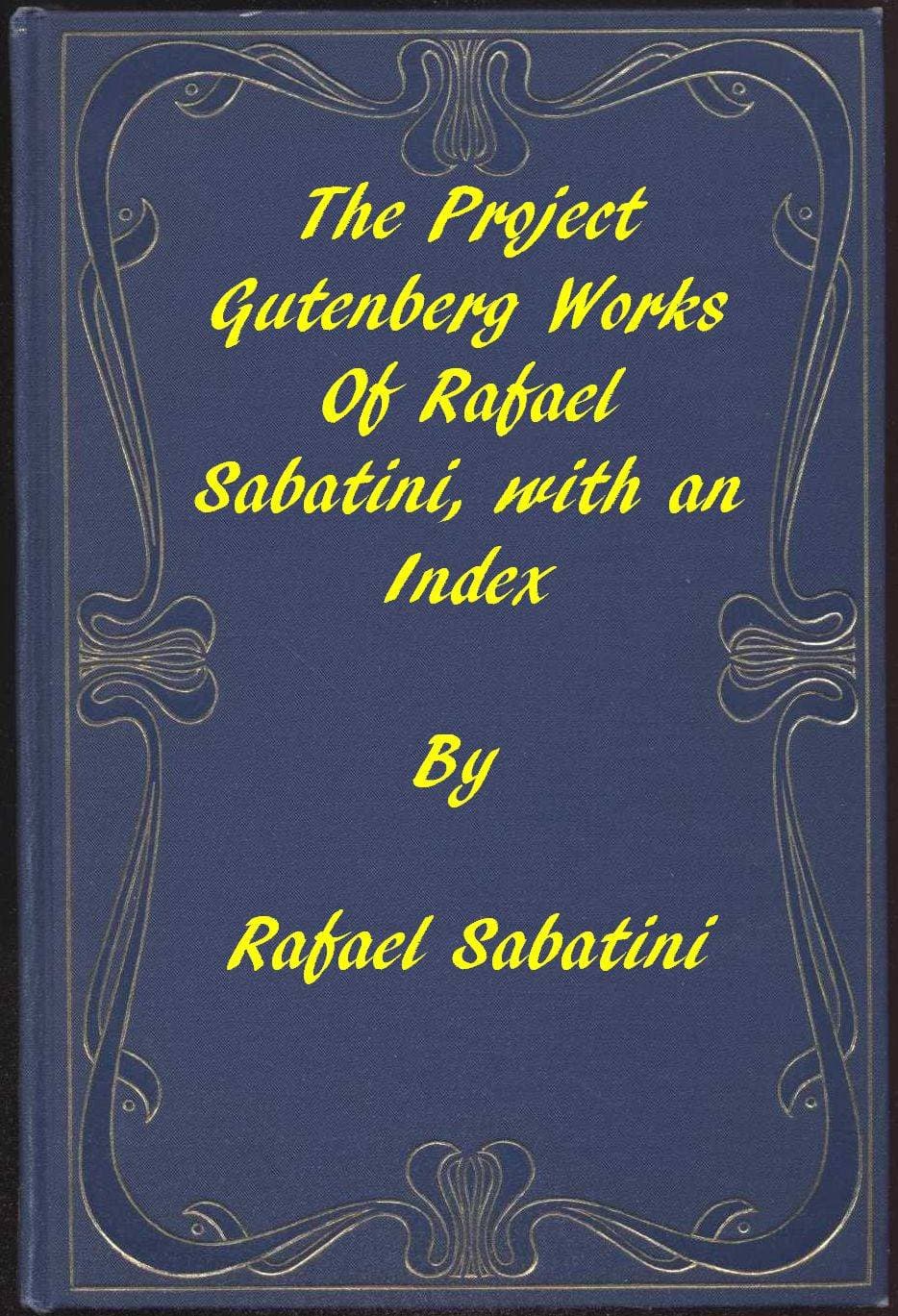
The Strolling Saint; Being the Confessions of the High and Mighty Agostino D'anguissola, Tyrant of Mondolfo and Lord of Carmina, in the State of Piacenza
1913
The Strolling Saint; Being the Confessions of the High and Mighty Agostino D'anguissola, Tyrant of Mondolfo and Lord of Carmina, in the State of Piacenza
1913
In Renaissance Italy, Agostino D'Anguissola inherits more than his father's lands, he inherits a war between faith and defiance. Born to a devout mother who vowed him to the Church before his first breath and a father who spat at Papal authority, Agostino enters a world already shaped by contradiction. His mother's saintly name, Monica, becomes in his eyes the root of all his suffering: a woman who saw heaven in her son's future, and a man who saw only the earth he meant to conquer. The title is ironic: this is no saint, but a tyrant of Mondolfo, a lord who rules with the sword yet cannot escape the ghost of his mother's prayers. Sabatini constructs this as confession, a man looking back at the chains forged in childhood, the confinement, the wounds of identity, the long battle between duty and the blood that screams for freedom. It is Renaissance Italy rendered in shadow and velvet, where politics is warfare by other means and family is both prison and battleground. For readers who relish the intellectual swashbuckling of Sabatini at his most psychological: here is a man who stalked the earth and nonetheless found himself the defendant in his own trial of conscience.
Editions
Link to this book
Add a free, dofollow link to Lex on your blog, forum, syllabus, or reading list.

<a href="https://lex-books.com/book/the-strolling-saint-being-the-confessions-of-the-high-and-mighty-agostino-d-angu-3ea50412-bc03-4461-8960-8b93e55a6828"><img src="https://lex-books.com/badges/read-on-lex.svg" alt="Read The Strolling Saint; Being the Confessions of the High and Mighty Agostino D'anguissola, Tyrant of Mondolfo and Lord of Carmina, in the State of Piacenza by Rafael Sabatini free on Lex" width="160" height="40"></a>[](https://lex-books.com/book/the-strolling-saint-being-the-confessions-of-the-high-and-mighty-agostino-d-angu-3ea50412-bc03-4461-8960-8b93e55a6828)[url=https://lex-books.com/book/the-strolling-saint-being-the-confessions-of-the-high-and-mighty-agostino-d-angu-3ea50412-bc03-4461-8960-8b93e55a6828][img]https://lex-books.com/badges/read-on-lex.svg[/img][/url]Read The Strolling Saint; Being the Confessions of the High and Mighty Agostino D'anguissola, Tyrant of Mondolfo and Lord of Carmina, in the State of Piacenza by Rafael Sabatini free on Lex: https://lex-books.com/book/the-strolling-saint-being-the-confessions-of-the-high-and-mighty-agostino-d-angu-3ea50412-bc03-4461-8960-8b93e55a6828Cite this book
Reading this edition for a paper or guide? Copy a citation.
Sabatini, Rafael. The Strolling Saint; Being the Confessions of the High and Mighty Agostino D'anguissola, Tyrant of Mondolfo and Lord of Carmina, in the State of Piacenza. Lex, lex-books.com/book/the-strolling-saint-being-the-confessions-of-the-high-and-mighty-agostino-d-angu-3ea50412-bc03-4461-8960-8b93e55a6828.Sabatini, R. (1913). The Strolling Saint; Being the Confessions of the High and Mighty Agostino D'anguissola, Tyrant of Mondolfo and Lord of Carmina, in the State of Piacenza. Lex. https://lex-books.com/book/the-strolling-saint-being-the-confessions-of-the-high-and-mighty-agostino-d-angu-3ea50412-bc03-4461-8960-8b93e55a6828Sabatini, Rafael. The Strolling Saint; Being the Confessions of the High and Mighty Agostino D'anguissola, Tyrant of Mondolfo and Lord of Carmina, in the State of Piacenza. Lex. https://lex-books.com/book/the-strolling-saint-being-the-confessions-of-the-high-and-mighty-agostino-d-angu-3ea50412-bc03-4461-8960-8b93e55a6828.