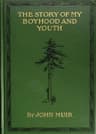
The Story of My Boyhood and Youth
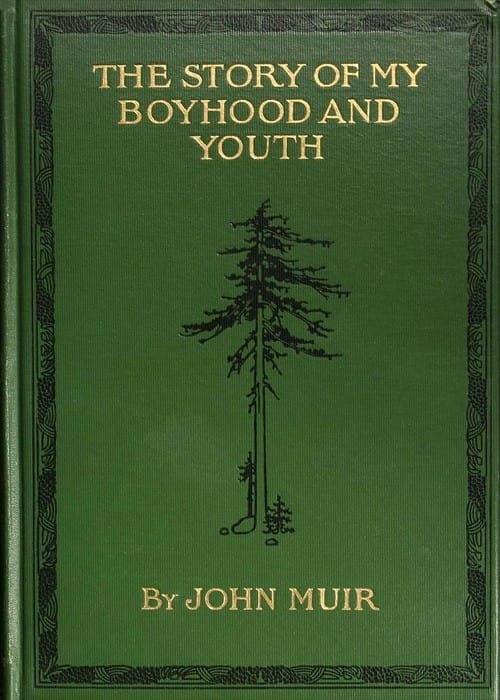
The Story of My Boyhood and Youth is an autobiographical memoir by John Muir, published in 1913. It recounts Muir's early life in Scotland and his family's immigration to America when he was eleven. The narrative emphasizes his deep connection to nature, detailing his childhood adventures and the formative experiences that ignited his passion for the environment. Muir's reflections provide insight into the influences that shaped him into a prominent naturalist and conservationist, known for his role in establishing the Sierra Club and advocating for national parks.
Editions
X-Ray
“Word lessons in particular, the wouldst-couldst-shouldst-have-loved kind, were kept up, with much warlike thrashing, until I had committed the whole of the French, Latin, and English grammars to memory, and in connection with reading-lessons we were called on to recite parts of them with the rules over and over again, as if all the regular and irregular incomprehensible verb stuff was poetry. In addition to all this, father made me learn so many Bible verses every day that by the time I was eleven years of age I had about three fourths of the Old Testament and all of the New by heart and by sore flesh. I could recite the New Testament from the beginning of Matthew to the end of Revelation without a single stop. The dangers of cramming and of making scholars study at home instead of letting their little brains rest were never heard of in those days. We carried our school-books home in a strap every night and committed to memory our next day’s lessons before we went to bed, and to do that we had to bend our attention as closely on our tasks as lawyers on great million-dollar cases. I can’t conceive of anything that would now enable me to concentrate my attention more fully than when I was a mere stripling boy, and it was all done by whipping,”
— John Muir
“A little pure wildness is the one great present want, both of men and sheep.””
— John Muir
“But the Douglas, with his denser body, leaps and glides in hidden strength, seemingly as independent of common muscles as a mountain stream. He threads the tasseled branches of the pines, stirring their needles like a rustling breeze; now shooting across openings in arrowy lines; now launching in curves, glinting deftly from side to side in sudden zigzags, and swirling in giddy loops and spirals around the knotty trunks; getting into what seem to be the most impossible situations without sense of danger; now on his haunches, now on his head; yet ever graceful, and punctuating his most irrepressible outbursts of energy with little dots and dashes of perfect repose. He is, without exception, the wildest animal I ever saw,”
— John Muir
“We are now in the mountains and they are in us, kindling enthusiasm, making every nerve quiver, filling every pore and cell of us. Our flesh-and-bone tabernacle seems transparent as glass to the beauty about us, as if truly an inseparable part of it, thrilling with the air and trees, streams and rocks, in the waves of the sun,”
— John Muir
“so much like wild beasts are baby boys, little fighting, biting, climbing pagans.””
— John Muir
“So far from complete at times is sympathy between parents and children, and so much like wild beasts are baby boys, little fighting, biting, climbing pagans.””
— John Muir
Link to this book
Add a free, dofollow link to Lex on your blog, forum, syllabus, or reading list.

<a href="https://lex-books.com/book/the-story-of-my-boyhood-and-youth-f7edff9d-94af-41d9-844d-69533e75542e"><img src="https://lex-books.com/badges/read-on-lex.svg" alt="Read The Story of My Boyhood and Youth by John Muir free on Lex" width="160" height="40"></a>[](https://lex-books.com/book/the-story-of-my-boyhood-and-youth-f7edff9d-94af-41d9-844d-69533e75542e)[url=https://lex-books.com/book/the-story-of-my-boyhood-and-youth-f7edff9d-94af-41d9-844d-69533e75542e][img]https://lex-books.com/badges/read-on-lex.svg[/img][/url]Read The Story of My Boyhood and Youth by John Muir free on Lex: https://lex-books.com/book/the-story-of-my-boyhood-and-youth-f7edff9d-94af-41d9-844d-69533e75542eCite this book
Reading this edition for a paper or guide? Copy a citation.
Muir, John. The Story of My Boyhood and Youth. Lex, lex-books.com/book/the-story-of-my-boyhood-and-youth-f7edff9d-94af-41d9-844d-69533e75542e.Muir, J. (n.d.). The Story of My Boyhood and Youth. Lex. https://lex-books.com/book/the-story-of-my-boyhood-and-youth-f7edff9d-94af-41d9-844d-69533e75542eMuir, John. The Story of My Boyhood and Youth. Lex. https://lex-books.com/book/the-story-of-my-boyhood-and-youth-f7edff9d-94af-41d9-844d-69533e75542e.