The Story of Flamenca: The First Modern Novel, Arranged from the Provençal Original of the Thirteenth Century by William Aspenwall Bradley
1922
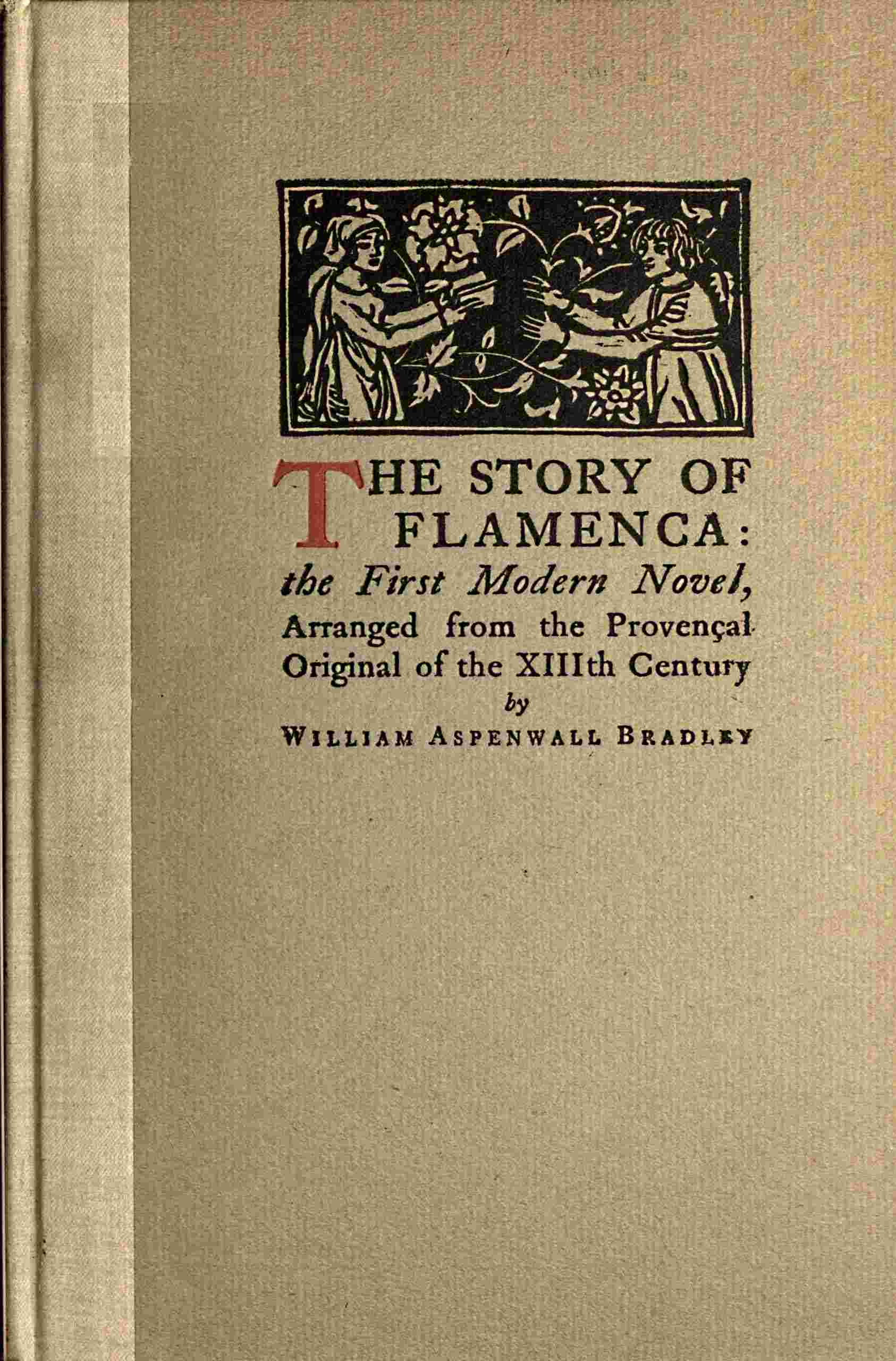
The Story of Flamenca: The First Modern Novel, Arranged from the Provençal Original of the Thirteenth Century by William Aspenwall Bradley
1922
Translated by William Aspenwall Bradley
Dating from the early thirteenth century, this fragmentary Provençal romance makes a startling claim: it is the first modern novel. The assertion is less hyperbole than revelation. Here is a story that thinks like a novel,obsessing over the psychology of jealousy, the theater of social performance, and the private rebellions possible even within gilded cages. Flamenca, daughter of a noble house, has been married to Archambaut, a man whose passion curdles into possession. He locks her away, fearing the world will covet what he owns. But beauty is its own kind of prison, and Guillem de Nevers, a knight passing through, glimpses her at chapel and loses his heart to her solitude. What unfolds is a deliciouslywitty campaign of stolen glances, whispered messages, and ever-more-elaborate schemes to outwit a jealous husband who is himself both pitiable and monstrous. The prose has a lightness that surprises: this is no heavy medieval sermon but a sophisticated comedy of manners, interested in desire as a game, love as strategy, and women as far cleverer than the men who presume to contain them. It survives incomplete, its beginning and ending lost, yet what remains feels startlingly alive.
Editions
Link to this book
Add a free, dofollow link to Lex on your blog, forum, syllabus, or reading list.

<a href="https://lex-books.com/book/the-story-of-flamenca-the-first-modern-novel-arranged-from-the-proven-al-origina-22944e8d-5e99-4fa4-acd6-02b94b7f521e"><img src="https://lex-books.com/badges/read-on-lex.svg" alt="Read The Story of Flamenca: The First Modern Novel, Arranged from the Provençal Original of the Thirteenth Century by William Aspenwall Bradley by Unknown free on Lex" width="160" height="40"></a>[](https://lex-books.com/book/the-story-of-flamenca-the-first-modern-novel-arranged-from-the-proven-al-origina-22944e8d-5e99-4fa4-acd6-02b94b7f521e)[url=https://lex-books.com/book/the-story-of-flamenca-the-first-modern-novel-arranged-from-the-proven-al-origina-22944e8d-5e99-4fa4-acd6-02b94b7f521e][img]https://lex-books.com/badges/read-on-lex.svg[/img][/url]Read The Story of Flamenca: The First Modern Novel, Arranged from the Provençal Original of the Thirteenth Century by William Aspenwall Bradley by Unknown free on Lex: https://lex-books.com/book/the-story-of-flamenca-the-first-modern-novel-arranged-from-the-proven-al-origina-22944e8d-5e99-4fa4-acd6-02b94b7f521eCite this book
Reading this edition for a paper or guide? Copy a citation.
Unknown. The Story of Flamenca: The First Modern Novel, Arranged from the Provençal Original of the Thirteenth Century by William Aspenwall Bradley. Lex, lex-books.com/book/the-story-of-flamenca-the-first-modern-novel-arranged-from-the-proven-al-origina-22944e8d-5e99-4fa4-acd6-02b94b7f521e.Unknown (1922). The Story of Flamenca: The First Modern Novel, Arranged from the Provençal Original of the Thirteenth Century by William Aspenwall Bradley. Lex. https://lex-books.com/book/the-story-of-flamenca-the-first-modern-novel-arranged-from-the-proven-al-origina-22944e8d-5e99-4fa4-acd6-02b94b7f521eUnknown. The Story of Flamenca: The First Modern Novel, Arranged from the Provençal Original of the Thirteenth Century by William Aspenwall Bradley. Lex. https://lex-books.com/book/the-story-of-flamenca-the-first-modern-novel-arranged-from-the-proven-al-origina-22944e8d-5e99-4fa4-acd6-02b94b7f521e.