The Spell
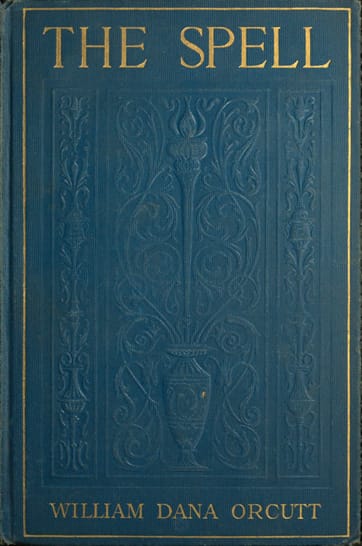
A newlywed couple's Italian honeymoon becomes a quiet battlefield of incompatible passions. Jack Armstrong, a scholar of classical antiquity, wanders through Tuscany and Florence as though retracing the footsteps of the ancients, intoxicated by the weight of history. His young wife Helen adores him but finds herself suffocated by his relentless devotion to the dead past, his endless lectures on humanism and the classics, when she longs only to live fully in the present moment. As they navigate the honey-lit streets of Florence and the sun-baked hills of the Italian countryside, their marriage reveals itself to be a negotiation between two irreconcilable ways of being. Orcutt, writing in 1909, captures with sharp, tender precision the particular loneliness of loving someone whose true attachments lie elsewhere, in centuries-old texts and ruined temples, while a living wife stands beside them, yearning to be seen. The Spell is a period piece in the finest sense: a meditation on what it means to share a life with a person who loves the idea of the past more than the reality of the present.
Editions
Link to this book
Add a free, dofollow link to Lex on your blog, forum, syllabus, or reading list.

<a href="https://lex-books.com/book/the-spell-08eb451c-d883-432e-a8c4-99ac009d5884"><img src="https://lex-books.com/badges/read-on-lex.svg" alt="Read The Spell by William Dana Orcutt free on Lex" width="160" height="40"></a>[](https://lex-books.com/book/the-spell-08eb451c-d883-432e-a8c4-99ac009d5884)[url=https://lex-books.com/book/the-spell-08eb451c-d883-432e-a8c4-99ac009d5884][img]https://lex-books.com/badges/read-on-lex.svg[/img][/url]Read The Spell by William Dana Orcutt free on Lex: https://lex-books.com/book/the-spell-08eb451c-d883-432e-a8c4-99ac009d5884Cite this book
Reading this edition for a paper or guide? Copy a citation.
Orcutt, William Dana. The Spell. Lex, lex-books.com/book/the-spell-08eb451c-d883-432e-a8c4-99ac009d5884.Orcutt, W. D. (n.d.). The Spell. Lex. https://lex-books.com/book/the-spell-08eb451c-d883-432e-a8c4-99ac009d5884Orcutt, William Dana. The Spell. Lex. https://lex-books.com/book/the-spell-08eb451c-d883-432e-a8c4-99ac009d5884.