The Prolongation of Life: Optimistic Studies
1907
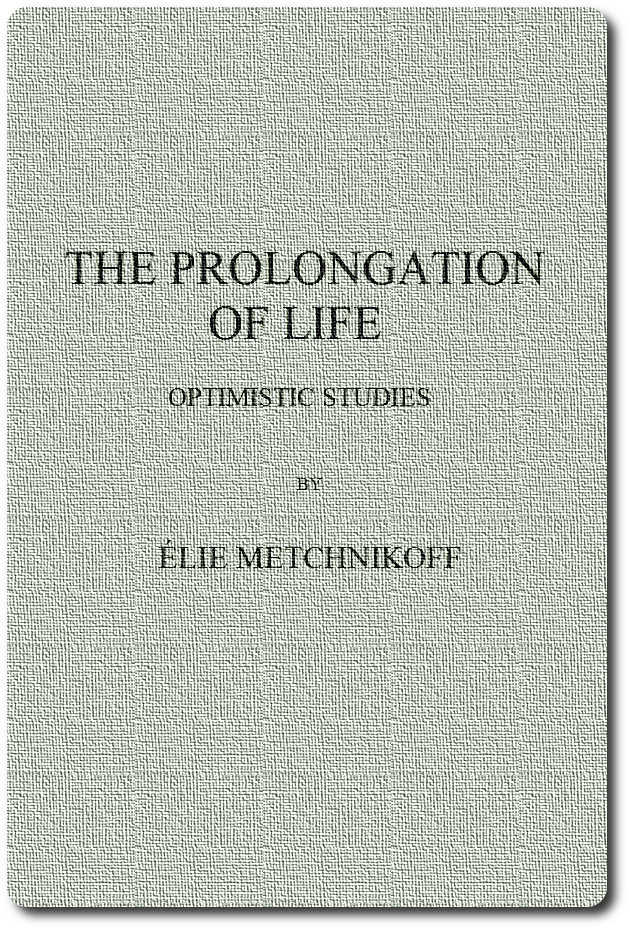
The Prolongation of Life: Optimistic Studies
1907
A Nobel laureate biologist's visionary argument that death is not inevitable and aging can be conquered through science. Written in 1907, this groundbreaking work established the foundations of modern gerontology while challenging humanity's fatalistic acceptance of senescence. Metchnikoff, the father of immunology, observed that different cultures treat the elderly with startling variety - from ancient practices of killing the old to modern neglect - and argued this reveals our resignation to a fate he believed was not fixed. Drawing on his revolutionary understanding of immunity and cellular biology, he proposed that 'autointoxication' from the colon, combined with dietary and lifestyle factors, drives much of what we call aging. His solution: fermented milk, vegetarian diets, and what he termed 'orthobiosis' - right living. Some of his theories now seem eccentric, others surprisingly prescient. Yet what elevates this book beyond its scientific specifics is its audacious claim: that mortality itself might yield to rational inquiry. For anyone curious about where the science of longevity began, or who wonders what turn-of-the-century optimism looked like applied to humanity's deepest mystery, this remains an astonishing document.
Editions
Link to this book
Add a free, dofollow link to Lex on your blog, forum, syllabus, or reading list.

<a href="https://lex-books.com/book/the-prolongation-of-life-optimistic-studies-23312d4a-037b-4ec6-865a-fa83afa2822b"><img src="https://lex-books.com/badges/read-on-lex.svg" alt="Read The Prolongation of Life: Optimistic Studies by Elie Metchnikoff free on Lex" width="160" height="40"></a>[](https://lex-books.com/book/the-prolongation-of-life-optimistic-studies-23312d4a-037b-4ec6-865a-fa83afa2822b)[url=https://lex-books.com/book/the-prolongation-of-life-optimistic-studies-23312d4a-037b-4ec6-865a-fa83afa2822b][img]https://lex-books.com/badges/read-on-lex.svg[/img][/url]Read The Prolongation of Life: Optimistic Studies by Elie Metchnikoff free on Lex: https://lex-books.com/book/the-prolongation-of-life-optimistic-studies-23312d4a-037b-4ec6-865a-fa83afa2822bCite this book
Reading this edition for a paper or guide? Copy a citation.
Metchnikoff, Elie. The Prolongation of Life: Optimistic Studies. Lex, lex-books.com/book/the-prolongation-of-life-optimistic-studies-23312d4a-037b-4ec6-865a-fa83afa2822b.Metchnikoff, E. (1907). The Prolongation of Life: Optimistic Studies. Lex. https://lex-books.com/book/the-prolongation-of-life-optimistic-studies-23312d4a-037b-4ec6-865a-fa83afa2822bMetchnikoff, Elie. The Prolongation of Life: Optimistic Studies. Lex. https://lex-books.com/book/the-prolongation-of-life-optimistic-studies-23312d4a-037b-4ec6-865a-fa83afa2822b.