The Montessori Elementary Material: The Advanced Montessori Method
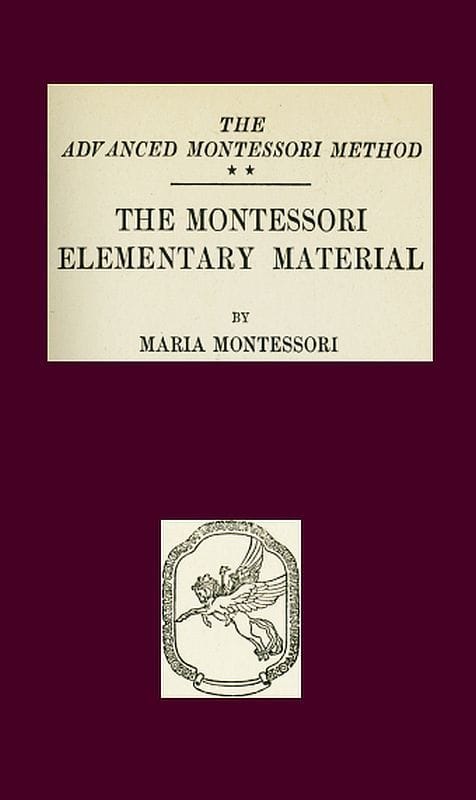
The Montessori Elementary Material: The Advanced Montessori Method
Translated by Arthur Livingston
In 1907, a young Italian physician revolutionized education by opening a Casa dei Bambini in Rome, proving that children, given the right environment, would teach themselves. This book is the meticulous record of what she discovered. Montessori's genius lay not in lecturing children, but in watching them and then building the materials that answered their developmental needs. Here she details the colored alphabets that transform grammar into a tactile puzzle, the number rods that make mathematics physical, the reading materials that unlock language through discovery rather than drill. What emerges is a profound argument: that children possess an "absorbent mind" capable of effortless acquisition, if we trust them enough to provide the right tools. For anyone who has watched a child struggle with traditional methods, or who wonders why learning feels like labor instead of joy, this book offers both a philosophy and a practical blueprint. A century later, Montessori schools span the globe, but this text remains the essential manual for understanding why her approach works.
Editions
Link to this book
Add a free, dofollow link to Lex on your blog, forum, syllabus, or reading list.

<a href="https://lex-books.com/book/the-montessori-elementary-material-the-advanced-montessori-method-fd9e6797-7b6e-4a84-a99f-d1c4f787cc66"><img src="https://lex-books.com/badges/read-on-lex.svg" alt="Read The Montessori Elementary Material: The Advanced Montessori Method by Maria Montessori free on Lex" width="160" height="40"></a>[](https://lex-books.com/book/the-montessori-elementary-material-the-advanced-montessori-method-fd9e6797-7b6e-4a84-a99f-d1c4f787cc66)[url=https://lex-books.com/book/the-montessori-elementary-material-the-advanced-montessori-method-fd9e6797-7b6e-4a84-a99f-d1c4f787cc66][img]https://lex-books.com/badges/read-on-lex.svg[/img][/url]Read The Montessori Elementary Material: The Advanced Montessori Method by Maria Montessori free on Lex: https://lex-books.com/book/the-montessori-elementary-material-the-advanced-montessori-method-fd9e6797-7b6e-4a84-a99f-d1c4f787cc66Cite this book
Reading this edition for a paper or guide? Copy a citation.
Montessori, Maria. The Montessori Elementary Material: The Advanced Montessori Method. Lex, lex-books.com/book/the-montessori-elementary-material-the-advanced-montessori-method-fd9e6797-7b6e-4a84-a99f-d1c4f787cc66.Montessori, M. (n.d.). The Montessori Elementary Material: The Advanced Montessori Method. Lex. https://lex-books.com/book/the-montessori-elementary-material-the-advanced-montessori-method-fd9e6797-7b6e-4a84-a99f-d1c4f787cc66Montessori, Maria. The Montessori Elementary Material: The Advanced Montessori Method. Lex. https://lex-books.com/book/the-montessori-elementary-material-the-advanced-montessori-method-fd9e6797-7b6e-4a84-a99f-d1c4f787cc66.