The Mongols: A History
1907
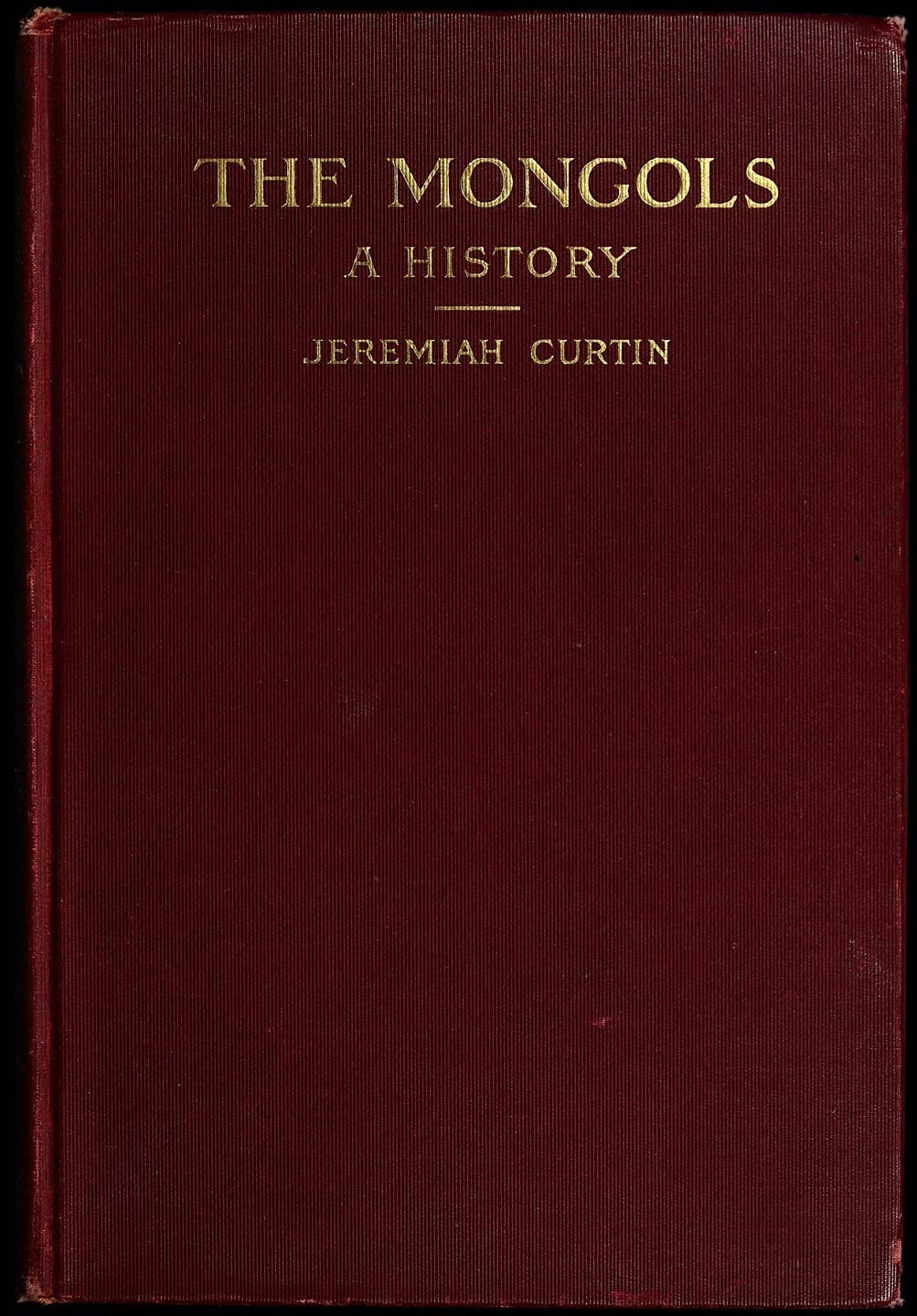
Few empires have reshaped the world as violently or as permanently as the Mongol Empire. Jeremiah Curtin's 1907 history traces the remarkable journey of Temudjin from orphaned outcast to Genghis Khan, the man who would unite the warring steppe tribes and forge a dominion stretching from China to Poland. Curtin writes with the dramatic sensibility of his era, rendering the frozen Mongolian plains, the brutal clan warfare, and the cunning political marriages that launched history's most terrifying military machine. The book examines how a people shaped by famine, raiders, and impossible winters became the architects of continental conquest, and how their tolerance of conquered peoples' religions and customs briefly made them as effective administrators as they were ruthless warriors. Though written over a century ago, this work captures something many modern histories lose: the sheer astonishment of how a handful of nomads on horseback dismantled every army sent against them.
Editions
X-Ray
“corner of the Empire and touched on the Naimans. These Uigurs are famous, at least among scholars, as having been the most devoted to learning of all Turkish nations; from them it was that the Mongols received an alphabet and their earliest instruction. The Idikut, or ruler, of the Uigurs acknowledged the Gurkhan as overlord, but the yearly tribute which he paid, and the daily””
— Jeremiah Curtin
“benefaction.””
— Jeremiah Curtin
Link to this book
Add a free, dofollow link to Lex on your blog, forum, syllabus, or reading list.

<a href="https://lex-books.com/book/the-mongols-a-history-49d2c687-6b77-4657-8c52-2619828cff26"><img src="https://lex-books.com/badges/read-on-lex.svg" alt="Read The Mongols: A History by Jeremiah Curtin free on Lex" width="160" height="40"></a>[](https://lex-books.com/book/the-mongols-a-history-49d2c687-6b77-4657-8c52-2619828cff26)[url=https://lex-books.com/book/the-mongols-a-history-49d2c687-6b77-4657-8c52-2619828cff26][img]https://lex-books.com/badges/read-on-lex.svg[/img][/url]Read The Mongols: A History by Jeremiah Curtin free on Lex: https://lex-books.com/book/the-mongols-a-history-49d2c687-6b77-4657-8c52-2619828cff26Cite this book
Reading this edition for a paper or guide? Copy a citation.
Curtin, Jeremiah. The Mongols: A History. Lex, lex-books.com/book/the-mongols-a-history-49d2c687-6b77-4657-8c52-2619828cff26.Curtin, J. (1907). The Mongols: A History. Lex. https://lex-books.com/book/the-mongols-a-history-49d2c687-6b77-4657-8c52-2619828cff26Curtin, Jeremiah. The Mongols: A History. Lex. https://lex-books.com/book/the-mongols-a-history-49d2c687-6b77-4657-8c52-2619828cff26.