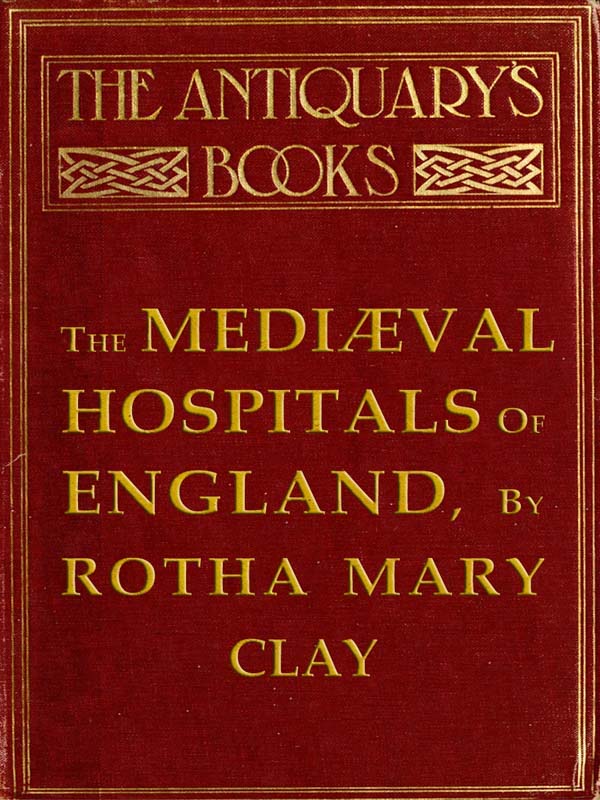
The Mediæval Hospitals of England
1909
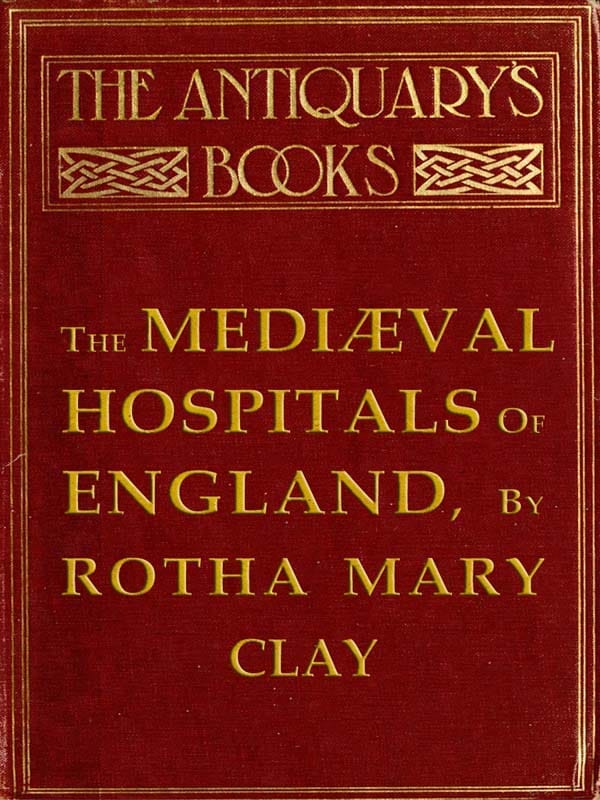
The Mediæval Hospitals of England
1909
Long before the NHS, medieval England built a network of hospitals that looked nothing like what we would recognize today. Rotha Mary Clay's 1909 study reveals institutions that were confessional spaces as much as places of healing, founded by the Church to shelter lepers, pilgrims, the destitute, and the dying. These hospitals offered not medicine but sustenance, prayer, and a dignified end for those society had abandoned. Through charters and manuscripts, Clay reconstructs a world where charity was liturgy and care was crusade. St. Bartholomew's and St. Thomas' emerge not as medical pioneers but as sanctuaries of last resort, their wards chapels and their nurses almoners. For anyone curious about where our hospitals came from, or how medieval Christians understood the corporal works of mercy, this scholarly excavation offers an illuminating window into an era when healing the body meant saving the soul.
Editions
X-Ray
The author and historian who compiled this comprehensive study of medieval hospitals in England. She demonstrates extensive research and scholarly dedication to documenting these charitable institutions.
G. F. Bristol who wrote the preface, praising Clay's work and emphasizing the importance of studying ordinary people's history rather than just kings and generals.
Norman Archbishop of Canterbury who founded hospitals at Canterbury and Harbledown. A pioneer in establishing charitable institutions in post-Conquest England.
Wife of Henry I, known as 'holy Queen Maud' for her charitable work with lepers. She personally served lepers, washing and kissing their feet.
About The Mediæval Hospitals of England
Chapter Summaries
- Introduction
- Clay establishes that medieval hospitals were ecclesiastical rather than medical institutions, focused on care rather than cure. She outlines the scope of over 750 charitable institutions in medieval England and explains the book's methodology and limitations.
- 1
- Traces the development of hospitals from Saxon times through four periods, showing how they evolved from simple hostels to institutions serving pilgrims, the sick, and eventually addressing vagrancy problems.
- 2
- Examines almshouses in cities, boroughs, and private foundations, including specialized homes for Jews, clergy, gentlefolk, women, and children. Shows the evolution from temporary to permanent relief institutions.
Key Themes
- Christian Charity and Social Responsibility
- The book demonstrates how medieval Christianity motivated extensive charitable works, with hospitals serving as practical expressions of the Seven Works of Mercy and Christian duty to care for the poor and sick.
- Disease and Social Exclusion
- Particularly through the study of leper hospitals, the work examines how medieval society dealt with contagious disease, balancing compassion with public health concerns and the social isolation of the afflicted.
- Institutional Evolution and Decline
- The narrative traces how hospitals evolved from simple hospices to complex institutions, then declined due to economic pressures, corruption, and ultimately the Dissolution of religious houses.
Characters
- Rotha Mary Clay(protagonist)
- The author and historian who compiled this comprehensive study of medieval hospitals in England. She demonstrates extensive research and scholarly dedication to documenting these charitable institutions.
- Lord Bishop of Bristol(major)
- G. F. Bristol who wrote the preface, praising Clay's work and emphasizing the importance of studying ordinary people's history rather than just kings and generals.
- Lanfranc(major)
- Norman Archbishop of Canterbury who founded hospitals at Canterbury and Harbledown. A pioneer in establishing charitable institutions in post-Conquest England.
- Queen Maud(major)
- Wife of Henry I, known as 'holy Queen Maud' for her charitable work with lepers. She personally served lepers, washing and kissing their feet.
- Rahere(major)
- Court minstrel turned priest who founded St. Bartholomew's Hospital, Smithfield. Born of low lineage but became a dedicated hospital founder after a vision.
- Henry III(major)
- King who founded multiple hospitals including houses for converted Jews in London and Oxford. Actively involved in charitable works.
Link to this book
Add a free, dofollow link to Lex on your blog, forum, syllabus, or reading list.

<a href="https://lex-books.com/book/the-medi-val-hospitals-of-england-e5d592a8-4c9a-4ae6-a435-b31642090bd3"><img src="https://lex-books.com/badges/read-on-lex.svg" alt="Read The Mediæval Hospitals of England by Rotha Mary Clay free on Lex" width="160" height="40"></a>[](https://lex-books.com/book/the-medi-val-hospitals-of-england-e5d592a8-4c9a-4ae6-a435-b31642090bd3)[url=https://lex-books.com/book/the-medi-val-hospitals-of-england-e5d592a8-4c9a-4ae6-a435-b31642090bd3][img]https://lex-books.com/badges/read-on-lex.svg[/img][/url]Read The Mediæval Hospitals of England by Rotha Mary Clay free on Lex: https://lex-books.com/book/the-medi-val-hospitals-of-england-e5d592a8-4c9a-4ae6-a435-b31642090bd3Cite this book
Reading this edition for a paper or guide? Copy a citation.
Clay, Rotha Mary. The Mediæval Hospitals of England. Lex, lex-books.com/book/the-medi-val-hospitals-of-england-e5d592a8-4c9a-4ae6-a435-b31642090bd3.Clay, R. M. (1909). The Mediæval Hospitals of England. Lex. https://lex-books.com/book/the-medi-val-hospitals-of-england-e5d592a8-4c9a-4ae6-a435-b31642090bd3Clay, Rotha Mary. The Mediæval Hospitals of England. Lex. https://lex-books.com/book/the-medi-val-hospitals-of-england-e5d592a8-4c9a-4ae6-a435-b31642090bd3.