The Mausoleum at Halicarnassus Restored in Conformity with the Recently Discovered Remains
1862
The Mausoleum at Halicarnassus Restored in Conformity with the Recently Discovered Remains
1862
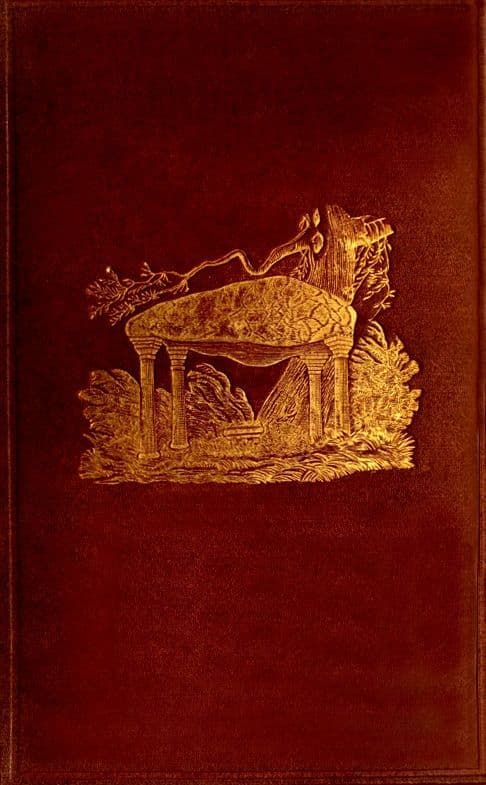
A detailed architectural account written in the mid-19th century. The text focuses on the historical significance and restoration of the Mausoleum at Halicarnassus, once considered one of the Seven Wonders of the Ancient World, and examines the body's design and construction based on ancient descriptions and archaeological discoveries.'' ''At the start of the book, the author introduces the subject of the Mausoleum, highlighting the architectural mystery surrounding it and the desire of various architects to reconstruct its appearance. Fergusson references ancient texts by authors like Pliny and Vitruvius, which, despite their inaccuracies, serve as a foundation for the restoration effort. He discusses recent archaeological discoveries made in the ruins of Halicarnassus, which have provided new insights and materials necessary for an accurate reconstruction of this monumental edifice.''
Editions
X-Ray
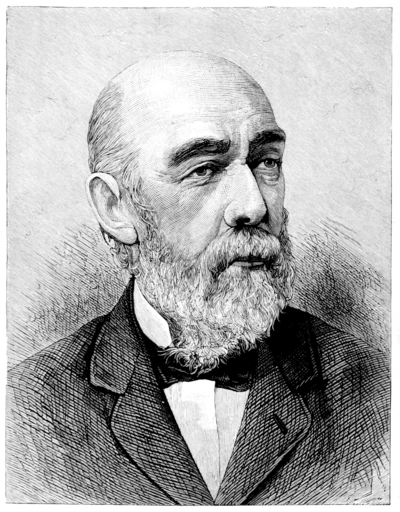
The author and architectural scholar attempting to restore the Mausoleum. A Fellow of the Royal Institute of British Architects with expertise in classical architecture and proportional systems.
King of Caria who died in 353 BC, for whom the Mausoleum was built. A Persian satrap who acknowledged Artaxerxes as late as 355 BC.
Queen of Caria and wife of Mausolus who commissioned the Mausoleum in his honor. Died before the monument's completion but the artists continued their work.
British archaeologist and former British Museum officer who discovered the true site of the Mausoleum and led the excavations from 1856-1859.
About The Mausoleum at Halicarnassus Restored in Conformity with the Recently Discovered Remains
Chapter Summaries
- Introduction
- Fergusson introduces the Mausoleum at Halicarnassus as the most intriguing of the Seven Wonders, explaining how it was admired for beauty rather than size. He describes the history of failed restoration attempts and the recent archaeological discoveries by Charles Newton.
- 1
- Fergusson outlines four types of evidence for restoration: ancient texts (especially Pliny), archaeological remains from Newton's excavations, comparable tombs in Asia and Africa, and Greek proportional systems. He provides detailed analysis of Pliny's description and the Knights of St. John's account of the building's destruction.
- 2
- Fergusson presents his detailed restoration based on Greek measurements, analyzing the cymatium, pteron (colonnade), pyramid, and vertical heights. He explains his theory of coupled angle columns and the building's complex internal arrangement with multiple chambers and lighting systems.
Key Themes
- Archaeological Reconstruction and Historical Truth
- The work explores the challenges of reconstructing ancient monuments from fragmentary evidence, emphasizing the need for rigorous methodology combining archaeological finds, textual sources, and architectural principles.
- Greek Mathematical Harmony and Proportional Systems
- Fergusson demonstrates how Greek architects used sophisticated mathematical ratios and proportional relationships to create harmonious designs, with the Mausoleum serving as a prime example of these principles.
- Cultural Destruction and Preservation
- The text laments the destruction of classical monuments by later civilizations, particularly the Knights of St. John's demolition of the Mausoleum, while celebrating efforts to preserve and understand ancient art.
Characters
- James Fergusson(protagonist)
- The author and architectural scholar attempting to restore the Mausoleum. A Fellow of the Royal Institute of British Architects with expertise in classical architecture and proportional systems.
- Mausolus(major)
- King of Caria who died in 353 BC, for whom the Mausoleum was built. A Persian satrap who acknowledged Artaxerxes as late as 355 BC.
- Artemisia(major)
- Queen of Caria and wife of Mausolus who commissioned the Mausoleum in his honor. Died before the monument's completion but the artists continued their work.
- Charles Newton(major)
- British archaeologist and former British Museum officer who discovered the true site of the Mausoleum and led the excavations from 1856-1859.
- Scopas(major)
- One of the four great sculptors who worked on the Mausoleum, responsible for the sculptures on the east side.
- Bryaxis(major)
- One of the four great sculptors who worked on the Mausoleum, responsible for the sculptures on the north side.
Link to this book
Add a free, dofollow link to Lex on your blog, forum, syllabus, or reading list.

<a href="https://lex-books.com/book/the-mausoleum-at-halicarnassus-restored-in-conformity-with-the-recently-discover-d0f41c9b-cb3c-44c7-b58d-8cb691a75f8d"><img src="https://lex-books.com/badges/read-on-lex.svg" alt="Read The Mausoleum at Halicarnassus Restored in Conformity with the Recently Discovered Remains by James Fergusson free on Lex" width="160" height="40"></a>[](https://lex-books.com/book/the-mausoleum-at-halicarnassus-restored-in-conformity-with-the-recently-discover-d0f41c9b-cb3c-44c7-b58d-8cb691a75f8d)[url=https://lex-books.com/book/the-mausoleum-at-halicarnassus-restored-in-conformity-with-the-recently-discover-d0f41c9b-cb3c-44c7-b58d-8cb691a75f8d][img]https://lex-books.com/badges/read-on-lex.svg[/img][/url]Read The Mausoleum at Halicarnassus Restored in Conformity with the Recently Discovered Remains by James Fergusson free on Lex: https://lex-books.com/book/the-mausoleum-at-halicarnassus-restored-in-conformity-with-the-recently-discover-d0f41c9b-cb3c-44c7-b58d-8cb691a75f8dCite this book
Reading this edition for a paper or guide? Copy a citation.
Fergusson, James. The Mausoleum at Halicarnassus Restored in Conformity with the Recently Discovered Remains. Lex, lex-books.com/book/the-mausoleum-at-halicarnassus-restored-in-conformity-with-the-recently-discover-d0f41c9b-cb3c-44c7-b58d-8cb691a75f8d.Fergusson, J. (1862). The Mausoleum at Halicarnassus Restored in Conformity with the Recently Discovered Remains. Lex. https://lex-books.com/book/the-mausoleum-at-halicarnassus-restored-in-conformity-with-the-recently-discover-d0f41c9b-cb3c-44c7-b58d-8cb691a75f8dFergusson, James. The Mausoleum at Halicarnassus Restored in Conformity with the Recently Discovered Remains. Lex. https://lex-books.com/book/the-mausoleum-at-halicarnassus-restored-in-conformity-with-the-recently-discover-d0f41c9b-cb3c-44c7-b58d-8cb691a75f8d.