The Malay Archipelago, Volume 1: The Land of the Orang-Utan and the Bird of Paradise; a Narrative of Travel, with Studies of Man and Nature
The Malay Archipelago, Volume 1: The Land of the Orang-Utan and the Bird of Paradise; a Narrative of Travel, with Studies of Man and Nature
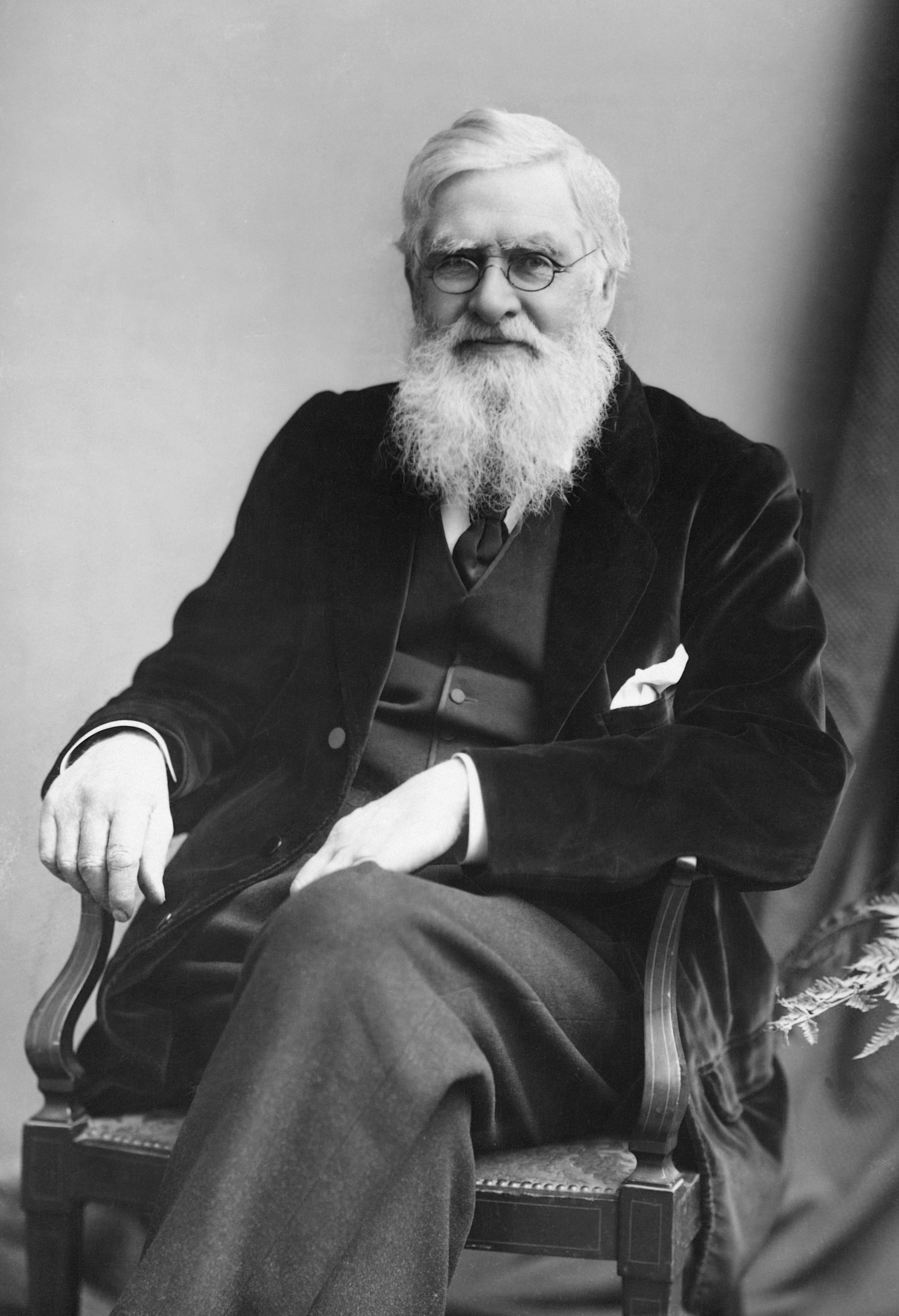
In the 1850s, a young British naturalist named Alfred Russel Wallace embarked on an eight-year journey through an archipelago of thousands of islands stretching from mainland Southeast Asia to New Guinea. What he found there would change our understanding of life on Earth. Through vivid, precise prose, Wallace documents his travels among the Spice Islands, Borneo, Sumatra, and beyond, cataloging an astonishing diversity of species while puzzling over a question that would consume him: why do certain animals exist only on certain islands, separated by water that should seem passable? His observations about the distribution of life across these islands became crucial evidence for the theory of evolution, developed independently of but concurrent with Charles Darwin's work. Along the way, he shoots orangutans in the Borneo jungle, watches birds of paradise display in the mountain forests of New Guinea, and navigates the customs of peoples whose ways of life have since vanished. This is adventure writing elevated by scientific purpose, a book that captures both a world that no longer exists and the birth of modern biology.
Editions
X-Ray
“FEW PLACES ARE MORE INTERESTING to a traveller from Europe than the town and island of Singapore, furnishing, as it does, examples of a variety of Eastern races, and of many different religions and modes of life. The government, the garrison, and the chief merchants are English; but the great mass of the population is Chinese, including some of the wealthiest merchants, the agriculturists of the interior, and most of the mechanics and labourers. The native Malays are usually fishermen and boatmen, and they form the main body of the police. The Portuguese of Malacca supply a large number of the clerks and smaller merchants. The Klings of Western India are a numerous body of Muslims, and, with many Arabs, are petty merchants and shopkeepers. The grooms and washermen are all Bengalis, and there is a small but highly respectable class of Parsee merchants. Besides these, there are numbers of Javanese sailors and domestic servants, as well as traders from Sulawesi, Bali, and many other islands of the archipelago.””
— Alfred Russel Wallace
“And if we continue to devote our chief energies to the utilizing of our knowledge of the laws of nature with the view of still further extending our commerce and our wealth, the evils which necessarily accompany these when too eagerly pursued, may increase to such gigantic dimensions as to be beyond our power to alleviate.””
— Alfred Russel Wallace
“By your letter and even still more by your paper in Annals, a year or more ago, I can plainly see that we have thought much alike and to a certain extent have come to similar conclusions. In regard to the Paper in Annals, I agree to the truth of almost every word of your paper; and I daresay that you will agree with me that it is very rare to find oneself agreeing pretty closely with any theoretical paper; for it is lamentable how each man draws his own different conclusions from the very same fact.””
— Alfred Russel Wallace
“Trigonometrical Survey of England.””
— Alfred Russel Wallace
Link to this book
Add a free, dofollow link to Lex on your blog, forum, syllabus, or reading list.

<a href="https://lex-books.com/book/the-malay-archipelago-volume-1-the-land-of-the-orang-utan-and-the-bird-of-paradi-61d457f2-f819-4170-a34b-b535ce94d576"><img src="https://lex-books.com/badges/read-on-lex.svg" alt="Read The Malay Archipelago, Volume 1: The Land of the Orang-Utan and the Bird of Paradise; a Narrative of Travel, with Studies of Man and Nature by Alfred Russel Wallace free on Lex" width="160" height="40"></a>[](https://lex-books.com/book/the-malay-archipelago-volume-1-the-land-of-the-orang-utan-and-the-bird-of-paradi-61d457f2-f819-4170-a34b-b535ce94d576)[url=https://lex-books.com/book/the-malay-archipelago-volume-1-the-land-of-the-orang-utan-and-the-bird-of-paradi-61d457f2-f819-4170-a34b-b535ce94d576][img]https://lex-books.com/badges/read-on-lex.svg[/img][/url]Read The Malay Archipelago, Volume 1: The Land of the Orang-Utan and the Bird of Paradise; a Narrative of Travel, with Studies of Man and Nature by Alfred Russel Wallace free on Lex: https://lex-books.com/book/the-malay-archipelago-volume-1-the-land-of-the-orang-utan-and-the-bird-of-paradi-61d457f2-f819-4170-a34b-b535ce94d576Cite this book
Reading this edition for a paper or guide? Copy a citation.
Wallace, Alfred Russel. The Malay Archipelago, Volume 1: The Land of the Orang-Utan and the Bird of Paradise; a Narrative of Travel, with Studies of Man and Nature. Lex, lex-books.com/book/the-malay-archipelago-volume-1-the-land-of-the-orang-utan-and-the-bird-of-paradi-61d457f2-f819-4170-a34b-b535ce94d576.Wallace, A. R. (n.d.). The Malay Archipelago, Volume 1: The Land of the Orang-Utan and the Bird of Paradise; a Narrative of Travel, with Studies of Man and Nature. Lex. https://lex-books.com/book/the-malay-archipelago-volume-1-the-land-of-the-orang-utan-and-the-bird-of-paradi-61d457f2-f819-4170-a34b-b535ce94d576Wallace, Alfred Russel. The Malay Archipelago, Volume 1: The Land of the Orang-Utan and the Bird of Paradise; a Narrative of Travel, with Studies of Man and Nature. Lex. https://lex-books.com/book/the-malay-archipelago-volume-1-the-land-of-the-orang-utan-and-the-bird-of-paradi-61d457f2-f819-4170-a34b-b535ce94d576.