The History of Rome, Books 01 to 08
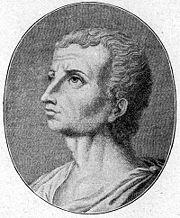
Here is the origin story of the Western world. Livy, writing in the twilight of the Roman Republic, composed a history meant not merely to record events but to preserve the moral architecture of an empire. Books One through Eight trace Rome's journey from legend to republic: the arrival of Aeneas in Italy, the she-wolf's twins founding a city through fratricide, the seven kings culminating in the tyrannical Tarquins, and the revolution that birthed the Republic. Livy gives us Lucretia's violated body and the燃烧的愤怒 that overthrew a monarchy. He gives us Brutus, who executed his own sons for treason. These are not dry annals but moral dramas, each episode designed to illustrate what made Rome great and what would, Livy feared, prove her undoing. The prose moves with a storyteller's urgency, even when recounting treaties and consulships. To read Livy is to understand how Rome saw itself, and why its founding myths still shape how we think about power, virtue, and destiny.
Editions

X-Ray
“He creates one hundred senators, either because that number was sufficient, or because there were only one hundred who could name their fathers.””
— Livy
“Servius Sulpicius and M. Tullius were consuls the next year: nothing worth mentioning happened.””
— Livy
“This it is which is particularly salutary and profitable in the study of history, that you behold instances of every variety of conduct displayed on a conspicuous monument; that from thence you may select for yourself and for your country that which you may imitate; thence note what is shameful in the undertaking, and shameful in the result, which you may avoid.””
— Livy
“THE HISTORY OF ROME.””
— Livy
“THE HISTORY OF ROME. BY TITUS LIVIUS.””
— Livy
About The History of Rome, Books 01 to 08
Chapter Summaries
- Book I, 1-7
- Aeneas arrives in Italy and establishes Lavinium. His descendants rule Alba Longa until Romulus and Remus are born to Rhea Silvia and Mars, exposed as infants, and raised by a she-wolf.
- Book I, 8-16
- Romulus kills Remus and founds Rome, establishes its institutions, conducts the rape of the Sabine women, and integrates the Sabines into Roman society before his mysterious disappearance.
- Book I, 17-21
- Numa Pompilius becomes the second king and establishes Rome's religious institutions, creates the calendar, and maintains peace for 43 years through piety and wisdom.
Key Themes
- Virtue and Civic Duty
- Livy emphasizes the importance of personal virtue and devotion to the state. Heroes like Cincinnatus, Horatius, and Brutus exemplify the Roman ideal of placing public good above personal interest.
- The Corruption of Power
- The work shows how power corrupts, from Tarquinius Superbus's tyranny to the decemvirs' abuse of authority. Livy demonstrates that unchecked power inevitably leads to oppression and moral decay.
- Liberty vs. Authority
- The tension between freedom and order permeates the work, from the establishment of the Republic to the ongoing struggles between patricians and plebeians over rights and representation.
Characters
- Romulus(protagonist)
- Legendary founder and first king of Rome. Son of Mars and Rhea Silvia, raised by a she-wolf, he established Rome's basic institutions and was deified after death.
- Numa Pompilius(major)
- Second king of Rome, known for establishing religious institutions and maintaining peace. A Sabine who ruled for 43 years and created Rome's religious framework.
- Tullus Hostilius(major)
- Third king of Rome, warlike in nature and opposite to Numa's peaceful reign. Conquered Alba Longa and integrated the Albans into Rome.
- Tarquinius Priscus(major)
- Fifth king of Rome, originally Lucumo from Tarquinii. Expanded Rome's territory and began construction of the Circus Maximus and Temple of Jupiter.
- Servius Tullius(major)
- Sixth king of Rome who instituted the census and reorganized Roman society into classes. Murdered by Tarquinius Superbus and his own daughter Tullia.
- Tarquinius Superbus(antagonist)
- Seventh and last king of Rome, known as 'the Proud.' His tyrannical rule and his son's rape of Lucretia led to the expulsion of the monarchy.
Link to this book
Add a free, dofollow link to Lex on your blog, forum, syllabus, or reading list.

<a href="https://lex-books.com/book/the-history-of-rome-books-01-to-08-86839d2a-f2b4-4c57-83bb-04c627337041"><img src="https://lex-books.com/badges/read-on-lex.svg" alt="Read The History of Rome, Books 01 to 08 by Livy free on Lex" width="160" height="40"></a>[](https://lex-books.com/book/the-history-of-rome-books-01-to-08-86839d2a-f2b4-4c57-83bb-04c627337041)[url=https://lex-books.com/book/the-history-of-rome-books-01-to-08-86839d2a-f2b4-4c57-83bb-04c627337041][img]https://lex-books.com/badges/read-on-lex.svg[/img][/url]Read The History of Rome, Books 01 to 08 by Livy free on Lex: https://lex-books.com/book/the-history-of-rome-books-01-to-08-86839d2a-f2b4-4c57-83bb-04c627337041Cite this book
Reading this edition for a paper or guide? Copy a citation.
Livy. The History of Rome, Books 01 to 08. Lex, lex-books.com/book/the-history-of-rome-books-01-to-08-86839d2a-f2b4-4c57-83bb-04c627337041.Livy (n.d.). The History of Rome, Books 01 to 08. Lex. https://lex-books.com/book/the-history-of-rome-books-01-to-08-86839d2a-f2b4-4c57-83bb-04c627337041Livy. The History of Rome, Books 01 to 08. Lex. https://lex-books.com/book/the-history-of-rome-books-01-to-08-86839d2a-f2b4-4c57-83bb-04c627337041.