The Higher Powers of Mind and Spirit
1917
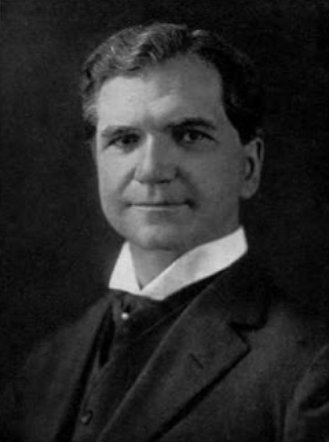
There are moments when we sense lives infinitely beyond our own. We feel the gap between what we are and what we might become. This 1917 classic from Ralph Waldo Trine, a founding voice of New Thought philosophy, argues that most of us live far below our potential. We possess reservoirs of mental and spiritual power we barely understand, let alone harness. Trine draws on the wisdom of William James and the emerging science of psychology to make a radical claim: our thoughts and emotions don't merely reflect our lives, they shape them. The inner kingdom of mind and spirit operates according to knowable laws, and those who learn to work with these forces unlock a life multiplied tenfold, a hundredfold. Trine offers no empty optimism; he speaks of practical metaphysics, of concrete methods for entering into communion with the directing, molding, sustaining powers that surround us. A century later, the book endures for readers who sense there is more within them than they've accessed, and who want to do something about it.
Editions
X-Ray
“In order to enjoy life one must be a master of life”
— Ralph Waldo Trine
“The words that I speak unto you I speak not of myself: but the Father that dwelleth in me, he doeth the works." Again, "I can of my own self do nothing." And he then speaks of his purpose, his aim: "I am come that ye might have life, and that ye might have it more abundantly." A little later he adds: "The works that I do ye shall do also." Now again, these things mean something of a very definite nature, or they mean nothing at all.””
— Ralph Waldo Trine
“Jesus did not look with much favour upon outward form, ceremony, or with much favour upon formulated, or formal religion; and he somehow or other seemed to avoid the company of those who did.””
— Ralph Waldo Trine
“THE SILENT, SUBTLE BUILDING FORCES OF MIND AND SPIRIT””
— Ralph Waldo Trine
“It is through the instrumentality or the agency of thought that the Life, the Self, uses, and manifests through, the body. Again, while it is true that the food that is taken and assimilated nourishes, sustains and builds the body, it is also true that the condition and the operation of the mind through the avenue of thought determines into what shape or form the body is so builded. So in this sense it is true that mind builds body; it is the agency, the force that determines the shaping of the material elements.””
— Ralph Waldo Trine
“Was it not the chief mistake and also the hopeless futility of Pharisaism to meddle with the minute affairs of life, and to lay down what a man should do at every turn? It was not therefore an education of conscience, but a bondage of conscience; it did not bring men to their full stature by teaching them to face their own problems of duty and to settle them, it kept them in a state of childhood, by forbidding and commanding in every particular of daily life. Pharisaism, therefore, whether Jewish or Gentile, ancient or modern, which replaces the moral law by casuistry, and the enlightened judgment of the individual by the confessional, creates a narrow character and mechanical morals. Freedom is the birthright of the soul, and it is by the discipline of life the soul finds itself. It were a poor business to be towed across the pathless ocean of this world to the next; by the will of God and for our good we must sail the ship ourselves, and steer our own course. It is the work of the Bible to show us the stars and instruct us how to take our reckoning””
— Ralph Waldo Trine
“There is a world-wide yearning for spiritual peace and righteousness on the part of the common man. He is finding it occasionally in established religion, but often, perhaps more often, independently of it.””
— Ralph Waldo Trine
Link to this book
Add a free, dofollow link to Lex on your blog, forum, syllabus, or reading list.

<a href="https://lex-books.com/book/the-higher-powers-of-mind-and-spirit-b2a89749-d48a-416e-a4af-10b4b80ec404"><img src="https://lex-books.com/badges/read-on-lex.svg" alt="Read The Higher Powers of Mind and Spirit by Ralph Waldo Trine free on Lex" width="160" height="40"></a>[](https://lex-books.com/book/the-higher-powers-of-mind-and-spirit-b2a89749-d48a-416e-a4af-10b4b80ec404)[url=https://lex-books.com/book/the-higher-powers-of-mind-and-spirit-b2a89749-d48a-416e-a4af-10b4b80ec404][img]https://lex-books.com/badges/read-on-lex.svg[/img][/url]Read The Higher Powers of Mind and Spirit by Ralph Waldo Trine free on Lex: https://lex-books.com/book/the-higher-powers-of-mind-and-spirit-b2a89749-d48a-416e-a4af-10b4b80ec404Cite this book
Reading this edition for a paper or guide? Copy a citation.
Trine, Ralph Waldo. The Higher Powers of Mind and Spirit. Lex, lex-books.com/book/the-higher-powers-of-mind-and-spirit-b2a89749-d48a-416e-a4af-10b4b80ec404.Trine, R. W. (1917). The Higher Powers of Mind and Spirit. Lex. https://lex-books.com/book/the-higher-powers-of-mind-and-spirit-b2a89749-d48a-416e-a4af-10b4b80ec404Trine, Ralph Waldo. The Higher Powers of Mind and Spirit. Lex. https://lex-books.com/book/the-higher-powers-of-mind-and-spirit-b2a89749-d48a-416e-a4af-10b4b80ec404.