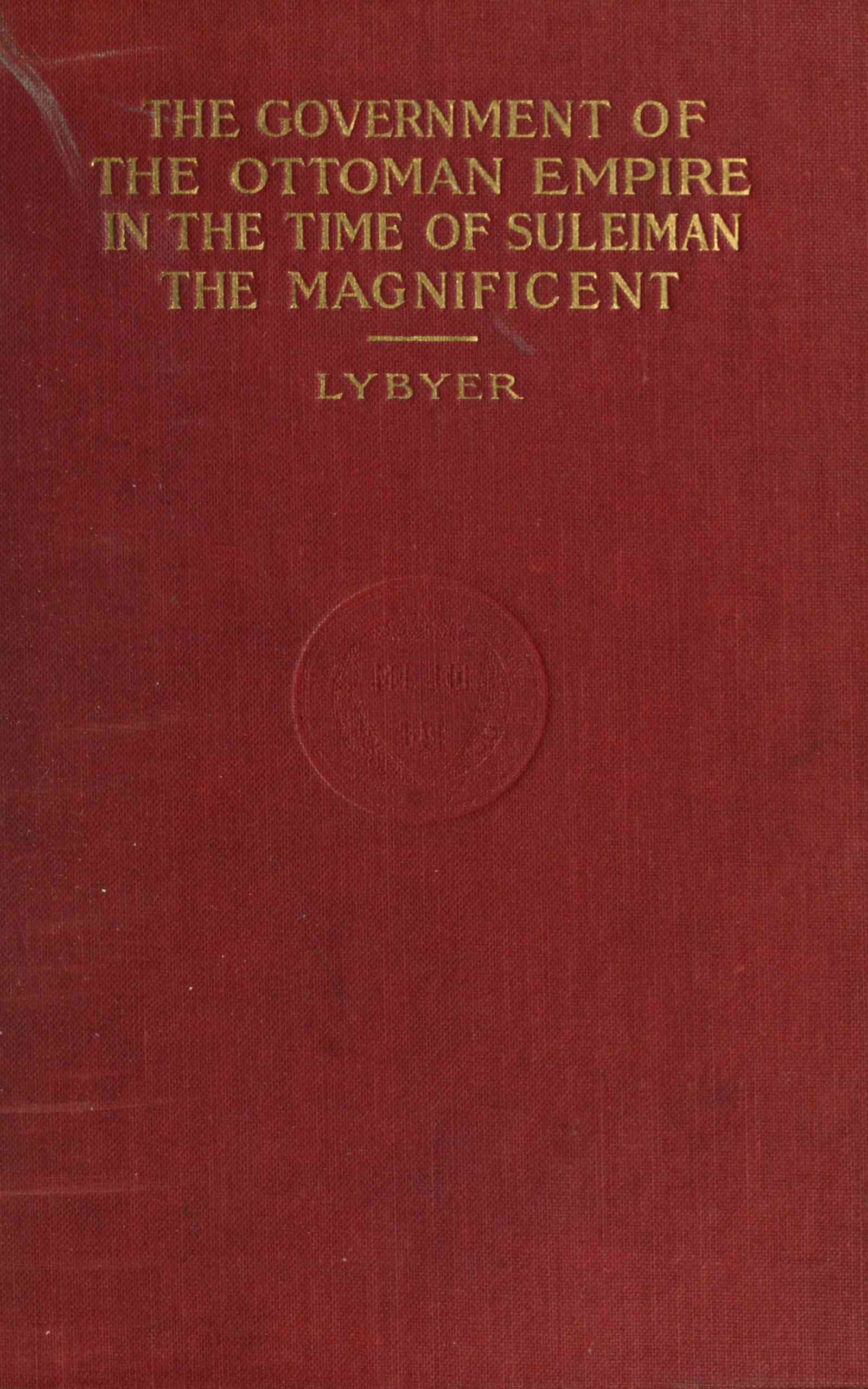
The Government of the Ottoman Empire in the Time of Suleiman the Magnificent
1913
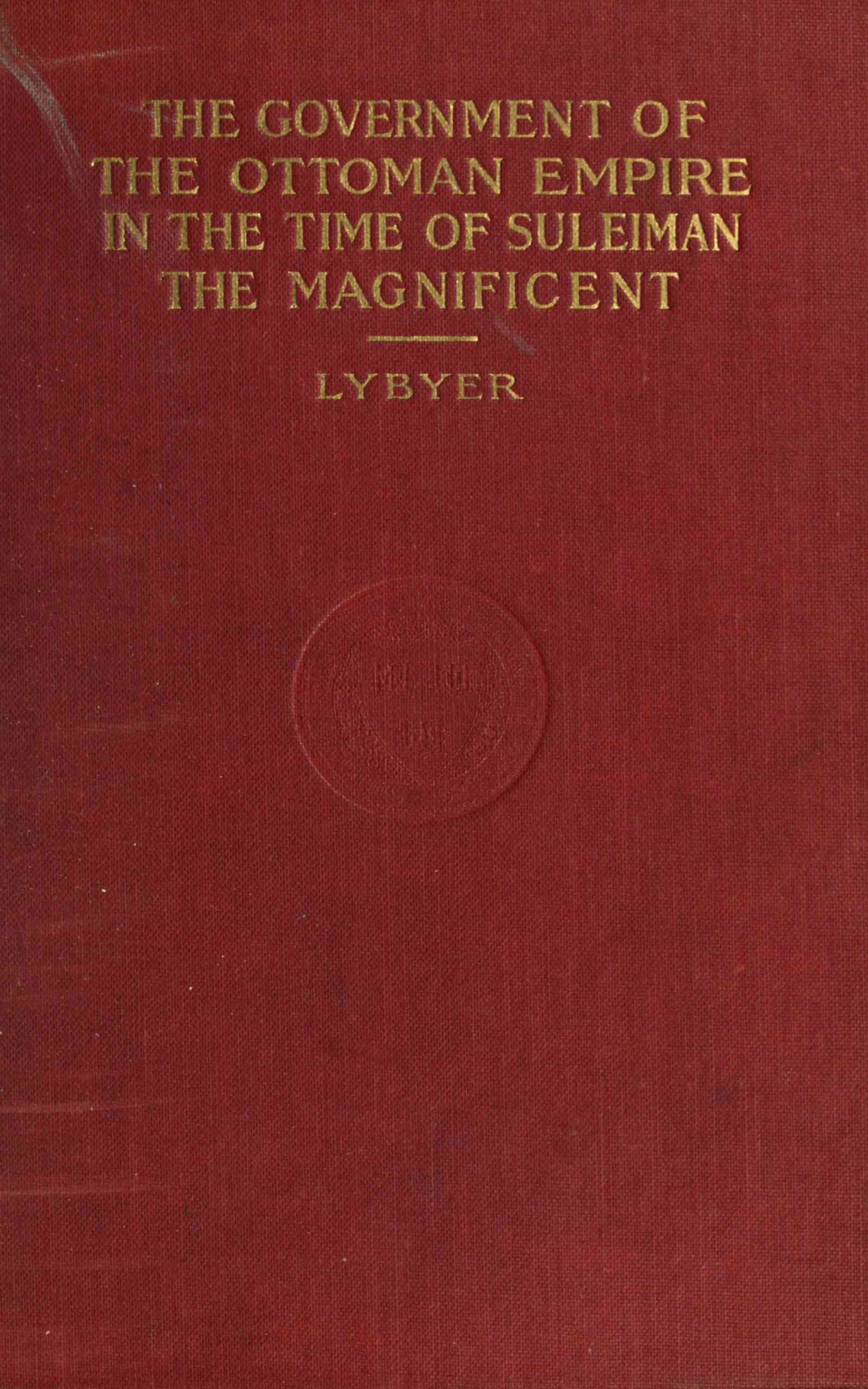
The Government of the Ottoman Empire in the Time of Suleiman the Magnificent
1913
A groundbreaking study of how the Ottoman Empire actually worked. Lybyer, writing in 1913, proposed a revolutionary framework: the Ottomans governed their vast, multicultural realm through not one but two parallel institutions. The Ruling Institution, built on the infamous devshirme system, recruited Christian boys from the Balkans, converted them to Islam, and trained them to become the empire's administrators, soldiers, and grand viziers. The Moslem Institution handled religion, law, and education through the traditional Islamic scholarly class. This duality, Lybyer argued, was the secret to Ottoman cohesion: a slave-based meritocracy that transcended blood and race, governed alongside religious law and custom. The book traces Turkish origins, the empire's transformation from frontier beylik to global superpower, and the delicate balance between sultanic authority and Islamic jurisprudence. Though written over a century ago, Lybyer's analysis remains essential reading for understanding how one of history's most durable empires held together such extraordinary diversity.
Editions

X-Ray
The Ottoman Sultan during the empire's golden age, known as both the Legislator and the Conqueror. He ruled from 1520-1566 and expanded the empire to its greatest territorial extent while establishing comprehensive legal codes.
Suleiman's first and most trusted grand vizier, a Christian-born slave who rose to unprecedented power. He served for thirteen years before being executed in 1536 for overstepping his authority.
A Russian-born slave who became Suleiman's legal wife, breaking Ottoman tradition. She wielded significant influence over the sultan and played a role in succession politics.
Grand vizier who married Suleiman's daughter Mihrmah and introduced the practice of selling offices. He served in two separate periods and was known for his financial acumen.
About The Government of the Ottoman Empire in the Time of Suleiman the Magnificent
Chapter Summaries
- Introduction
- Lybyer argues that nations are defined more by shared ideas than racial composition, tracing the Ottoman Empire's cultural origins through Chinese, Persian, Saracen, Seljuk, and Byzantine influences. The Ottomans inherited and synthesized governmental concepts from multiple civilizations.
- 1
- Defines the Ottoman Empire as a despotism limited by Islamic Sacred Law, governing diverse territories and peoples through two great institutions. The empire's complexity arose from its vast territorial extent and the presence of multiple religious and ethnic groups.
- 2
- Describes how the Ottoman government was essentially a vast slave-family headed by the sultan, recruited primarily from Christian children through tribute, capture, and purchase. This system created unprecedented loyalty while violating conventional notions of human rights.
Key Themes
- Meritocracy vs. Heredity
- The Ottoman system deliberately rejected hereditary privilege in favor of advancement based on ability and merit. This created a dynamic but ultimately unstable system that began to break down when hereditary elements crept in.
- Cultural Assimilation and Conversion
- The empire's practice of recruiting Christian children and converting them to Islam represented both a strength and a fundamental contradiction, creating loyal servants while perpetually alienating subject populations.
- Institutional Rivalry
- The tension between the Ruling Institution (military-administrative) and the Moslem Institution (religious-legal) created a system of checks and balances but also internal conflict that would eventually weaken the empire.
Characters
- Suleiman the Magnificent(protagonist)
- The Ottoman Sultan during the empire's golden age, known as both the Legislator and the Conqueror. He ruled from 1520-1566 and expanded the empire to its greatest territorial extent while establishing comprehensive legal codes.
- Ibrahim Pasha(major)
- Suleiman's first and most trusted grand vizier, a Christian-born slave who rose to unprecedented power. He served for thirteen years before being executed in 1536 for overstepping his authority.
- Roxelana (Khurrem)(major)
- A Russian-born slave who became Suleiman's legal wife, breaking Ottoman tradition. She wielded significant influence over the sultan and played a role in succession politics.
- Rustem Pasha(major)
- Grand vizier who married Suleiman's daughter Mihrmah and introduced the practice of selling offices. He served in two separate periods and was known for his financial acumen.
- Mohammed Sokolli(major)
- The last great Ottoman grand vizier of the classical period, serving Suleiman for his final years and continuing under his successors. Known for his exceptional statesmanship.
- Prince Mustapha(major)
- Suleiman's eldest and most capable son, popular with the Janissaries but executed by his father in 1553 due to fears of rebellion and succession disputes.
Link to this book
Add a free, dofollow link to Lex on your blog, forum, syllabus, or reading list.

<a href="https://lex-books.com/book/the-government-of-the-ottoman-empire-in-the-time-of-suleiman-the-magnificent-f720ae7a-2010-4b8b-81ab-2408d7e203e5"><img src="https://lex-books.com/badges/read-on-lex.svg" alt="Read The Government of the Ottoman Empire in the Time of Suleiman the Magnificent by Albert Howe Lybyer free on Lex" width="160" height="40"></a>[](https://lex-books.com/book/the-government-of-the-ottoman-empire-in-the-time-of-suleiman-the-magnificent-f720ae7a-2010-4b8b-81ab-2408d7e203e5)[url=https://lex-books.com/book/the-government-of-the-ottoman-empire-in-the-time-of-suleiman-the-magnificent-f720ae7a-2010-4b8b-81ab-2408d7e203e5][img]https://lex-books.com/badges/read-on-lex.svg[/img][/url]Read The Government of the Ottoman Empire in the Time of Suleiman the Magnificent by Albert Howe Lybyer free on Lex: https://lex-books.com/book/the-government-of-the-ottoman-empire-in-the-time-of-suleiman-the-magnificent-f720ae7a-2010-4b8b-81ab-2408d7e203e5Cite this book
Reading this edition for a paper or guide? Copy a citation.
Lybyer, Albert Howe. The Government of the Ottoman Empire in the Time of Suleiman the Magnificent. Lex, lex-books.com/book/the-government-of-the-ottoman-empire-in-the-time-of-suleiman-the-magnificent-f720ae7a-2010-4b8b-81ab-2408d7e203e5.Lybyer, A. H. (1913). The Government of the Ottoman Empire in the Time of Suleiman the Magnificent. Lex. https://lex-books.com/book/the-government-of-the-ottoman-empire-in-the-time-of-suleiman-the-magnificent-f720ae7a-2010-4b8b-81ab-2408d7e203e5Lybyer, Albert Howe. The Government of the Ottoman Empire in the Time of Suleiman the Magnificent. Lex. https://lex-books.com/book/the-government-of-the-ottoman-empire-in-the-time-of-suleiman-the-magnificent-f720ae7a-2010-4b8b-81ab-2408d7e203e5.