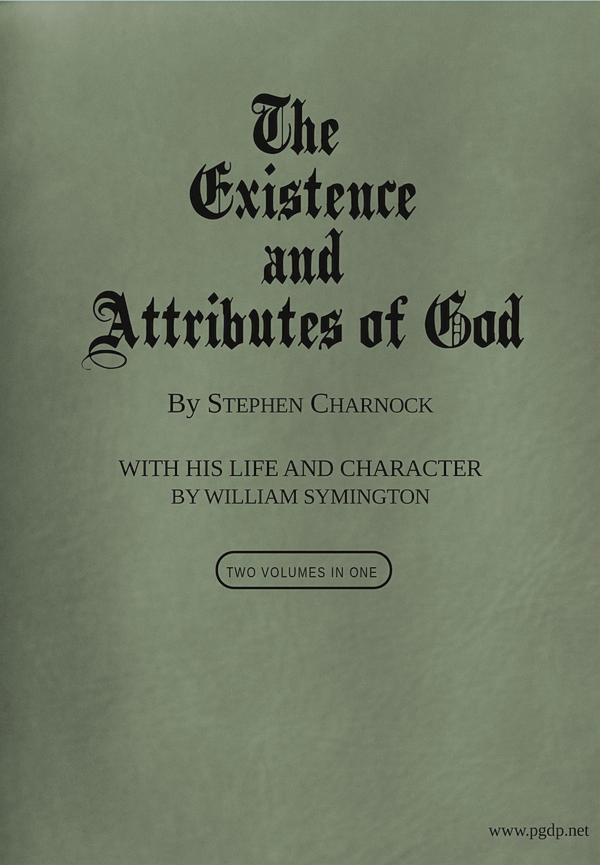
The Existence and Attributes of God, Volumes 1 and 2
1682
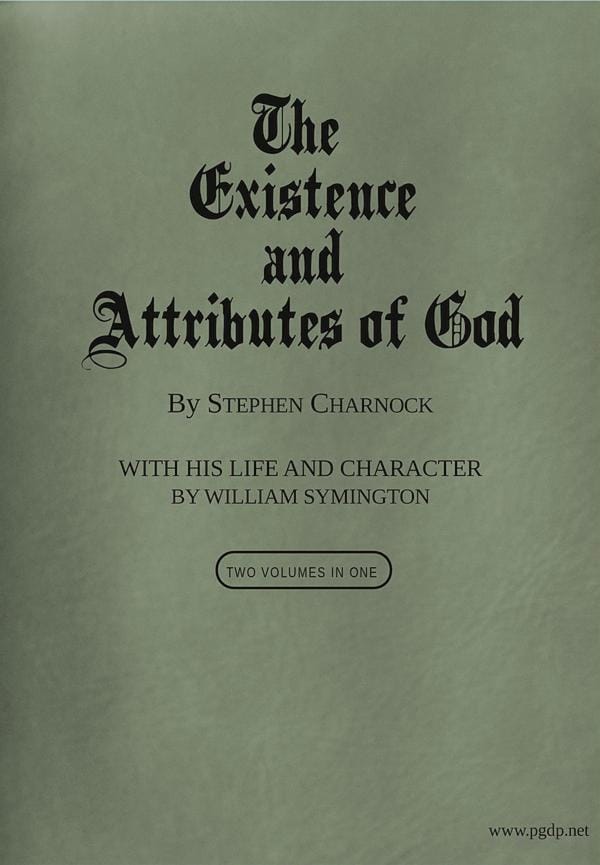
The Existence and Attributes of God, Volumes 1 and 2
1682
Written in the shadow of the English Civil War and the emerging atheism of the Enlightenment, this 1682 masterpiece stands as one of the most rigorous theological defenses of God's existence ever composed. Charnock, a Puritan physician-turned-divine, dismantles atheism not with fire but with relentless logic, arguing that the denial of God stems from moral corruption rather than intellectual insufficiency. He then proceeds to construct an awe-inspiring portrait of divine attributes: God's self-existence, omniscience, omnipresence, and holiness, among others, drawing equally from Scripture and centuries of philosophical tradition. The work is demanding, dense, and unapologetically scholarly, yet its aim is profoundly pastoral: to move readers from intellectual assent to genuine worship. Nearly 350 years later, Charnock's treatise remains essential reading for anyone seeking to understand how the great Puritan minds wrestled with the deepest questions of existence.
Editions
X-Ray
“Antiquity hath, too, too often bewitched the minds of men, and drawn them from the revealed will of God. Men are more willing to imitate the outward actions of their famous ancestors, than conform themselves to the revealed will of their Creator.””
— Stephen Charnock
“A man may sooner engrave the chronicle of a whole nation, or all the records of God in the Scripture upon the hardest marble with his bare finger, than write one syllable of the law of God in a spiritual manner upon his heart.””
— Stephen Charnock
“To conclude this: As when a man comes into a palace, built according to the exactest rule of art, and with an unexceptionable conveniency for the inhabitants, he would acknowledge both the being and skill of the builder; so whosoever shall observe the disposition of all the parts of the world, their connection, comeliness, the variety of seasons, the swarms of different creatures, and the mutual offices they render to one another, cannot conclude less, than that it was contrived by an infinite skill, effected by infinite power, and governed by infinite wisdom. None can imagine a ship to be orderly conducted without a pilot; nor the parts of the world to perform their several functions without a wise guide; considering the members of the body cannot perform theirs, without the active presence of the soul. The atheist, then, is a fool to deny that which every creature in his constitution asserts, and thereby renders himself unable to give a satisfactory account of that constant uniformity in the motions of the creatures.””
— Stephen Charnock
“Every plant, every atom, as well as every star, at the first meeting whispers this in our ears, "I have a Creator, I am witness to a deity.””
— Stephen Charnock
“the faith of Abel testified in his sacrifice, and the faith of Enoch testified in his walking with God, was not simply a faith of the existence of God. Cain in the time of Abel, other men in the world in the time of Enoch, believed this as well as they: but it was a faith joined with the worship of God, and desires to please him in the way of his own appointment; so that they believed that God was such as he had declared himself to be in his promise to Adam, such an one as would be as good as his word, and bruise the serpent’s head.””
— Stephen Charnock
“When man fell from his created goodness, God would evidence that he could not fall from his infinite goodness: that the greatest evil could not surmount the ability of his wisdom to contrive, nor the riches of his bounty to present us a remedy for it. Divine Goodness would not stand by a spectator, without being reliever of that misery man had plunged himself into; but by astonishing methods it would recover him to happiness, who had wrested himself out of his hands, to fling himself into the most deplorable calamity: and it was the greater, since it surmounted those natural inclinations, and those strong provocations which he had to shower down the power of his wrath.””
— Stephen Charnock
“It is evident a man may as well doubt whether there be a sun, when he sees his beams gilding the earth, as doubt whether there be a God, when he sees his works spread in the world.””
— Stephen Charnock
“But what miracles could rationally be supposed to work upon an atheist, who is not drawn to a sense of the truth proclaimed aloud by so many wonders of the creation?””
— Stephen Charnock
“When the sense of religion is shaken off, all kinds of wickedness is eagerly rushed into, whereby they become as loathsome to God as putrefied carcases are to men.””
— Stephen Charnock
Link to this book
Add a free, dofollow link to Lex on your blog, forum, syllabus, or reading list.

<a href="https://lex-books.com/book/the-existence-and-attributes-of-god-volumes-1-and-2-233bed29-1039-4789-8618-9448f6857c3c"><img src="https://lex-books.com/badges/read-on-lex.svg" alt="Read The Existence and Attributes of God, Volumes 1 and 2 by Stephen Charnock free on Lex" width="160" height="40"></a>[](https://lex-books.com/book/the-existence-and-attributes-of-god-volumes-1-and-2-233bed29-1039-4789-8618-9448f6857c3c)[url=https://lex-books.com/book/the-existence-and-attributes-of-god-volumes-1-and-2-233bed29-1039-4789-8618-9448f6857c3c][img]https://lex-books.com/badges/read-on-lex.svg[/img][/url]Read The Existence and Attributes of God, Volumes 1 and 2 by Stephen Charnock free on Lex: https://lex-books.com/book/the-existence-and-attributes-of-god-volumes-1-and-2-233bed29-1039-4789-8618-9448f6857c3cCite this book
Reading this edition for a paper or guide? Copy a citation.
Charnock, Stephen. The Existence and Attributes of God, Volumes 1 and 2. Lex, lex-books.com/book/the-existence-and-attributes-of-god-volumes-1-and-2-233bed29-1039-4789-8618-9448f6857c3c.Charnock, S. (1682). The Existence and Attributes of God, Volumes 1 and 2. Lex. https://lex-books.com/book/the-existence-and-attributes-of-god-volumes-1-and-2-233bed29-1039-4789-8618-9448f6857c3cCharnock, Stephen. The Existence and Attributes of God, Volumes 1 and 2. Lex. https://lex-books.com/book/the-existence-and-attributes-of-god-volumes-1-and-2-233bed29-1039-4789-8618-9448f6857c3c.