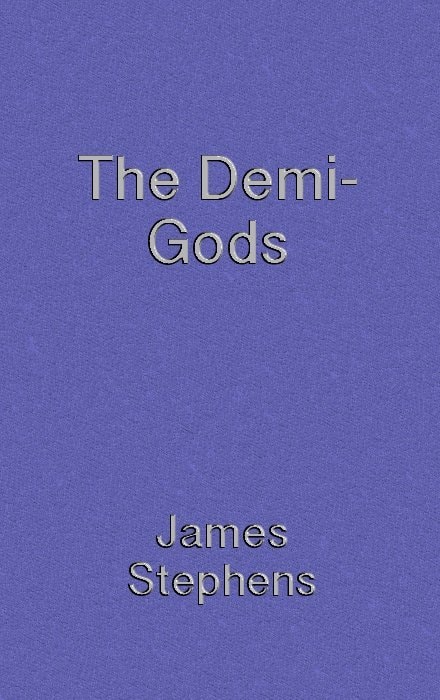
The Demi-Gods
1914
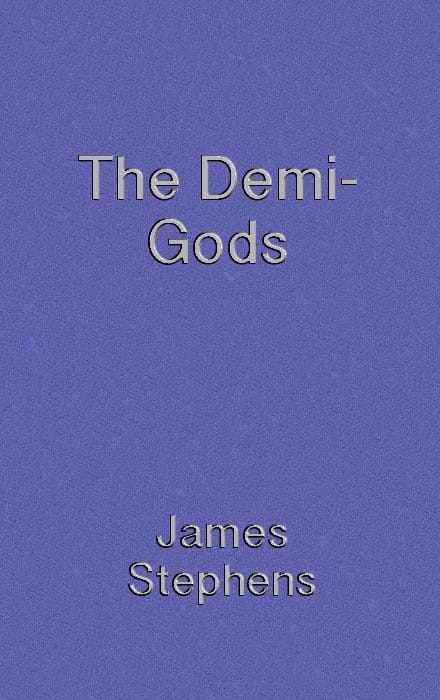
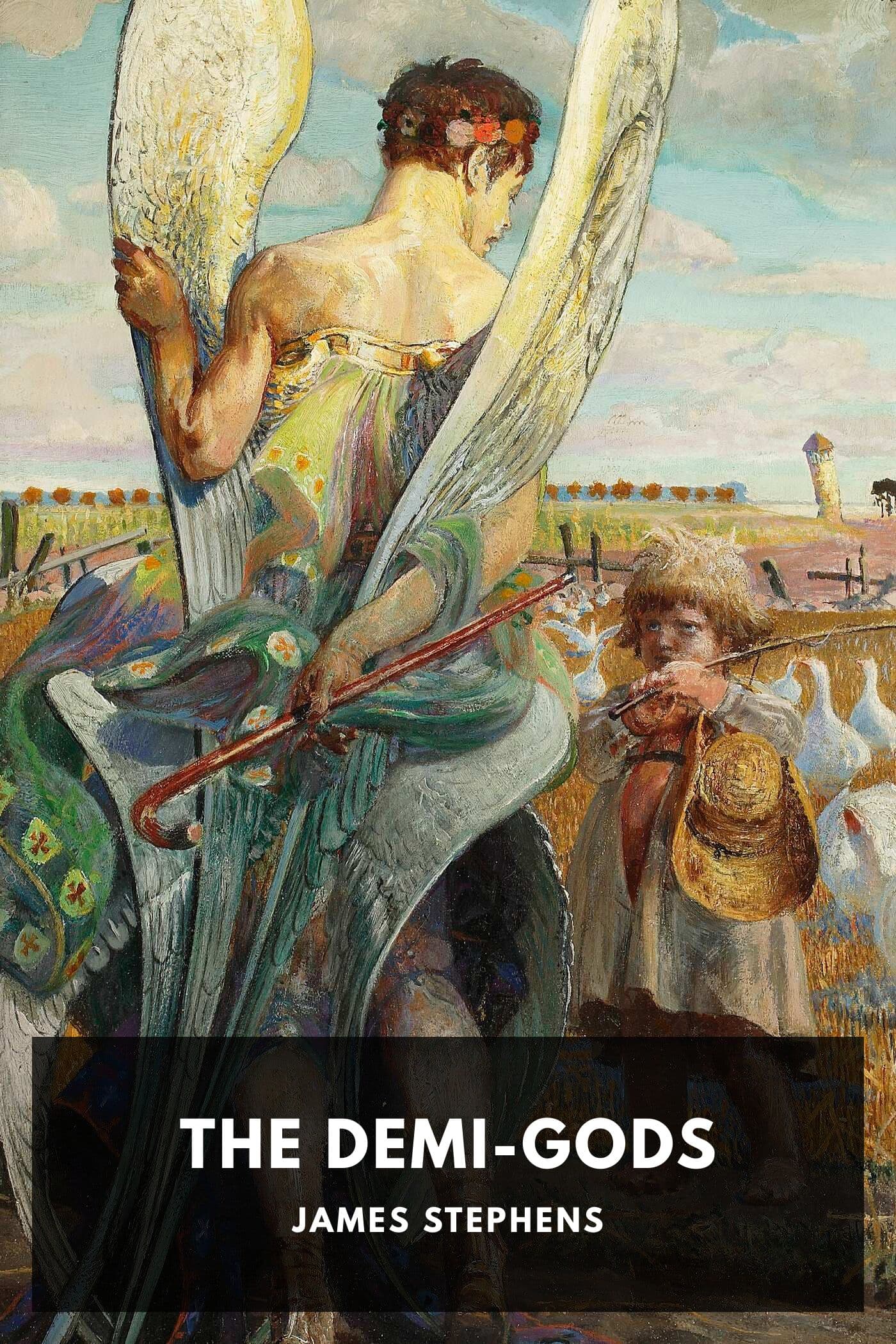
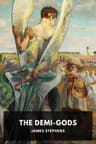
In 1914 Ireland, three winged figures descend from legend into the camp of a ragged traveler and his daughter. They are ancient heroes, demi-gods, beings who have walked the earth before and return now to wander again. Patsy Mac Cann and his daughter Mary accept this impossible company without question, and together this strange fellowship sets out across the Irish countryside: a poor man, a sharp-witted girl, a weary donkey, and three immortal beings who have forgotten what it means to be mortal. James Stephens weaves myth into the fabric of everyday life with a lightness that feels almost improvisational. The demi-gods tell stories, cause mischief, and encounter faces both familiar and troubling from Ireland's complex past. The novel unfolds in four books, each centering a different character: Patsy's quiet dignity, the wild Eileen, the turbulent Brien, and finally Mary herself, whose perspective closes the book. Stephens captures something essential about Ireland, where ancient and modern occupy the same soil, where the sacred and ridiculous travel the same road. This is a book for readers who love the strange, the mythic, the almost-unbelievable. It endures because it asks what happens when wonder meets the ordinary, and answers: everything changes, nothing changes, and both are true.
Editions
X-Ray
“He saw a square room furnished as a library. The entire section of the walls which he could spy was covered from floor to ceiling with books. There were volumes of every size, every shape, every colour. There were long, narrow books that held themselves like grenadiers at stiff attention. There were short, fat books that stood solidly like aldermen who were going to make speeches and were ashamed but not frightened. There were mediocre books bearing themselves with the carelessness of folk who are never looked at and have consequently no shyness. There were solemn books that seemed to be feeling for their spectacles; and there were tattered, important books that had got dirty because they took snuff, and were tattered because they had been crossed in love and had never married afterwards. There were prim, ancient tomes that were certainly ashamed of their heroines and utterly unable to obtain a divorce from the hussies; and there were lean, rakish volumes that leaned carelessly, or perhaps it was with studied elegance, against their neighbours, murmuring in affected tones, "All heroines are charming to us.””
— James Stephens
Link to this book
Add a free, dofollow link to Lex on your blog, forum, syllabus, or reading list.

<a href="https://lex-books.com/book/the-demi-gods-5d3c3cb2-7675-4bcb-9cde-2d7d4b991005"><img src="https://lex-books.com/badges/read-on-lex.svg" alt="Read The Demi-Gods by James Stephens free on Lex" width="160" height="40"></a>[](https://lex-books.com/book/the-demi-gods-5d3c3cb2-7675-4bcb-9cde-2d7d4b991005)[url=https://lex-books.com/book/the-demi-gods-5d3c3cb2-7675-4bcb-9cde-2d7d4b991005][img]https://lex-books.com/badges/read-on-lex.svg[/img][/url]Read The Demi-Gods by James Stephens free on Lex: https://lex-books.com/book/the-demi-gods-5d3c3cb2-7675-4bcb-9cde-2d7d4b991005Cite this book
Reading this edition for a paper or guide? Copy a citation.
Stephens, James. The Demi-Gods. Lex, lex-books.com/book/the-demi-gods-5d3c3cb2-7675-4bcb-9cde-2d7d4b991005.Stephens, J. (1914). The Demi-Gods. Lex. https://lex-books.com/book/the-demi-gods-5d3c3cb2-7675-4bcb-9cde-2d7d4b991005Stephens, James. The Demi-Gods. Lex. https://lex-books.com/book/the-demi-gods-5d3c3cb2-7675-4bcb-9cde-2d7d4b991005.