The Communist Manifesto
1848
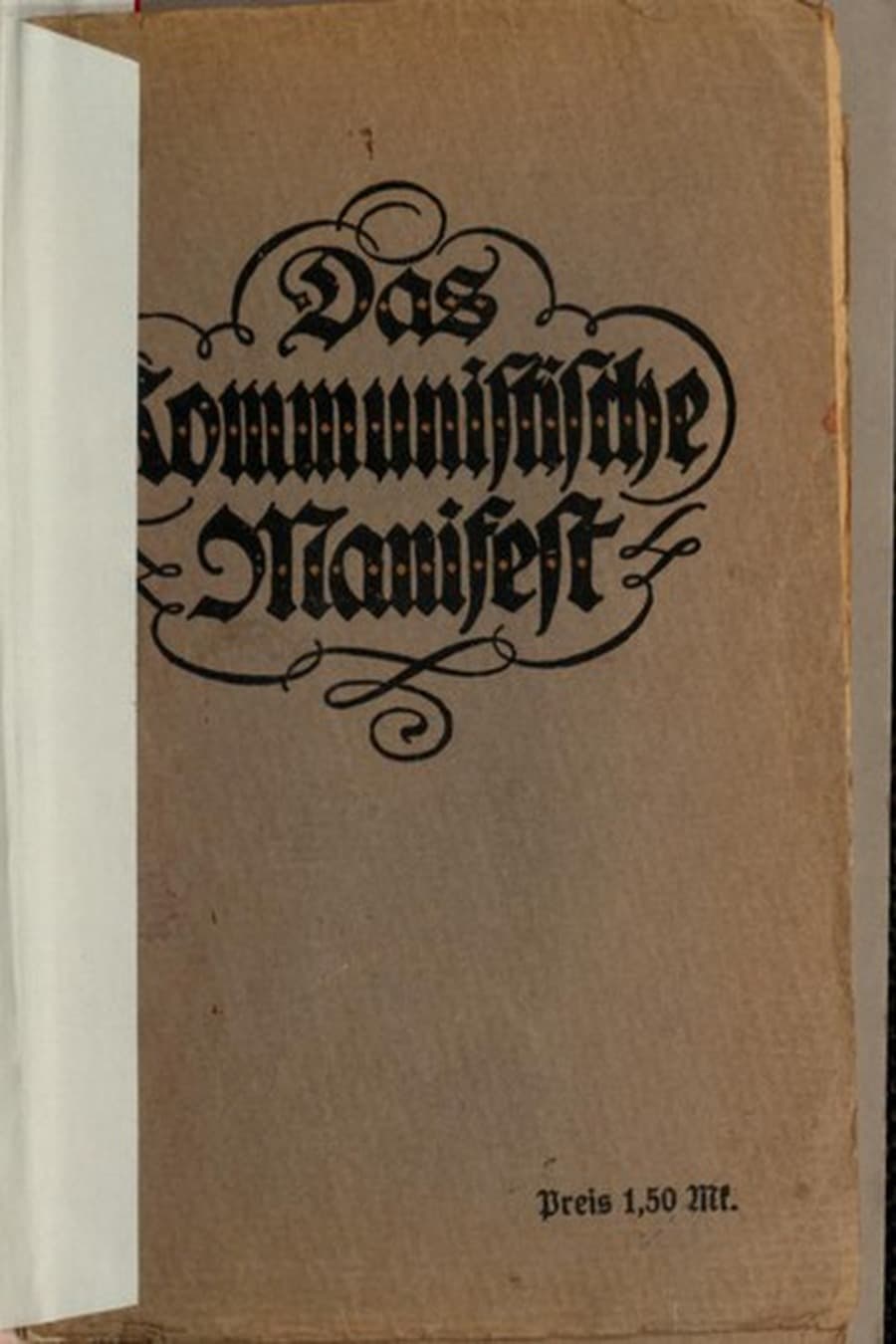
The Communist Manifesto
1848
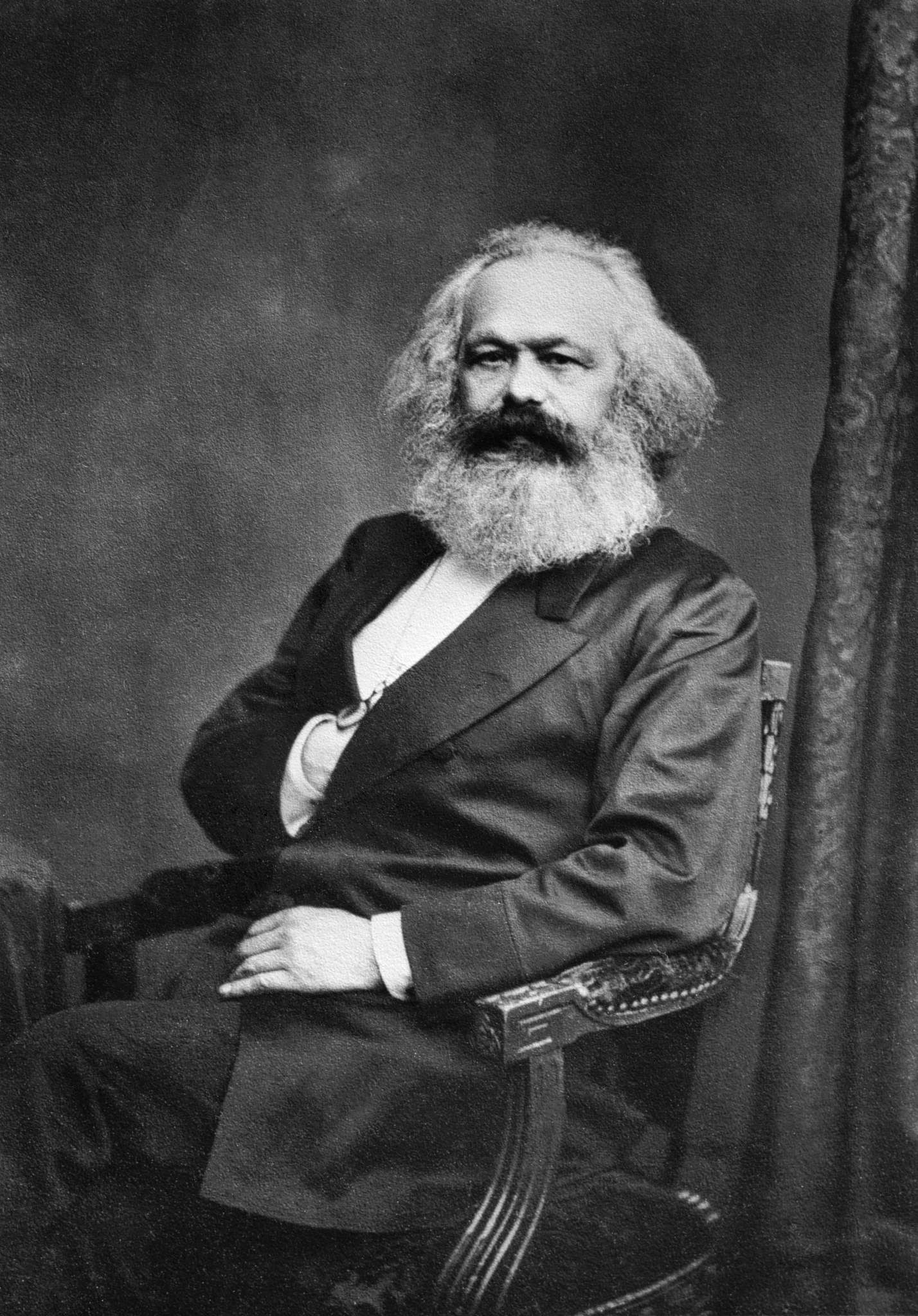
Published in the winter of 1848, in the wake of revolutionary upheavals sweeping Europe, The Communist Manifesto arrived as a thunderclap. Karl Marx and Friedrich Engels, commissioned by the Communist League, produced a document that would reshape the modern world. Their argument is deceptively simple: all history is the history of class struggle, and the current epoch pits the bourgeoisie, those who own the means of production, against the proletariat, the workers who sell their labor. Capitalism, they argue, is not a permanent state but a stage, one that creates its own grave-diggers through the very exploitation it requires. The manifesto concludes with its famous rallying cry: workers of the world, unite. What follows is one of the most consequential texts in human history, a work that has inspired revolutions, informed constitutions, and haunted the dreams and nightmares of nations for nearly two centuries. Whether you see it as prophecy or warning, the Manifesto remains the essential lens through which to understand capitalism, class, and the political forces that still define our world. It is required reading for anyone who wants to think seriously about power, inequality, and change.
Editions

X-Ray
“The history of all hitherto existing society is the history of class struggles.Freeman and slave, patrician and plebeian, lord and serf, guildmaster and journeyman, in a word, oppressor and oppressed, stood in constant opposition to one another, carried on an uninterrupted, now hidden, now open fight, that each time ended, either in the revolutionary reconstitution of society at large, or in the common ruin of the contending classes.””
— Karl Marx
“Let the ruling classes tremble at a Communistic revolution. The proletarians have nothing to lose but their chains. They have a world to win.Workingmen of all countries unite!””
— Karl Marx
“A specter is haunting Europe”
— Karl Marx
“The bourgeoisie, wherever it has got the upper hand, has put an end to all feudal, patriarchal, idyllic relations. It has pitilessly torn asunder the motley feudal ties that bound man to his 'natural superiors,' and has left remaining no other nexus between man and man than naked self-interest, callous 'cash payment.' It has drowned the most heavenly ecstasies of religious fervor, of chivalrous enthusiasm, of philistine sentimentalism, in the icy water of egotistical calculation. It has resolved personal worth into exchange value, and in place of the numberless indefeasible chartered freedoms, has set up that single, unconscionable freedom”
— Karl Marx
“The bourgeoisie cannot exist without constantly revolutionizing the instruments of production, and thereby the relations of production, and with them the whole relations of society. Conservation of the old modes of production in unaltered forms, was, on the contrary, the first condition of existence for all earlier industrial classes. Constant revolutionizing of production, uninterrupted disturbance of all social conditions, everlasting uncertainty and agitation, distinguish the bourgeois epoch from all earlier ones. .””
— Karl Marx
“The proletarians have nothing to loose but their chains. They have a world to win.””
— Karl Marx
“The bourgeoisie, by the rapid improvement of all instruments of production, by the immensely facilitated means of communication, draws all, even the most barbarian, nations into civilization. The cheap prices of its commodities are the heavy artillery with which it batters down all Chinese walls, with which it forces the barbarians' intensely obstinate hatred of foreigners to capitulate. It compels all nations, on pain of extinction, to adopt the bourgeois mode of production; it compels them to introduce what it calls civilization into their midst, i.e., to become bourgeois themselves. In one word, it creates a world after its own image.””
— Karl Marx
“Modern bourgeois society with its relations of production, of exchange, and of property, a society that has conjured up such gigantic means of production and of exchange, is like the sorcerer, who is no longer able to control the powers of the nether world whom he has called up by his spells.””
— Karl Marx
“You are horrified at our intending to do away with private property. But in your existing society private property is already done away with for nine-tenths of the population; its existence for the few is solely due to its non-existence in the hands of those nine-tenths. You reproach us, therefore, with intending to do away with a form of property, the necessary condition for whose existence is the non-existence of any property for the immense majority of society.In one word, you reproach us with intending to do away with your property. Precisely so: that is just what we intend.””
— Karl Marx
Link to this book
Add a free, dofollow link to Lex on your blog, forum, syllabus, or reading list.

<a href="https://lex-books.com/book/the-communist-manifesto-101d9bfd-6ed8-493f-9c5c-eece404c5942"><img src="https://lex-books.com/badges/read-on-lex.svg" alt="Read The Communist Manifesto by Karl Marx free on Lex" width="160" height="40"></a>[](https://lex-books.com/book/the-communist-manifesto-101d9bfd-6ed8-493f-9c5c-eece404c5942)[url=https://lex-books.com/book/the-communist-manifesto-101d9bfd-6ed8-493f-9c5c-eece404c5942][img]https://lex-books.com/badges/read-on-lex.svg[/img][/url]Read The Communist Manifesto by Karl Marx free on Lex: https://lex-books.com/book/the-communist-manifesto-101d9bfd-6ed8-493f-9c5c-eece404c5942Cite this book
Reading this edition for a paper or guide? Copy a citation.
Marx, Karl. The Communist Manifesto. Lex, lex-books.com/book/the-communist-manifesto-101d9bfd-6ed8-493f-9c5c-eece404c5942.Marx, K. (1848). The Communist Manifesto. Lex. https://lex-books.com/book/the-communist-manifesto-101d9bfd-6ed8-493f-9c5c-eece404c5942Marx, Karl. The Communist Manifesto. Lex. https://lex-books.com/book/the-communist-manifesto-101d9bfd-6ed8-493f-9c5c-eece404c5942.