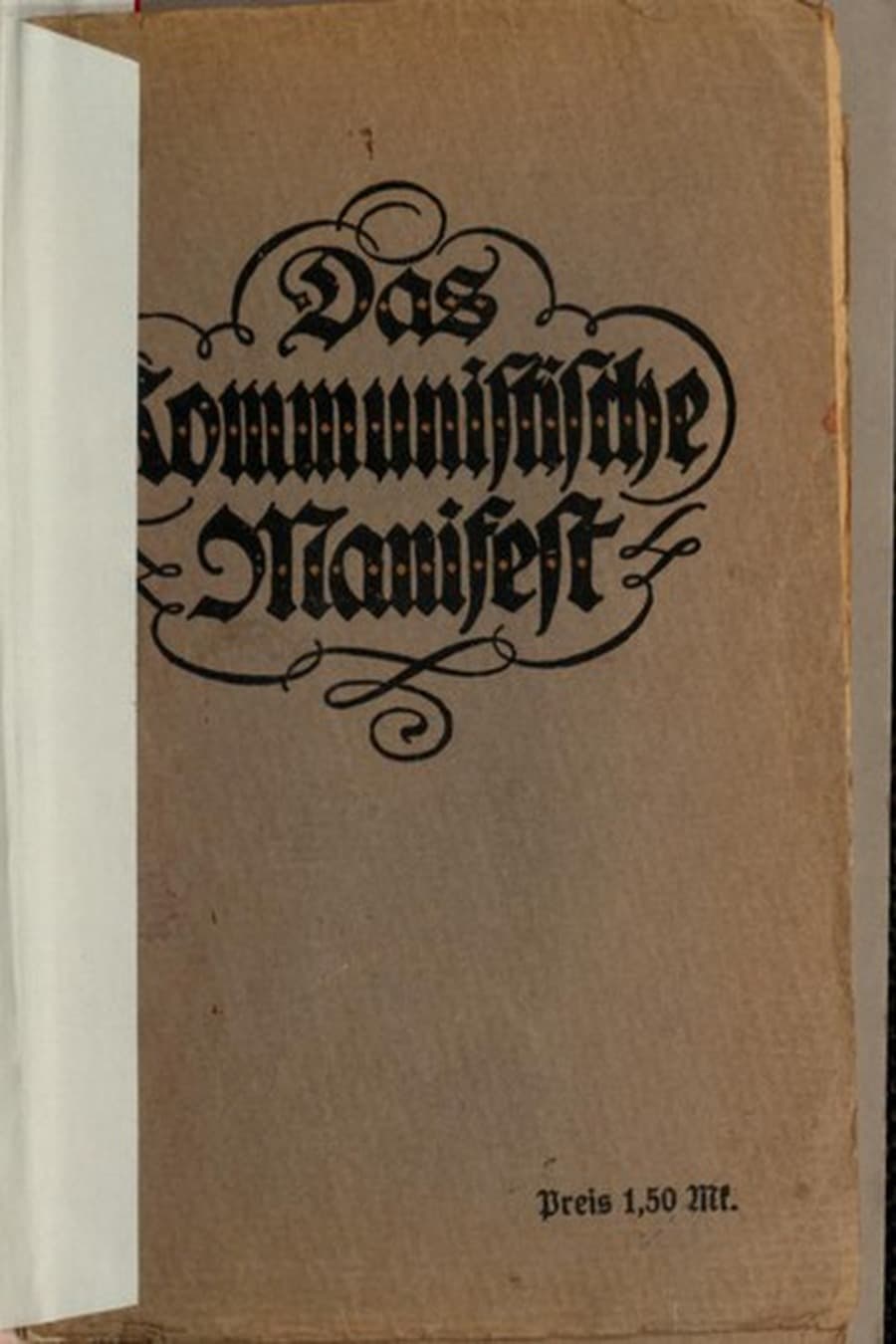
The Eighteenth Brumaire of Louis Bonaparte
The Eighteenth Brumaire of Louis Bonaparte
The most brilliant application of historical materialism to a single political event ever written. Marx composed this penetrating analysis in the wake of Louis Bonaparte's 1851 coup d'etat, which transformed the French Republic into the Second Empire. What begins with Marx's famous observation that history repeats itself first as tragedy, then as farce becomes a surgical examination of how class alliances collapse, how the peasantry becomes a politically inert force, and how a man of staggering mediocrity can seize the mantle of empire. Marx dissects the betrayals of the bourgeoisie, the disillusionment of the proletariat, and the political machinations that left France vulnerable to Bonapartist authoritarianism. The result is not merely a account of 1851, but a masterclass in understanding how revolutions die, how the state achieves a kind of independence from class control, and how democracy can hollow itself out from within. More than a century and a half later, the question of how authoritarianism rises through democratic institutions remains urgent. This is essential reading for anyone seeking to understand the mechanics of political power, class betrayal, and the ancient rhythm of radical hope giving way to reaction.
Editions
X-Ray
“Men make their own history, but they do not make it as they please; they do not make it under self-selected circumstances, but under circumstances existing already, given and transmitted from the past. The tradition of all dead generations weighs like a nightmare on the brains of the living. And just as they seem to be occupied with revolutionizing themselves and things, creating something that did not exist before, precisely in such epochs of revolutionary crisis they anxiously conjure up the spirits of the past to their service, borrowing from them names, battle slogans, and costumes in order to present this new scene in world history in time-honored disguise and borrowed language.””
— Karl Marx
“remarks somewhere that all great, world-historical facts and personages occur, as it were, twice. He has forgotten to add: the first time as tragedy, the second as farce.””
— Karl Marx
“The tradition of all dead generations weighs like a nightmare on the brains of the living.””
— Karl Marx
“Man makes his own history, but he does not make it out of the whole cloth; he does not make it out of conditions chosen by himself, but out of such as he finds close at hand.””
— Karl Marx
“Every demand for the most simple bourgeois financial reform, for the most ordinary liberalism, for the most commonplace republicanism, for the flattest democracy, is forthwith punished as an "assault upon society," and is branded as "Socialism””
— Karl Marx
“The tradition of past generations weighs like the Alps on the brains of the living.””
— Karl Marx
“...it happens that "society is saved" as often as the circle of its ruling class is narrowed, as often as a more exclusive interest asserts itself over the general. Every demand for the most simple bourgeois financial reform, for the most ordinary liberalism, for the most commonplace republicanism, for the flattest democracy is forthwith punished as an "assault upon society" and is branded as "Socialism.””
— Karl Marx
“The bourgeoisie, in truth, is bound to fear the stupidity of the masses so long as they remain conservative, and the insight of the masses as soon as they become revolutionary.””
— Karl Marx
“Hic Rhodus, hic salta!Here is the rose, here dance!””
— Karl Marx
Link to this book
Add a free, dofollow link to Lex on your blog, forum, syllabus, or reading list.

<a href="https://lex-books.com/book/the-eighteenth-brumaire-of-louis-bonaparte-06c5537b-84f5-4ee1-8e29-2f093be312df"><img src="https://lex-books.com/badges/read-on-lex.svg" alt="Read The Eighteenth Brumaire of Louis Bonaparte by Karl Marx free on Lex" width="160" height="40"></a>[](https://lex-books.com/book/the-eighteenth-brumaire-of-louis-bonaparte-06c5537b-84f5-4ee1-8e29-2f093be312df)[url=https://lex-books.com/book/the-eighteenth-brumaire-of-louis-bonaparte-06c5537b-84f5-4ee1-8e29-2f093be312df][img]https://lex-books.com/badges/read-on-lex.svg[/img][/url]Read The Eighteenth Brumaire of Louis Bonaparte by Karl Marx free on Lex: https://lex-books.com/book/the-eighteenth-brumaire-of-louis-bonaparte-06c5537b-84f5-4ee1-8e29-2f093be312dfCite this book
Reading this edition for a paper or guide? Copy a citation.
Marx, Karl. The Eighteenth Brumaire of Louis Bonaparte. Lex, lex-books.com/book/the-eighteenth-brumaire-of-louis-bonaparte-06c5537b-84f5-4ee1-8e29-2f093be312df.Marx, K. (n.d.). The Eighteenth Brumaire of Louis Bonaparte. Lex. https://lex-books.com/book/the-eighteenth-brumaire-of-louis-bonaparte-06c5537b-84f5-4ee1-8e29-2f093be312dfMarx, Karl. The Eighteenth Brumaire of Louis Bonaparte. Lex. https://lex-books.com/book/the-eighteenth-brumaire-of-louis-bonaparte-06c5537b-84f5-4ee1-8e29-2f093be312df.