The Common Law
1881
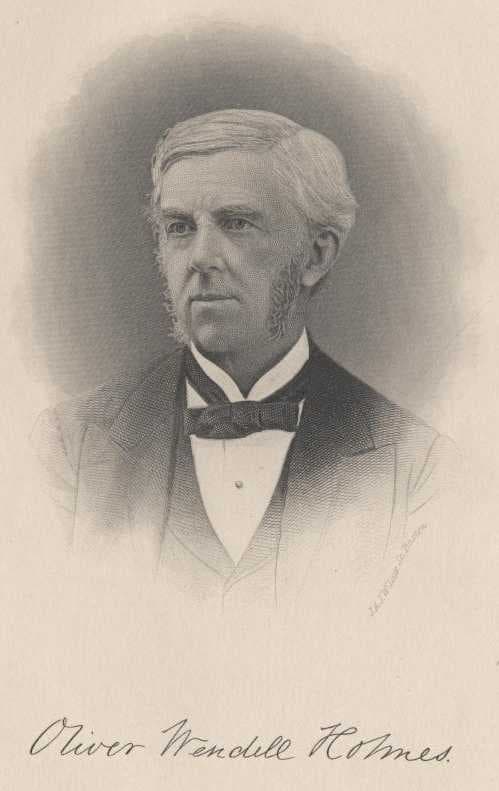
Oliver Wendell Holmes Jr. wrote a book that would reshape how we understand law itself. Published in 1881 based on his Lowell Institute lectures, The Common Law argues that legal rules are not abstract logic frozen in time but living expressions of a society's history, needs, and evolving moral consciousness. Holmes traces liability from its origins in blood feuds and the primal desire for vengeance through Roman and Germanic legal systems, showing how what once was pure retribution gradually became something more nuanced: a mechanism for restoring balance and serving collective social purposes. The book proceeds through criminal law, torts, contracts, possession, and ownership, each section revealing how modern doctrines carry the fingerprints of their savage origins. Holmes writes with a literary grace rare among jurists, making dense legal history pulse with argument and narrative. More than a century later, his central insight remains uncontested: law is a living organism, not a museum of dusty relics. Any reader curious about where our legal categories come from, and why they take the forms they do, will find this book endlessly rewarding.
Editions
X-Ray
“Even a dog distinguishes between being stumbled over and being kicked.””
— Oliver Wendell Holmes
“The first requirement of a sound body of law is, that it should correspond with the actual feelings and demands of the community, whether right or wrong.””
— Oliver Wendell Holmes
“Law, being a practical thing, must found itself on actual forces. It is quite enough, therefore, for the law, that man, by an instinct which he shares with the domestic dog, and of which the seal gives a most striking example, will not allow himself to be dispossessed, either by force or fraud, of what he olds, without trying to get it back again. Philosophy may find a hundred reasons to justify the instinct, but it would be totally immaterial if it should condemn it and bid us surrender without a murmur.””
— Oliver Wendell Holmes
“The life of the law has not been logic: it has been experience. The felt necessities of the time, the prevalent moral and political theories, intuitions of public policy, avowed or unconscious, even the prejudices which judges share with their fellow-men, have had a good deal more to do than the syllogism in determining the rules by which men should be governed.””
— Oliver Wendell Holmes
“Law, being a practical thing, must found itself onactual forces. It is quite enough, therefore, for the law, that man, by an instinct which he shares with the domestic dog, and of which the seal gives a most striking example, will not allow himself to bedispossessed, either by force or fraud, of what he holds, without trying to get it back again.Philosophy may find a hundred reasons to justify the instinct, but it would be totally immaterial if itshould condemn it and bid us surrender without a murmur.””
— Oliver Wendell Holmes
“a preliminary sketch. Your experience tells you that. But””
— Oliver Wendell Holmes
“Many things which we take for granted have had to be laboriously fought out or thought out in past times.””
— Oliver Wendell Holmes
“The law embodies the story of a nation’s development through many centuries, and it cannot be dealt with as if it contained only the axioms and corollaries of a book of mathematics.””
— Oliver Wendell Holmes
“State interference is an evil, where it cannot be shown to be a good.””
— Oliver Wendell Holmes
Link to this book
Add a free, dofollow link to Lex on your blog, forum, syllabus, or reading list.

<a href="https://lex-books.com/book/the-common-law-bf4f4032-b1e9-4822-a6b4-aba527d6f96d"><img src="https://lex-books.com/badges/read-on-lex.svg" alt="Read The Common Law by Oliver Wendell Holmes free on Lex" width="160" height="40"></a>[](https://lex-books.com/book/the-common-law-bf4f4032-b1e9-4822-a6b4-aba527d6f96d)[url=https://lex-books.com/book/the-common-law-bf4f4032-b1e9-4822-a6b4-aba527d6f96d][img]https://lex-books.com/badges/read-on-lex.svg[/img][/url]Read The Common Law by Oliver Wendell Holmes free on Lex: https://lex-books.com/book/the-common-law-bf4f4032-b1e9-4822-a6b4-aba527d6f96dCite this book
Reading this edition for a paper or guide? Copy a citation.
Holmes, Oliver Wendell. The Common Law. Lex, lex-books.com/book/the-common-law-bf4f4032-b1e9-4822-a6b4-aba527d6f96d.Holmes, O. W. (1881). The Common Law. Lex. https://lex-books.com/book/the-common-law-bf4f4032-b1e9-4822-a6b4-aba527d6f96dHolmes, Oliver Wendell. The Common Law. Lex. https://lex-books.com/book/the-common-law-bf4f4032-b1e9-4822-a6b4-aba527d6f96d.