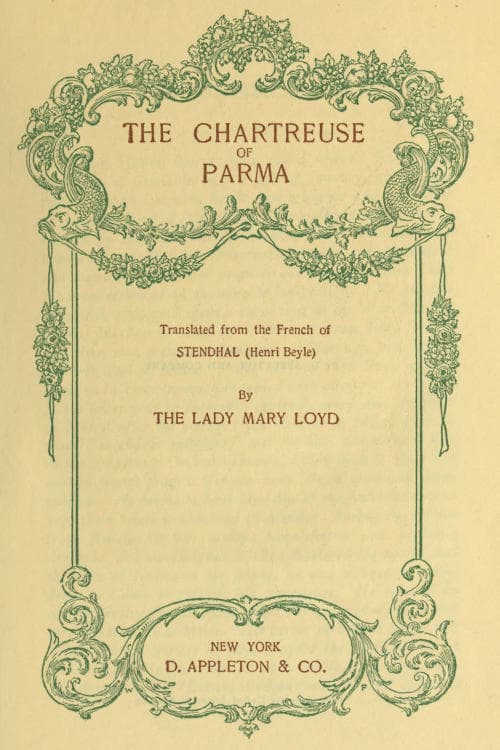
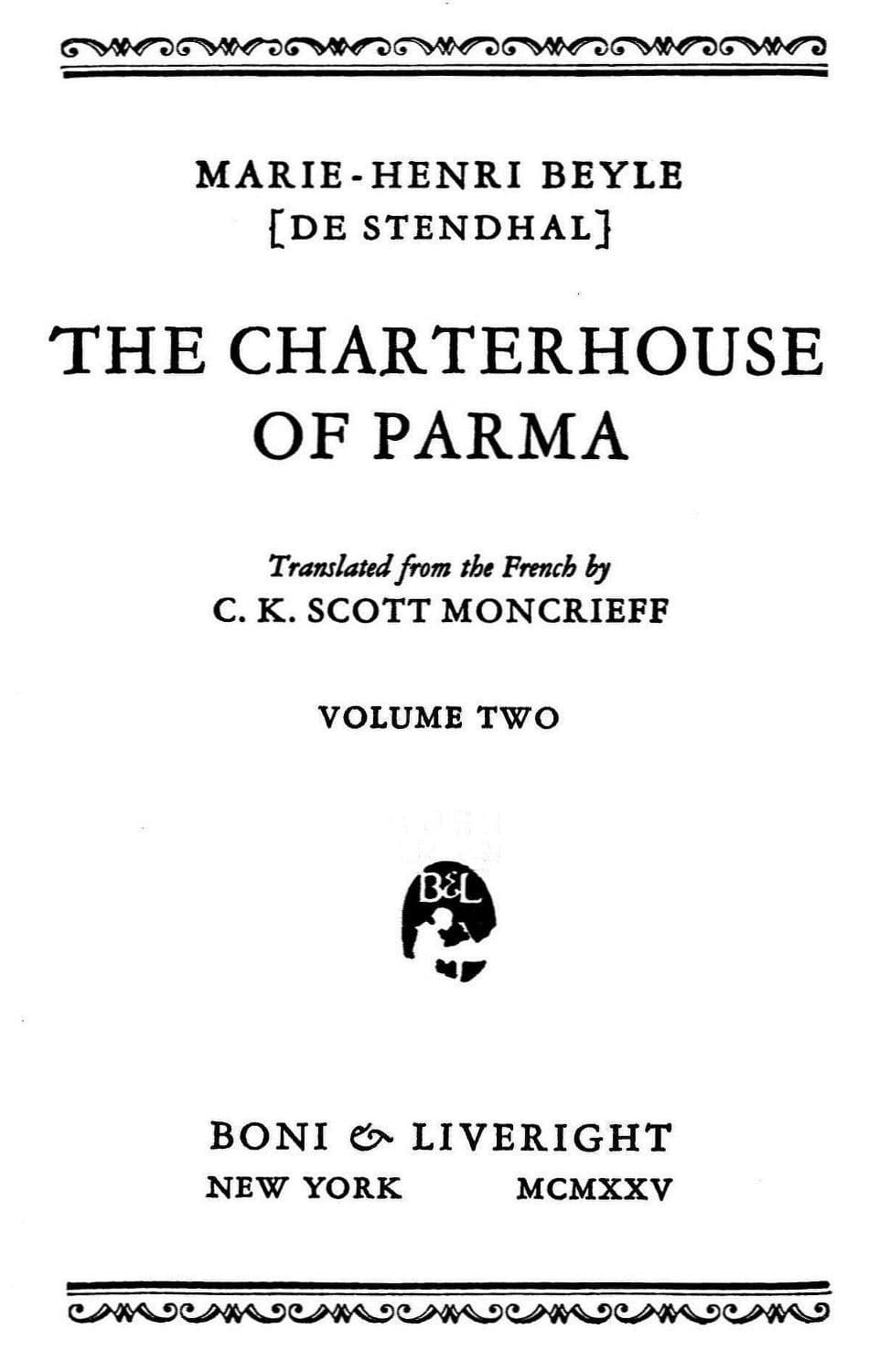
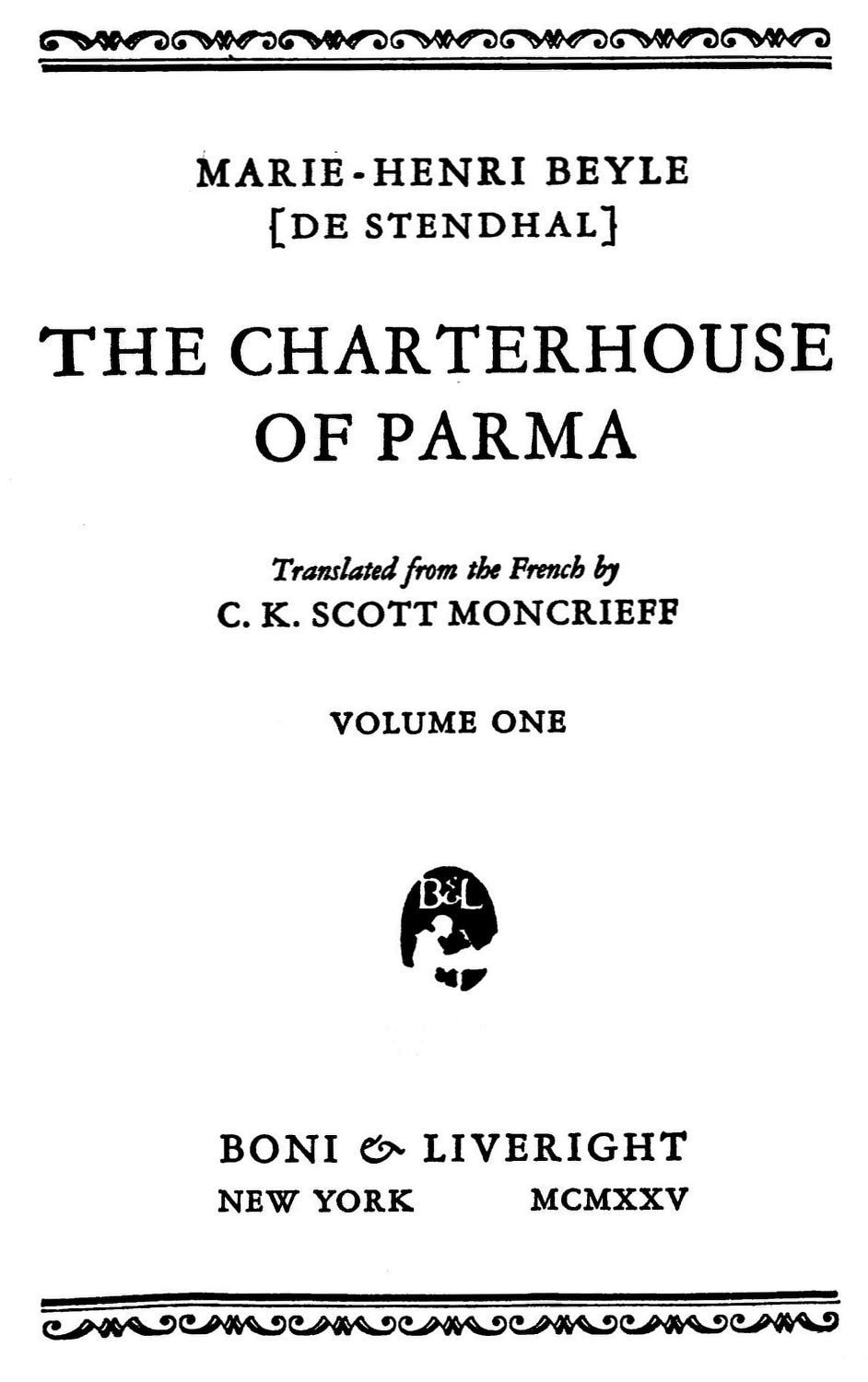
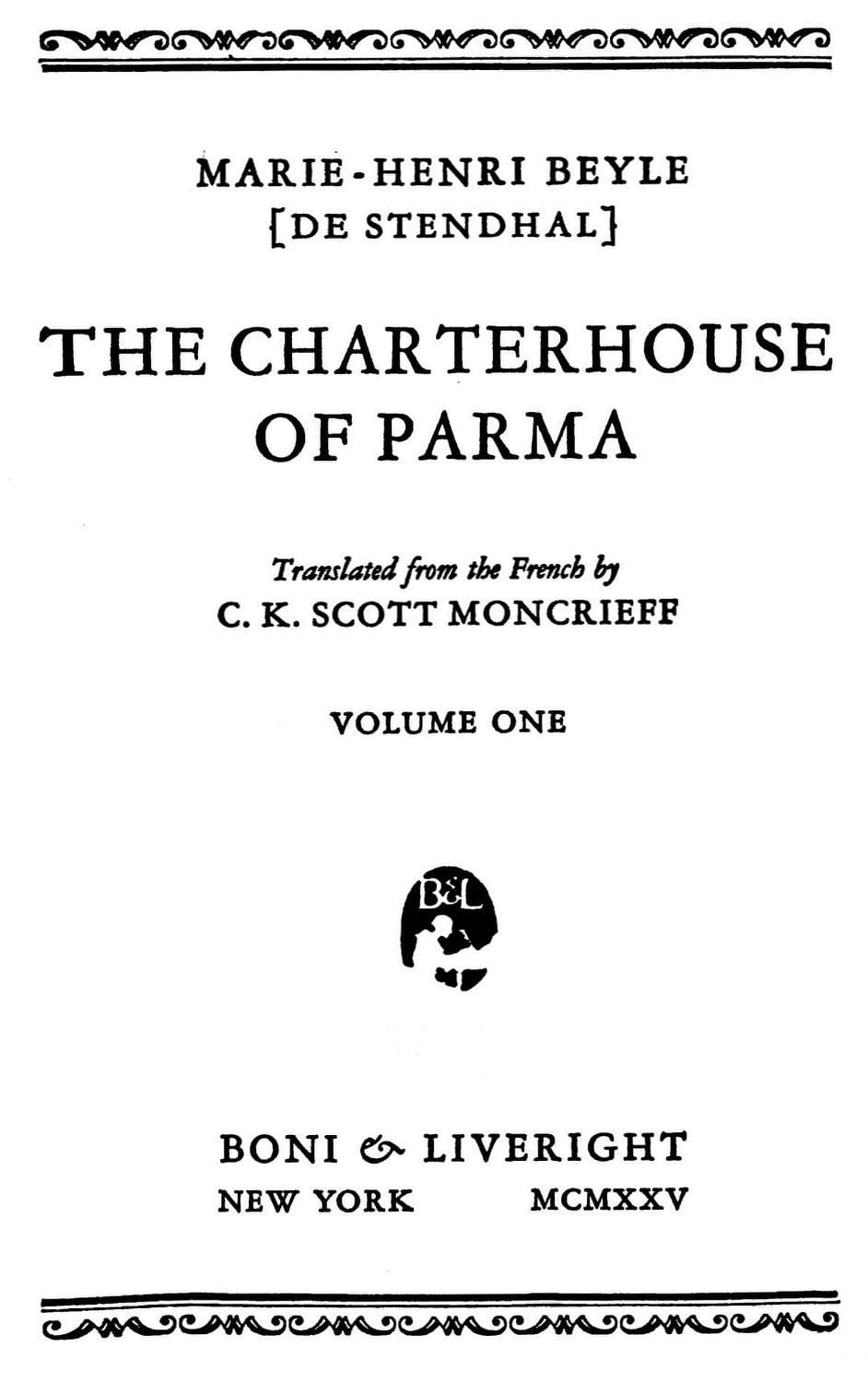
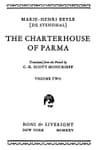
The Charterhouse of Parma, Volume 1
The year is 1815. Young Italian aristocrat Fabrice del Dongo rides toward Waterloo not because he understands what the battle means, but because he has glimpsed Napoleon in the distance and believes he has found his destiny. This is Stendhal at his most luminous, following a naive but strangely sympathetic hero through the collision of history and personal ambition. What begins as a quixotic quest becomes something far more complex. Fabrice returns from Waterloo to find his world transformed, drawn into the treacherous court politics of Parma. His aunt Gina, a woman of fierce intelligence and dangerous passions, manipulates events to secure his future. The cunning Count Mosca becomes both mentor and rival. Love, jealousy, murder, and betrayal accumulate as Fabrice discovers that ambition and desire are forces he cannot control. This is a novel about the formation of a soul. Stendhal renders the interior life with startling modernity, making Fabrice's uncertainties and compromises feel startlingly contemporary even across two centuries. The stakes are nothing less than the question of who one becomes when history demands everything.
Editions

X-Ray
“The lover thinks oftener of reaching his mistress than the husband thinks of guarding his wife; the prisoner thinks more often of escape than the jailer thinks of locking the doors. Therefore, in spite of every obstacle, the lover and the prisoner are certain to succeed.””
— Stendhal
“This beautiful thought, of 'dying close by that which one loves', expressed in a hundred different ways, was followed by a sonnet in which it was found that the soul, separated, after atrocious torments, from the frail body in which it dwelt for twenty-three years, and impelled by that instinct for happiness natural to all that has once existed, would not reascend to heaven to mingle with angelic choirs as soon as it was set free, and in the event of the awful judgment according it forgiveness for its sins, but, happier after death than it had been in life, it would go a few steps from the prison where it had lamented for so long, to be reunited with all that it had loved in the world. And thus, the sonnet's last line went. I shall have found my paradise on earth.””
— Stendhal
“There's one convenience about absolute power, that it sanctifies everything in the eyes of the people.””
— Stendhal
“Mutluluğu uzaklarda aramaya kalkmanın ne anlamı var, işte burada, elimin altında!””
— Stendhal
“This man, whom great monarchies would have envied the prince of Parma, was known to have only one passion: of holding intimate conversations with great personages and currying favour by his buffoonery.””
— Stendhal
“Tahtın üzerine ya da yakınına doğan zeki insanlar, kısa sürede incelikli düşünme yetilerini yitirirler; çevrelerinde, kabalık olarak gördükleri konuşma özgürlüğünü yasaklarlar; yalnızca birtakım maskeler görmek isterler ve insanları tenlerinin güzelliğine bakarak yargılamaya kalkarlar; işin hoş yanı, sezgilerinin çok ince olduğuna inanmalarıdır.””
— Stendhal
“petty despotisms reduce to nothing the value of public opinion.””
— Stendhal
“The presence of danger inspires a sensible man with genius, raising him, so to speak, above himself. In the case of the man of imagination, it inspires him with romances, which may indeed be bold, but which are frequently absurd.””
— Stendhal
“On the other hand in America, in the Republic, one has to spend the whole weary day paying serious court to the shopkeepers in the street, and must become as stupid as they are; and there, one has no Opera.””
— Stendhal
Link to this book
Add a free, dofollow link to Lex on your blog, forum, syllabus, or reading list.

<a href="https://lex-books.com/book/the-charterhouse-of-parma-volume-1-51cb6ace-d5c0-47ce-b550-1448fd2d3d12"><img src="https://lex-books.com/badges/read-on-lex.svg" alt="Read The Charterhouse of Parma, Volume 1 by Stendhal free on Lex" width="160" height="40"></a>[](https://lex-books.com/book/the-charterhouse-of-parma-volume-1-51cb6ace-d5c0-47ce-b550-1448fd2d3d12)[url=https://lex-books.com/book/the-charterhouse-of-parma-volume-1-51cb6ace-d5c0-47ce-b550-1448fd2d3d12][img]https://lex-books.com/badges/read-on-lex.svg[/img][/url]Read The Charterhouse of Parma, Volume 1 by Stendhal free on Lex: https://lex-books.com/book/the-charterhouse-of-parma-volume-1-51cb6ace-d5c0-47ce-b550-1448fd2d3d12Cite this book
Reading this edition for a paper or guide? Copy a citation.
Stendhal. The Charterhouse of Parma, Volume 1. Lex, lex-books.com/book/the-charterhouse-of-parma-volume-1-51cb6ace-d5c0-47ce-b550-1448fd2d3d12.Stendhal (n.d.). The Charterhouse of Parma, Volume 1. Lex. https://lex-books.com/book/the-charterhouse-of-parma-volume-1-51cb6ace-d5c0-47ce-b550-1448fd2d3d12Stendhal. The Charterhouse of Parma, Volume 1. Lex. https://lex-books.com/book/the-charterhouse-of-parma-volume-1-51cb6ace-d5c0-47ce-b550-1448fd2d3d12.