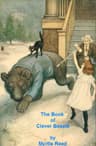
The Book of Clever Beasts: Studies in Unnatural History
1904
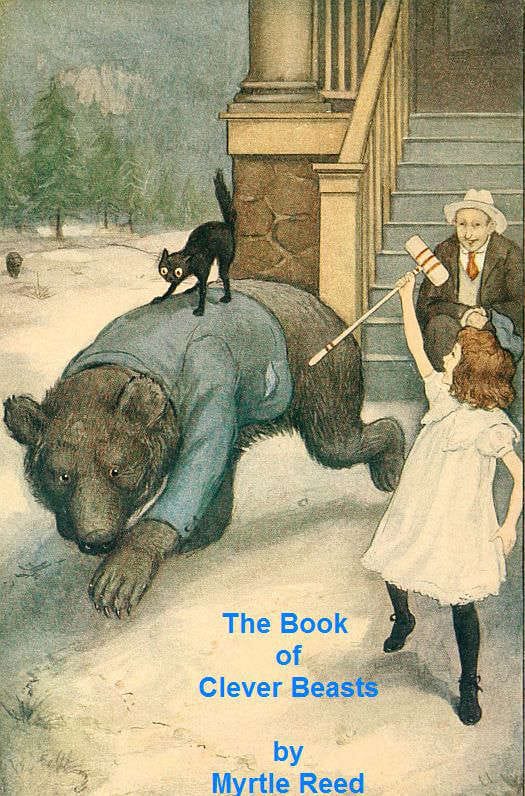
At the turn of the 20th century, when children's literature still trusted its young readers with sorrow, Myrtle Reed crafted something extraordinary: a collection that treats animals not as lessons in morality but as creatures of genuine complexity and feeling. The frame is deceptively simple. A telegraph operator named Mr. Johnson-Sitdown, worn down by the noise of modern life, retreats to his grandparents' cabin in the woods on doctor's orders. He brings only his cat, Tom-Tom, and a naturalist's curiosity. What follows is a series of encounters with woodland creatures, each rendered with an intimacy that feels almost radical for its era. The centerpiece is Little Upsidaisi, a field mouse whose story moves from gentle wonder to something far darker. Reed refuses to soften the harsh realities of wilderness life, and this refusal gives her work its peculiar power. The result is a book that functions as both charming animal tale and quiet meditation on grief, companionship, and the distance (or closeness) between human and beast.
Editions
Link to this book
Add a free, dofollow link to Lex on your blog, forum, syllabus, or reading list.

<a href="https://lex-books.com/book/the-book-of-clever-beasts-studies-in-unnatural-history-116a262a-6dbf-465c-a3d2-7bcedde7e83a"><img src="https://lex-books.com/badges/read-on-lex.svg" alt="Read The Book of Clever Beasts: Studies in Unnatural History by Myrtle Reed free on Lex" width="160" height="40"></a>[](https://lex-books.com/book/the-book-of-clever-beasts-studies-in-unnatural-history-116a262a-6dbf-465c-a3d2-7bcedde7e83a)[url=https://lex-books.com/book/the-book-of-clever-beasts-studies-in-unnatural-history-116a262a-6dbf-465c-a3d2-7bcedde7e83a][img]https://lex-books.com/badges/read-on-lex.svg[/img][/url]Read The Book of Clever Beasts: Studies in Unnatural History by Myrtle Reed free on Lex: https://lex-books.com/book/the-book-of-clever-beasts-studies-in-unnatural-history-116a262a-6dbf-465c-a3d2-7bcedde7e83aCite this book
Reading this edition for a paper or guide? Copy a citation.
Reed, Myrtle. The Book of Clever Beasts: Studies in Unnatural History. Lex, lex-books.com/book/the-book-of-clever-beasts-studies-in-unnatural-history-116a262a-6dbf-465c-a3d2-7bcedde7e83a.Reed, M. (1904). The Book of Clever Beasts: Studies in Unnatural History. Lex. https://lex-books.com/book/the-book-of-clever-beasts-studies-in-unnatural-history-116a262a-6dbf-465c-a3d2-7bcedde7e83aReed, Myrtle. The Book of Clever Beasts: Studies in Unnatural History. Lex. https://lex-books.com/book/the-book-of-clever-beasts-studies-in-unnatural-history-116a262a-6dbf-465c-a3d2-7bcedde7e83a.