The Art of Writing & Speaking the English Language: How to Read and What to Read
1911
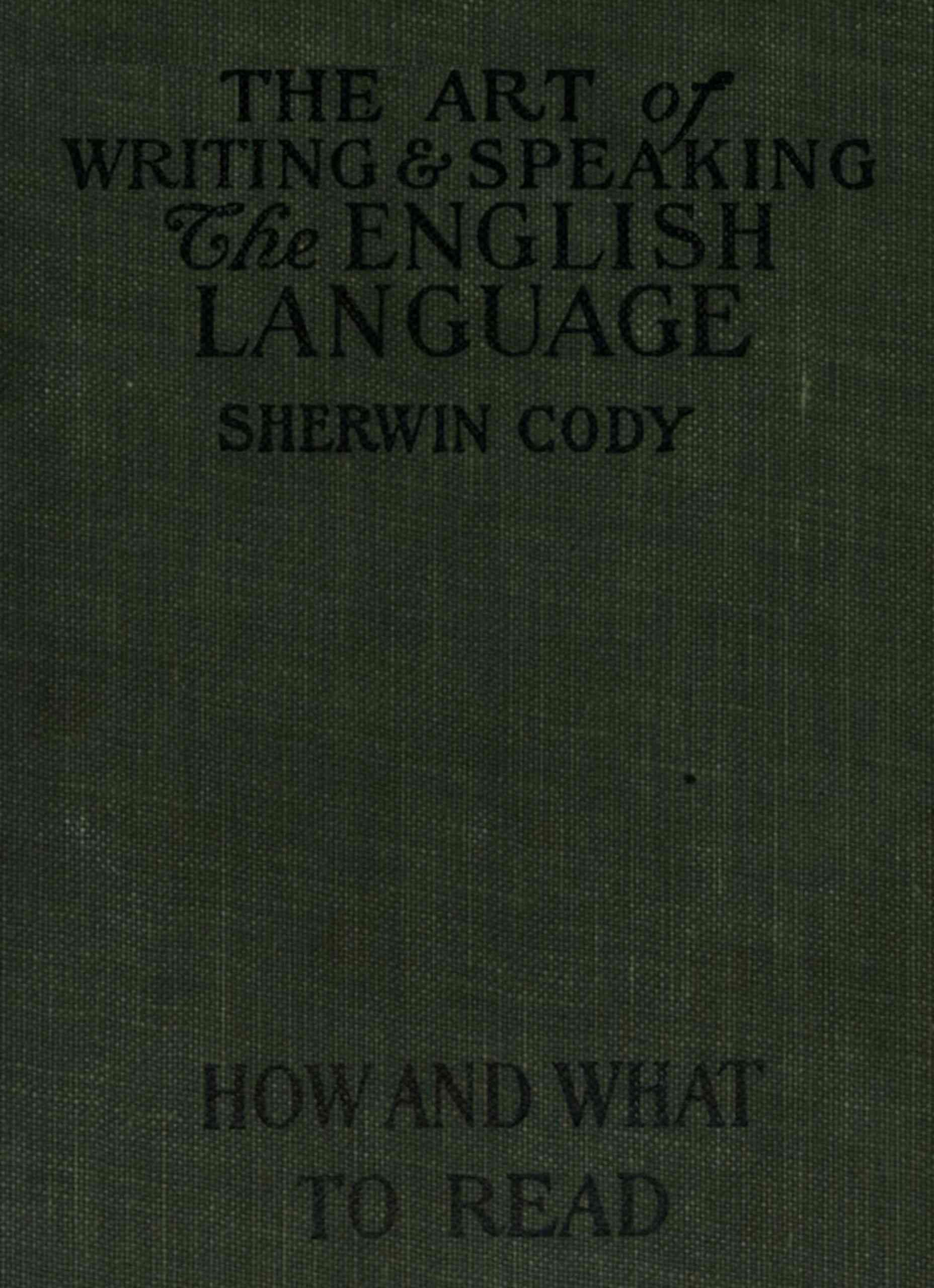
The Art of Writing & Speaking the English Language: How to Read and What to Read
1911
Language & Communication, Teaching & Education
The Art of Writing & Speaking the English Language, authored by Sherwin Cody and first published in 1911, is a guidebook designed to help readers select and appreciate quality literature. It emphasizes enjoyment and practical standards over exhaustive lists, proposing three tests for literature: beauty, truth, and nobility. The book provides insights into poetry, essays, and novels, offering practical recommendations for engaging with works by authors like Shakespeare and Tennyson, while also mapping significant literary movements and figures in British and American literature.
Editions
The Art of Writing & Speaking the English Language: How to Read and What to ReadCurrent
Project Gutenberg · 126 pages
Link to this book
Add a free, dofollow link to Lex on your blog, forum, syllabus, or reading list.

HTML
<a href="https://lex-books.com/book/the-art-of-writing-speaking-the-english-language-how-to-read-and-what-to-read-c8993eea-f6f7-47e0-b546-aada59d77457"><img src="https://lex-books.com/badges/read-on-lex.svg" alt="Read The Art of Writing & Speaking the English Language: How to Read and What to Read by Sherwin Cody free on Lex" width="160" height="40"></a>Markdown
[](https://lex-books.com/book/the-art-of-writing-speaking-the-english-language-how-to-read-and-what-to-read-c8993eea-f6f7-47e0-b546-aada59d77457)BBCode
[url=https://lex-books.com/book/the-art-of-writing-speaking-the-english-language-how-to-read-and-what-to-read-c8993eea-f6f7-47e0-b546-aada59d77457][img]https://lex-books.com/badges/read-on-lex.svg[/img][/url]Plain link
Read The Art of Writing & Speaking the English Language: How to Read and What to Read by Sherwin Cody free on Lex: https://lex-books.com/book/the-art-of-writing-speaking-the-english-language-how-to-read-and-what-to-read-c8993eea-f6f7-47e0-b546-aada59d77457Cite this book
Reading this edition for a paper or guide? Copy a citation.
MLA
Cody, Sherwin. The Art of Writing & Speaking the English Language: How to Read and What to Read. Lex, lex-books.com/book/the-art-of-writing-speaking-the-english-language-how-to-read-and-what-to-read-c8993eea-f6f7-47e0-b546-aada59d77457.APA
Cody, S. (1911). The Art of Writing & Speaking the English Language: How to Read and What to Read. Lex. https://lex-books.com/book/the-art-of-writing-speaking-the-english-language-how-to-read-and-what-to-read-c8993eea-f6f7-47e0-b546-aada59d77457Chicago
Cody, Sherwin. The Art of Writing & Speaking the English Language: How to Read and What to Read. Lex. https://lex-books.com/book/the-art-of-writing-speaking-the-english-language-how-to-read-and-what-to-read-c8993eea-f6f7-47e0-b546-aada59d77457.