The Aeneid of Virgil

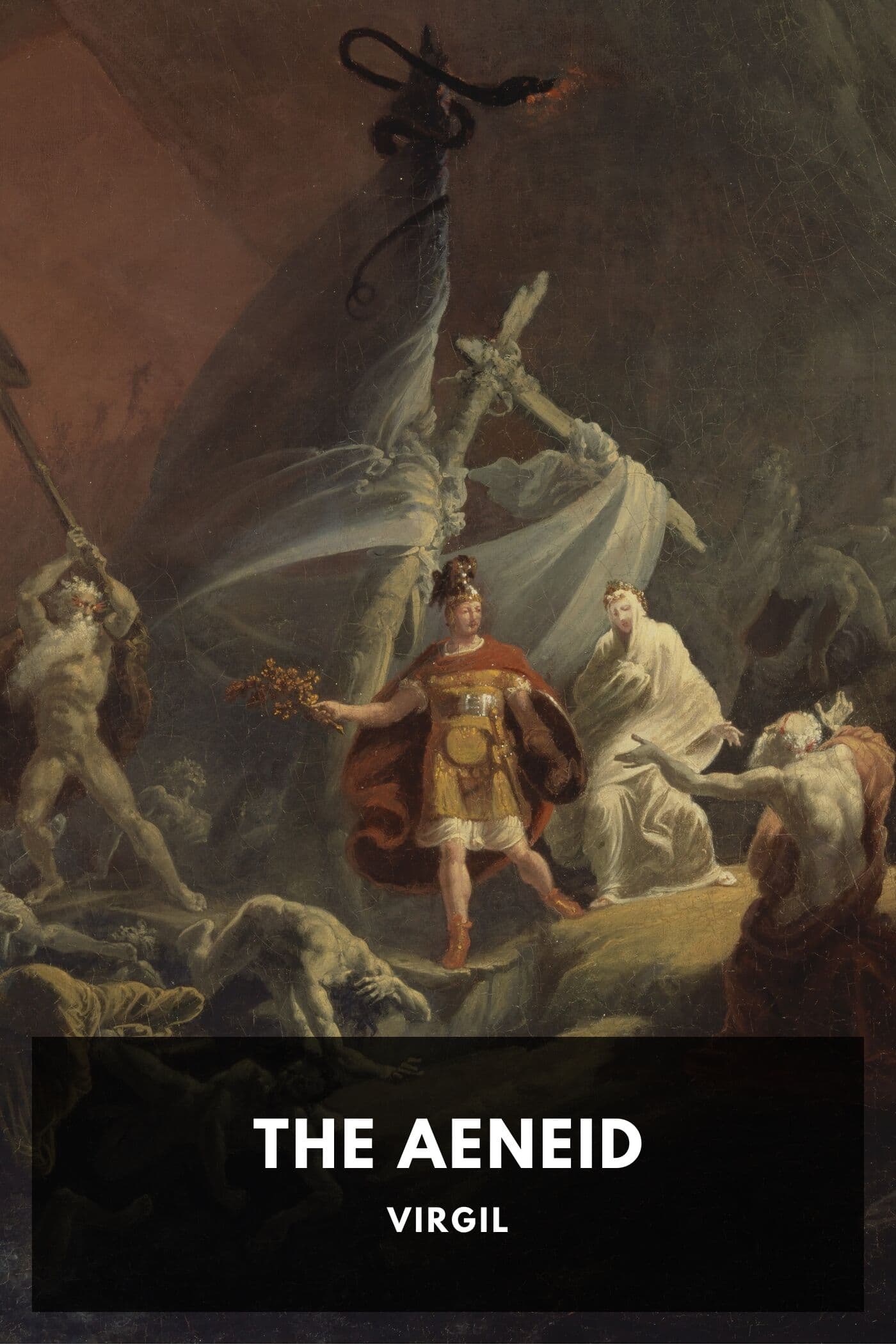
A man flees a burning city carrying his father on his back and his son by the hand. This is the image that opens Virgil's epic, and it contains the entire weight of the poem: the burden of destiny, the grief of the survivor, the violence required to found civilizations. Aeneas is not a hero in the mold of Achilles, he is haunted, torn between his love for the fallen city of Troy and the future city he must build. His journey across the Mediterranean traces both a physical passage and a psychological one, from the wreckage of who he was to the founder of an empire he will never see. The wanderings bring encounters that linger: the Cyclopes, the depths of the Underworld where his father shows him Rome's future, and above all, Dido, the Queen of Carthage, whose love he must abandon because his destiny is too heavy for both desire and duty. The second half of the poem turns brutal and necessary, war in Italy, the slaying of Turnus, the cost of every foundation laid in blood. Virgil wrote Rome's founding myth, but he did so with a sorrow that echoes across centuries. This is not celebration; it is reckoning.
Editions



X-Ray
“- If I cannot move heaven, I will raise hell.””
— Virgil
“The descent into Hell is easy””
— Virgil
“The gates of hell are open night and day;Smooth the descent, and easy is the way:But to return, and view the cheerful skies,In this the task and mighty labor lies.””
— Virgil
“Let me rage before I die.””
— Virgil
“Do the gods light this fire in our hearts or does each man's mad desire become his god?””
— Virgil
“The gates of Hell are open night and day; smooth the descent and easy is the way.””
— Virgil
“Through pain I've learned to comfort suffering men””
— Virgil
“Una Salus Victis Nullam Sperare Salutem - (Latin - written 19 BC)The only hope for the doomed, is no hope at all...””
— Virgil
“...She nourishes the poison in her veins and is consumed by a secret fire.””
— Virgil
Link to this book
Add a free, dofollow link to Lex on your blog, forum, syllabus, or reading list.

<a href="https://lex-books.com/book/the-aeneid-of-virgil-1fc4eac3-4957-4bce-86df-f22e1b72ffb3"><img src="https://lex-books.com/badges/read-on-lex.svg" alt="Read The Aeneid of Virgil by Virgil free on Lex" width="160" height="40"></a>[](https://lex-books.com/book/the-aeneid-of-virgil-1fc4eac3-4957-4bce-86df-f22e1b72ffb3)[url=https://lex-books.com/book/the-aeneid-of-virgil-1fc4eac3-4957-4bce-86df-f22e1b72ffb3][img]https://lex-books.com/badges/read-on-lex.svg[/img][/url]Read The Aeneid of Virgil by Virgil free on Lex: https://lex-books.com/book/the-aeneid-of-virgil-1fc4eac3-4957-4bce-86df-f22e1b72ffb3Cite this book
Reading this edition for a paper or guide? Copy a citation.
Virgil. The Aeneid of Virgil. Lex, lex-books.com/book/the-aeneid-of-virgil-1fc4eac3-4957-4bce-86df-f22e1b72ffb3.Virgil (n.d.). The Aeneid of Virgil. Lex. https://lex-books.com/book/the-aeneid-of-virgil-1fc4eac3-4957-4bce-86df-f22e1b72ffb3Virgil. The Aeneid of Virgil. Lex. https://lex-books.com/book/the-aeneid-of-virgil-1fc4eac3-4957-4bce-86df-f22e1b72ffb3.











![Birds and Nature, Vol. 12 No. 1 [June 1902]illustrated by Color Photography](/_next/image?url=https%3A%2F%2Fd3b2n8gj62qnwr.cloudfront.net%2FCOVERS%2Fgutenberg_covers75k%2Febook-47881.png&w=3840&q=75)