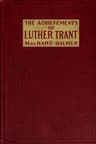
The Achievements of Luther Trant
1910

Before forensic psychology was a field, before TV proceduralists made it fashionable, there was Luther Trant. In 1910, Edwin Balmer imagined a detective who solved crimes not with a magnifying glass but with the nascent science of the human mind. When Dr. Lawrie is found dead, quickly ruled a suicide born of financial ruin, no one questions the verdict. Everyone, that is, except Trant. A young psychologist with faith in the new science of the mind, he sees what the authorities miss: the telltale signs of a man who did not take his own life. Using experimental psychological tests and an incisive reading of human behavior, Trant tears through a web of deception among university colleagues, exposing secrets the original investigation never thought to look for. This is detective fiction as intellectual combat, where the weapon is not violence but observation, deduction, and the radical proposition that the truth can be measured. For readers who love the elegance of early mysteries and the thrill of science outwitting superstition.
Editions
Link to this book
Add a free, dofollow link to Lex on your blog, forum, syllabus, or reading list.

<a href="https://lex-books.com/book/the-achievements-of-luther-trant-457296ae-d7a6-4722-897c-f0cae660fdec"><img src="https://lex-books.com/badges/read-on-lex.svg" alt="Read The Achievements of Luther Trant by Edwin Balmer free on Lex" width="160" height="40"></a>[](https://lex-books.com/book/the-achievements-of-luther-trant-457296ae-d7a6-4722-897c-f0cae660fdec)[url=https://lex-books.com/book/the-achievements-of-luther-trant-457296ae-d7a6-4722-897c-f0cae660fdec][img]https://lex-books.com/badges/read-on-lex.svg[/img][/url]Read The Achievements of Luther Trant by Edwin Balmer free on Lex: https://lex-books.com/book/the-achievements-of-luther-trant-457296ae-d7a6-4722-897c-f0cae660fdecCite this book
Reading this edition for a paper or guide? Copy a citation.
Balmer, Edwin. The Achievements of Luther Trant. Lex, lex-books.com/book/the-achievements-of-luther-trant-457296ae-d7a6-4722-897c-f0cae660fdec.Balmer, E. (1910). The Achievements of Luther Trant. Lex. https://lex-books.com/book/the-achievements-of-luther-trant-457296ae-d7a6-4722-897c-f0cae660fdecBalmer, Edwin. The Achievements of Luther Trant. Lex. https://lex-books.com/book/the-achievements-of-luther-trant-457296ae-d7a6-4722-897c-f0cae660fdec.