Ten Acres Enough: A Practical Experience, Showing How a Very Small Farm May Be Made to Keep a Very Large Family
1864
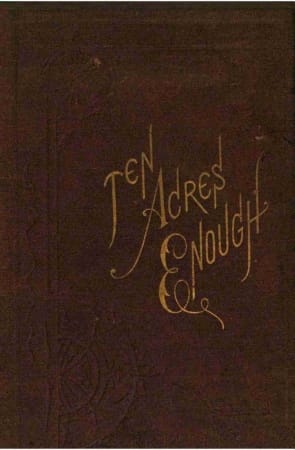
Ten Acres Enough: A Practical Experience, Showing How a Very Small Farm May Be Made to Keep a Very Large Family
1864
In 1864, a Philadelphia businessman does something radical: he abandons urban commerce for a ten-acre farm in rural New Jersey, and discovers that everything he needed was within reach all along. Edmund Morris's account blends practical manual with profound meditation on what it means to prosper. He argues that "the mistaken ambition for owning twice (often ten times) as much land as one can thoroughly manure or profitably cultivate" constitutes America's great agricultural sin. Instead, he proves that intensive, intelligent cultivation on modest acreage can yield profit, health, and something money never bought: freedom. Part financial ledger, part love letter to soil and family, the narrative moves through seasons of trial and contentment. We watch Morris select his land, plant orchards, battle weeds, raise pigs, and tallies the year's gains and losses. The book endures because it asks a question that feels urgently modern: what if abundance isn't about how much land you own, but how well you tend what you have?
Editions
X-Ray
“Indeed, until one tries it for himself, it is incredible what dignity there is in an old hat, what virtue in a time-worn coat, and how savory the dinner-table can be made without sirloin steaks and cranberry tarts.””
— Edmund Morris
“All that is most valuable can be had for nothing. They come as presents from the hand of the Creator, and neither air nor sky, nor beauty, genius, health, or strength, can be bought or sold.””
— Edmund Morris
Link to this book
Add a free, dofollow link to Lex on your blog, forum, syllabus, or reading list.

<a href="https://lex-books.com/book/ten-acres-enough-a-practical-experience-showing-how-a-very-small-farm-may-be-mad-39e8135c-2e6c-41a2-b16c-b6aab17ea359"><img src="https://lex-books.com/badges/read-on-lex.svg" alt="Read Ten Acres Enough: A Practical Experience, Showing How a Very Small Farm May Be Made to Keep a Very Large Family by Edmund Morris free on Lex" width="160" height="40"></a>[](https://lex-books.com/book/ten-acres-enough-a-practical-experience-showing-how-a-very-small-farm-may-be-mad-39e8135c-2e6c-41a2-b16c-b6aab17ea359)[url=https://lex-books.com/book/ten-acres-enough-a-practical-experience-showing-how-a-very-small-farm-may-be-mad-39e8135c-2e6c-41a2-b16c-b6aab17ea359][img]https://lex-books.com/badges/read-on-lex.svg[/img][/url]Read Ten Acres Enough: A Practical Experience, Showing How a Very Small Farm May Be Made to Keep a Very Large Family by Edmund Morris free on Lex: https://lex-books.com/book/ten-acres-enough-a-practical-experience-showing-how-a-very-small-farm-may-be-mad-39e8135c-2e6c-41a2-b16c-b6aab17ea359Cite this book
Reading this edition for a paper or guide? Copy a citation.
Morris, Edmund. Ten Acres Enough: A Practical Experience, Showing How a Very Small Farm May Be Made to Keep a Very Large Family. Lex, lex-books.com/book/ten-acres-enough-a-practical-experience-showing-how-a-very-small-farm-may-be-mad-39e8135c-2e6c-41a2-b16c-b6aab17ea359.Morris, E. (1864). Ten Acres Enough: A Practical Experience, Showing How a Very Small Farm May Be Made to Keep a Very Large Family. Lex. https://lex-books.com/book/ten-acres-enough-a-practical-experience-showing-how-a-very-small-farm-may-be-mad-39e8135c-2e6c-41a2-b16c-b6aab17ea359Morris, Edmund. Ten Acres Enough: A Practical Experience, Showing How a Very Small Farm May Be Made to Keep a Very Large Family. Lex. https://lex-books.com/book/ten-acres-enough-a-practical-experience-showing-how-a-very-small-farm-may-be-mad-39e8135c-2e6c-41a2-b16c-b6aab17ea359.