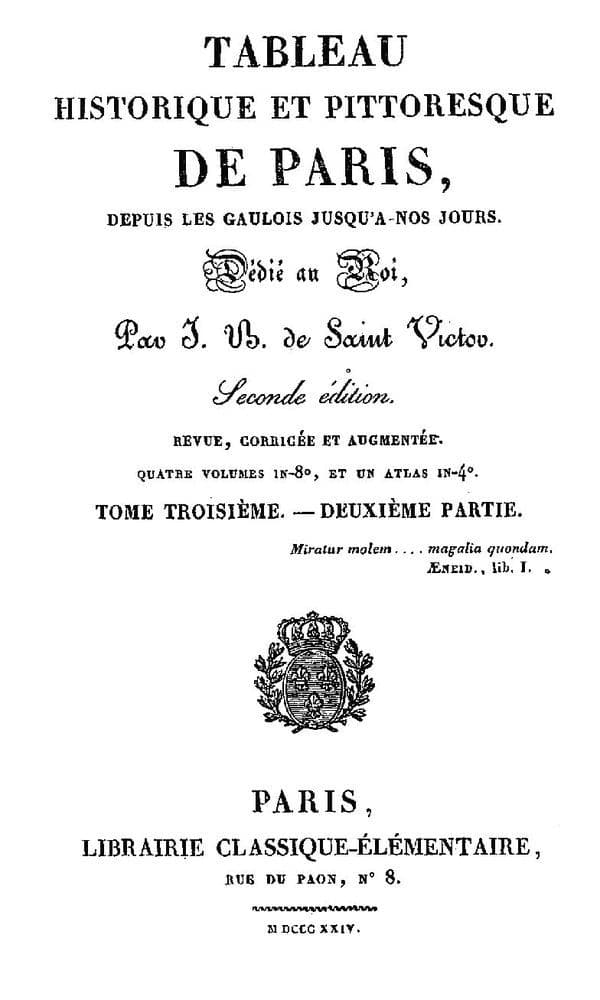
Tableau Historique Et Pittoresque De Paris Depuis Les Gaulois Jusqu'à Nos Jours (volume 3/8)
Tableau Historique Et Pittoresque De Paris Depuis Les Gaulois Jusqu'à Nos Jours (volume 3/8)
A historical account written in the early 19th century. This work aims to chronicle the history, culture, and societal evolution of Paris, from its origins with the Gauls through various historical milestones. It provides a detailed examination of significant events, rulers, and the political landscape that shaped the city over centuries. At the start of the book, the author introduces the various districts of Paris with a focus on the Montmartre area, detailing its geographic boundaries and the social dynamics that existed there during notable historical periods. The narrative then delves into the political climate surrounding the regency of Charles V and Charles VI, emphasizing the struggles and power transitions that occurred during their reigns. Additionally, the text sets the stage for an in-depth analysis of the early French monarchy and the tensions between the monarchy and the nobility, illustrating how these factors influenced the larger narrative of Paris's history.
Editions
X-Ray
King of France who restored order and prosperity after the disasters of his father's reign. Known for his prudence, intelligence, and administrative skills despite physical frailty.
King of France who suffered from mental illness, leading to a disastrous reign marked by civil war and foreign invasion. His madness allowed various factions to struggle for power.
Provost of merchants who led a violent rebellion against royal authority during the regency. Ultimately betrayed Paris to the King of Navarre before being killed by loyal citizens.
King of France captured at the Battle of Poitiers, leaving the kingdom in chaos. Known for his courage and good faith but poor judgment in political matters.
About Tableau Historique Et Pittoresque De Paris Depuis Les Gaulois Jusqu'à Nos Jours (volume 3/8)
Chapter Summaries
- 1
- Explains how the early Capetian kings gradually increased their power from a position of weakness, through the cessation of general assemblies and establishment of hereditary succession.
- 2
- Chronicles the disasters that befell France under these kings, including the beginning of the Hundred Years' War, the Battle of Poitiers, and John's capture.
- 3
- Details the regency of the future Charles V, the revolt led by Étienne Marcel, and the violent confrontations between royal authority and popular uprising.
Key Themes
- Political Corruption and Decay
- The text chronicles the progressive corruption of French political institutions, from the rise of the third estate to violent popular uprisings and factional warfare that nearly destroyed the kingdom.
- The Role of Providence in History
- The author frequently attributes historical events to divine intervention, seeing God's hand in both the salvation and punishment of France through various crises and recoveries.
- Popular Sovereignty vs Royal Authority
- The tension between emerging popular power (embodied in figures like Étienne Marcel) and traditional royal authority creates ongoing conflict throughout the period.
Characters
- Charles V (Charles the Wise)(protagonist)
- King of France who restored order and prosperity after the disasters of his father's reign. Known for his prudence, intelligence, and administrative skills despite physical frailty.
- Charles VI(major)
- King of France who suffered from mental illness, leading to a disastrous reign marked by civil war and foreign invasion. His madness allowed various factions to struggle for power.
- Étienne Marcel(antagonist)
- Provost of merchants who led a violent rebellion against royal authority during the regency. Ultimately betrayed Paris to the King of Navarre before being killed by loyal citizens.
- Jean II (John the Good)(major)
- King of France captured at the Battle of Poitiers, leaving the kingdom in chaos. Known for his courage and good faith but poor judgment in political matters.
- Duke of Burgundy (Philip the Bold, then John the Fearless)(antagonist)
- Powerful duke who competed for control during Charles VI's madness. John the Fearless assassinated the Duke of Orléans and allied with England against France.
- Duke of Orléans (Louis)(major)
- Brother of Charles VI, rival to the Duke of Burgundy for power during the king's madness. Assassinated by Burgundian agents in 1407.
Link to this book
Add a free, dofollow link to Lex on your blog, forum, syllabus, or reading list.

<a href="https://lex-books.com/book/tableau-historique-et-pittoresque-de-paris-depuis-les-gaulois-jusqu-nos-jours-vo-3caa88fe-8d0d-48e0-a38a-d085533a336b"><img src="https://lex-books.com/badges/read-on-lex.svg" alt="Read Tableau Historique Et Pittoresque De Paris Depuis Les Gaulois Jusqu'à Nos Jours (volume 3/8) by J. B. de Saint-Victor free on Lex" width="160" height="40"></a>[](https://lex-books.com/book/tableau-historique-et-pittoresque-de-paris-depuis-les-gaulois-jusqu-nos-jours-vo-3caa88fe-8d0d-48e0-a38a-d085533a336b)[url=https://lex-books.com/book/tableau-historique-et-pittoresque-de-paris-depuis-les-gaulois-jusqu-nos-jours-vo-3caa88fe-8d0d-48e0-a38a-d085533a336b][img]https://lex-books.com/badges/read-on-lex.svg[/img][/url]Read Tableau Historique Et Pittoresque De Paris Depuis Les Gaulois Jusqu'à Nos Jours (volume 3/8) by J. B. de Saint-Victor free on Lex: https://lex-books.com/book/tableau-historique-et-pittoresque-de-paris-depuis-les-gaulois-jusqu-nos-jours-vo-3caa88fe-8d0d-48e0-a38a-d085533a336bCite this book
Reading this edition for a paper or guide? Copy a citation.
Saint-Victor, J. B. de. Tableau Historique Et Pittoresque De Paris Depuis Les Gaulois Jusqu'à Nos Jours (volume 3/8). Lex, lex-books.com/book/tableau-historique-et-pittoresque-de-paris-depuis-les-gaulois-jusqu-nos-jours-vo-3caa88fe-8d0d-48e0-a38a-d085533a336b.Saint-Victor, J. B. D. (n.d.). Tableau Historique Et Pittoresque De Paris Depuis Les Gaulois Jusqu'à Nos Jours (volume 3/8). Lex. https://lex-books.com/book/tableau-historique-et-pittoresque-de-paris-depuis-les-gaulois-jusqu-nos-jours-vo-3caa88fe-8d0d-48e0-a38a-d085533a336bSaint-Victor, J. B. de. Tableau Historique Et Pittoresque De Paris Depuis Les Gaulois Jusqu'à Nos Jours (volume 3/8). Lex. https://lex-books.com/book/tableau-historique-et-pittoresque-de-paris-depuis-les-gaulois-jusqu-nos-jours-vo-3caa88fe-8d0d-48e0-a38a-d085533a336b.