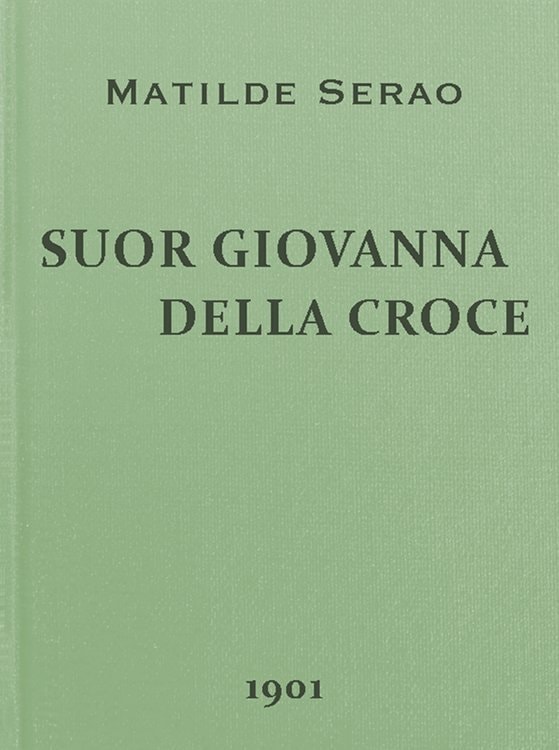
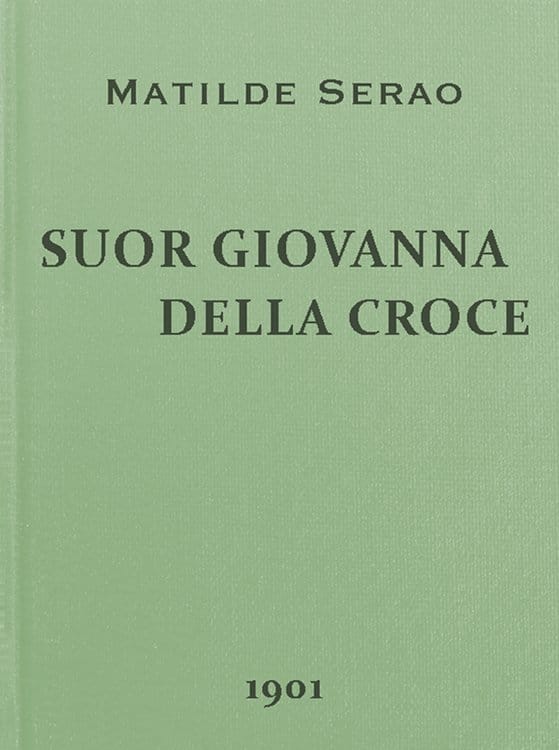
Suor Giovanna Della Croce: Romanzo
1901
The novel opens on a cloistered world about to be destroyed. Suor Giovanna, an elderly nun, has spent decades within these walls, her secular self Luisa Bevilacqua faded into memory like a dream. Then comes the priest's visit, delivering the news that will unravel everything: new government laws have decreed the dissolution of her convent. The sisters must leave. The sanctuary that has defined them for lifetimes will cease to exist. What follows is a quiet devastation. Serao renders the sisters' grief with precision - not through melodrama, but through the small annihilations of identity. Suor Giovanna must reckon with what she has lost: not merely her home, but the only self she has known for decades. Outside those walls awaits a world she abandoned as a young woman, one that has continued without her. Her past as Luisa Bevilacqua - her desires, her dreams, the life she might have lived - surfaces like a ghost. A meditation on displacement and the fragility of belonging, Serao captures the particular anguish of women whose entire existence has been shaped by a single place, only to be cast into an uncertain future.
Editions
Link to this book
Add a free, dofollow link to Lex on your blog, forum, syllabus, or reading list.

<a href="https://lex-books.com/book/suor-giovanna-della-croce-romanzo-34c4fbd4-f646-4902-965e-6782e263d98d"><img src="https://lex-books.com/badges/read-on-lex.svg" alt="Read Suor Giovanna Della Croce: Romanzo by Matilde Serao free on Lex" width="160" height="40"></a>[](https://lex-books.com/book/suor-giovanna-della-croce-romanzo-34c4fbd4-f646-4902-965e-6782e263d98d)[url=https://lex-books.com/book/suor-giovanna-della-croce-romanzo-34c4fbd4-f646-4902-965e-6782e263d98d][img]https://lex-books.com/badges/read-on-lex.svg[/img][/url]Read Suor Giovanna Della Croce: Romanzo by Matilde Serao free on Lex: https://lex-books.com/book/suor-giovanna-della-croce-romanzo-34c4fbd4-f646-4902-965e-6782e263d98dCite this book
Reading this edition for a paper or guide? Copy a citation.
Serao, Matilde. Suor Giovanna Della Croce: Romanzo. Lex, lex-books.com/book/suor-giovanna-della-croce-romanzo-34c4fbd4-f646-4902-965e-6782e263d98d.Serao, M. (1901). Suor Giovanna Della Croce: Romanzo. Lex. https://lex-books.com/book/suor-giovanna-della-croce-romanzo-34c4fbd4-f646-4902-965e-6782e263d98dSerao, Matilde. Suor Giovanna Della Croce: Romanzo. Lex. https://lex-books.com/book/suor-giovanna-della-croce-romanzo-34c4fbd4-f646-4902-965e-6782e263d98d.