Stage-Coach and Tavern Days
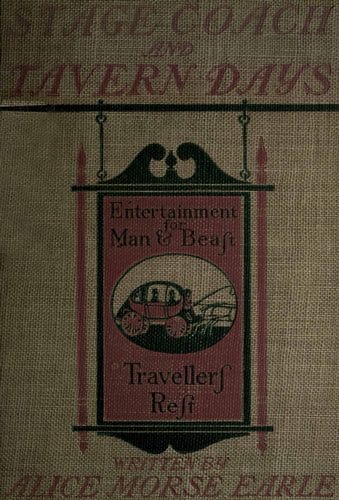
In early New England, the line between the meetinghouse and the tavern was thinner than history remembers. Alice Morse Earle excavates a colonial world where the 'ordinary' served as something far more complex than a place to sleep: it was the living room of a community, the office where deals were struck, the courtroom where disputes were settled, and the stage where the drama of provincial life unfolded. Stage-coach and Tavern Days reveals how travelers and locals alike gathered around rough wooden bars, navigating an intricate dance of hospitality and restraint in a society that prized both drink and godliness. Earle writes with the particularity of someone who has dug through court records and family diaries, bringing forward the voices of tavern keepers who balanced pints with sermons, and travelers who braved rutted roads in wooden carriages to reach these sanctuaries. This is social history at its most vivid: a portrait of the institutions that held early America together, long before coffee shops or social media gave people places to linger together.
Editions

Link to this book
Add a free, dofollow link to Lex on your blog, forum, syllabus, or reading list.

<a href="https://lex-books.com/book/stage-coach-and-tavern-days-db8e7e08-d162-46f1-9994-7ea6aac1444d"><img src="https://lex-books.com/badges/read-on-lex.svg" alt="Read Stage-Coach and Tavern Days by Alice Morse Earle free on Lex" width="160" height="40"></a>[](https://lex-books.com/book/stage-coach-and-tavern-days-db8e7e08-d162-46f1-9994-7ea6aac1444d)[url=https://lex-books.com/book/stage-coach-and-tavern-days-db8e7e08-d162-46f1-9994-7ea6aac1444d][img]https://lex-books.com/badges/read-on-lex.svg[/img][/url]Read Stage-Coach and Tavern Days by Alice Morse Earle free on Lex: https://lex-books.com/book/stage-coach-and-tavern-days-db8e7e08-d162-46f1-9994-7ea6aac1444dCite this book
Reading this edition for a paper or guide? Copy a citation.
Earle, Alice Morse. Stage-Coach and Tavern Days. Lex, lex-books.com/book/stage-coach-and-tavern-days-db8e7e08-d162-46f1-9994-7ea6aac1444d.Earle, A. M. (n.d.). Stage-Coach and Tavern Days. Lex. https://lex-books.com/book/stage-coach-and-tavern-days-db8e7e08-d162-46f1-9994-7ea6aac1444dEarle, Alice Morse. Stage-Coach and Tavern Days. Lex. https://lex-books.com/book/stage-coach-and-tavern-days-db8e7e08-d162-46f1-9994-7ea6aac1444d.