Some Account of Gothic Architecture in Spain
1865
Some Account of Gothic Architecture in Spain
1865
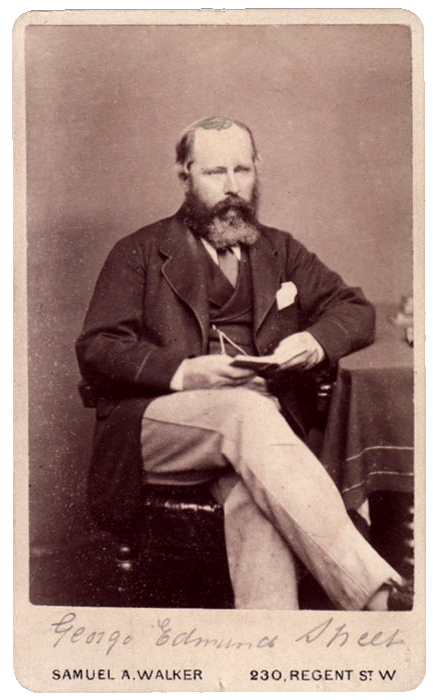
In 1865, a celebrated Victorian architect embarked on a journey through Spain's forgotten corners, determined to document a Gothic heritage that had been systematically overlooked by scholars. George Edmund Street traveled to remote cathedrals, village churches, and decaying monasteries, finding in Spain a living laboratory of Gothic evolution that no English writer had yet explored. This two-volume work reads less like a dry catalogue and more like an impassioned travel narrative: Street describes sleepless nights in crumbling choirs, chance discoveries of extraordinary facades, and the particular quality of Spanish light falling on ribbed vaults. His prose carries the genuine thrill of an architect encountering forms he'd only read about in French and German treatises. The book remains indispensable not merely as a historical document but as a window into how the Victorians understood medieval architecture, and why they believed these Spanish examples represented some of the finest Gothic building in Europe. For architecture enthusiasts, historians of the Gothic Revival, and anyone drawn to the romance of scholarly discovery, Street's account offers both granular technical analysis and the transports of genuine aesthetic wonder.
Editions

Link to this book
Add a free, dofollow link to Lex on your blog, forum, syllabus, or reading list.

<a href="https://lex-books.com/book/some-account-of-gothic-architecture-in-spain-ac5741b9-d532-45b0-9836-4f95f0403285"><img src="https://lex-books.com/badges/read-on-lex.svg" alt="Read Some Account of Gothic Architecture in Spain by George Edmund Street free on Lex" width="160" height="40"></a>[](https://lex-books.com/book/some-account-of-gothic-architecture-in-spain-ac5741b9-d532-45b0-9836-4f95f0403285)[url=https://lex-books.com/book/some-account-of-gothic-architecture-in-spain-ac5741b9-d532-45b0-9836-4f95f0403285][img]https://lex-books.com/badges/read-on-lex.svg[/img][/url]Read Some Account of Gothic Architecture in Spain by George Edmund Street free on Lex: https://lex-books.com/book/some-account-of-gothic-architecture-in-spain-ac5741b9-d532-45b0-9836-4f95f0403285Cite this book
Reading this edition for a paper or guide? Copy a citation.
Street, George Edmund. Some Account of Gothic Architecture in Spain. Lex, lex-books.com/book/some-account-of-gothic-architecture-in-spain-ac5741b9-d532-45b0-9836-4f95f0403285.Street, G. E. (1865). Some Account of Gothic Architecture in Spain. Lex. https://lex-books.com/book/some-account-of-gothic-architecture-in-spain-ac5741b9-d532-45b0-9836-4f95f0403285Street, George Edmund. Some Account of Gothic Architecture in Spain. Lex. https://lex-books.com/book/some-account-of-gothic-architecture-in-spain-ac5741b9-d532-45b0-9836-4f95f0403285.