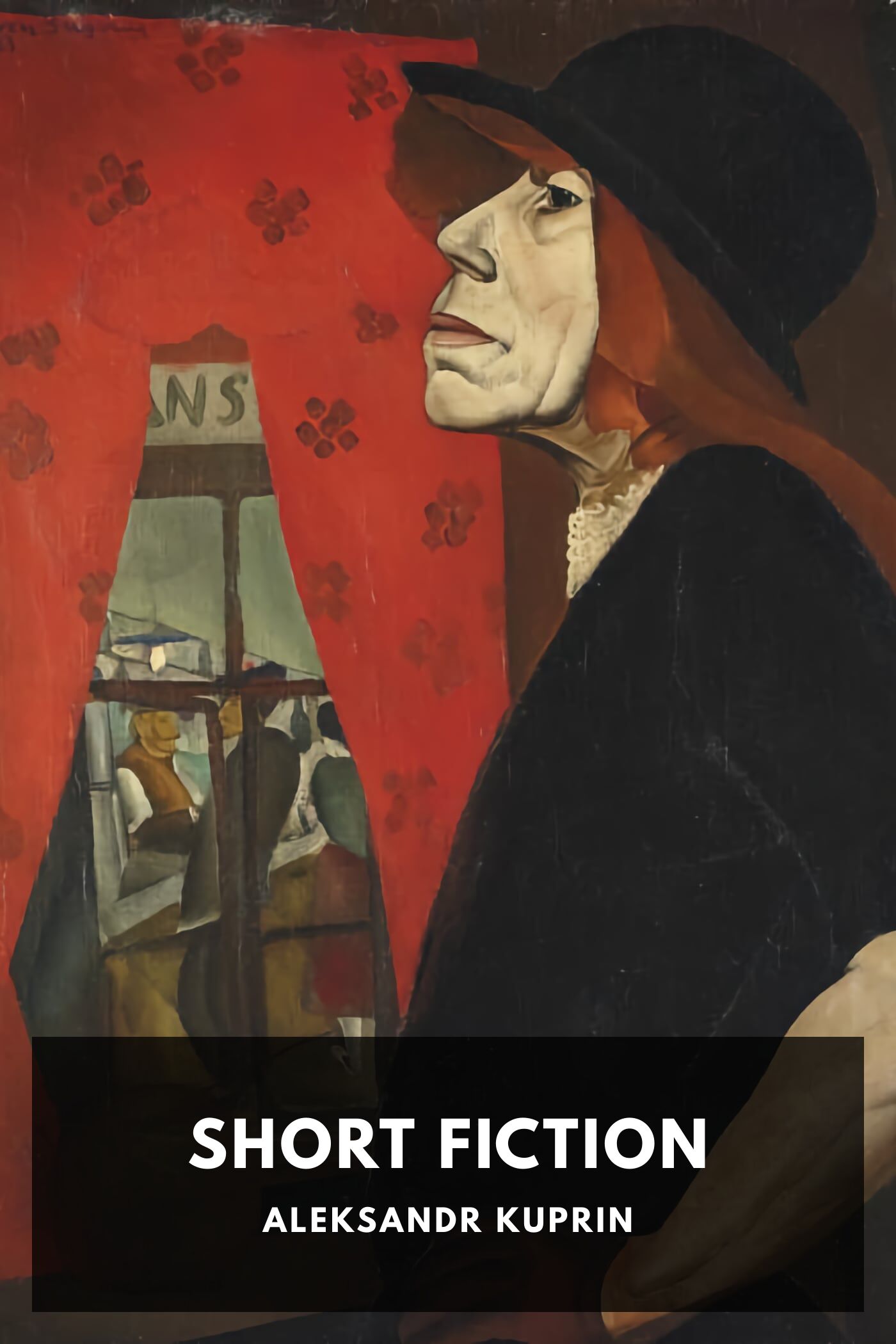
Short Fiction

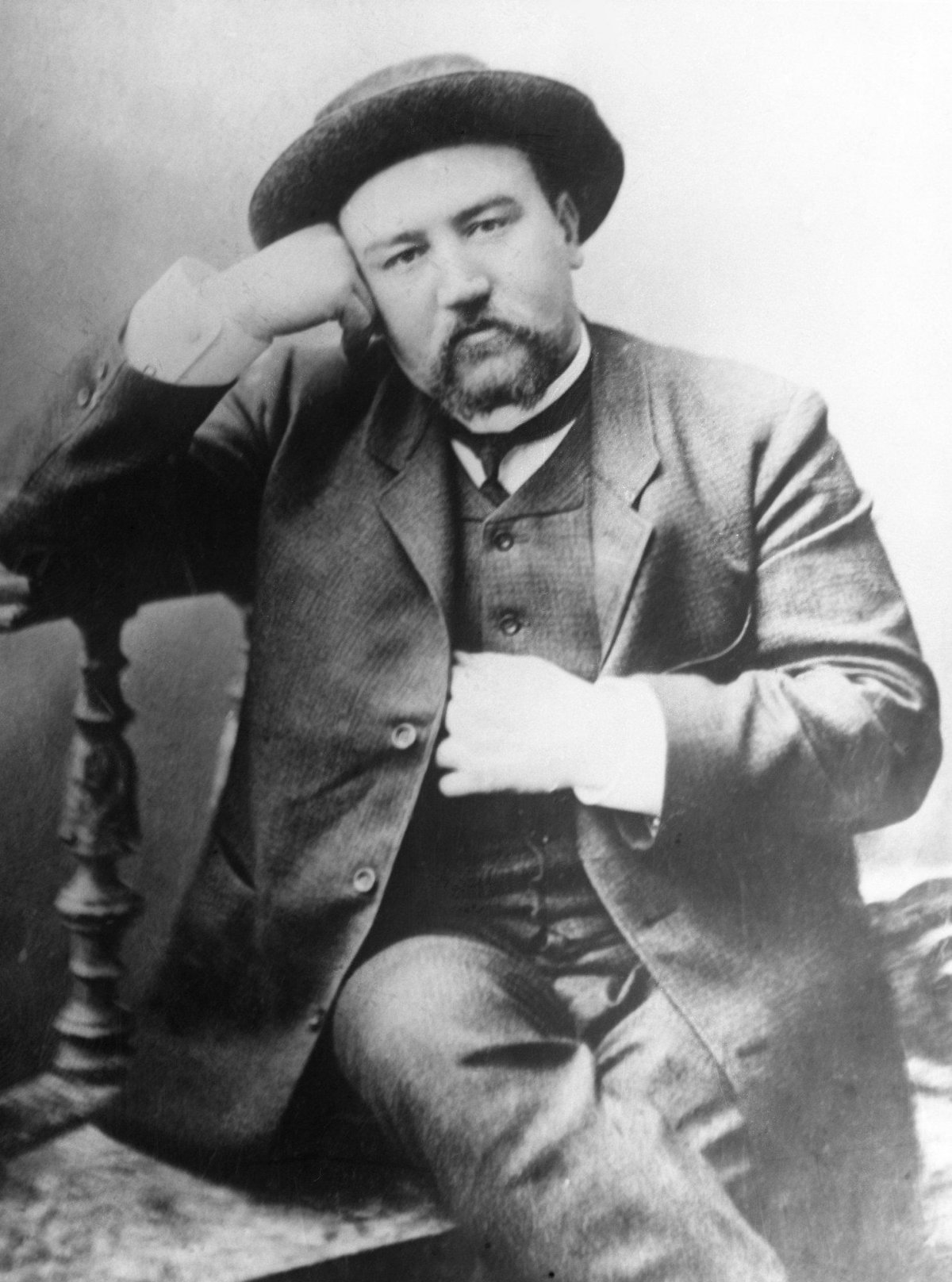
Aleksandr Kuprin, a luminary of early 20th-century Russian literature, carved his niche by championing the short story form alongside contemporaries like Chekhov and Bunin. This collection showcases the breadth and depth of his genius, spanning biblical parables, poignant romances, thrilling spy narratives, and uproarious farces. Kuprin's masterful prose transports readers through the vivid landscapes and societal intricacies of both his native Russia and his adopted France, always anchoring the rich descriptive qualities to the complex inner lives of his characters. From the bustling streets of pre-revolutionary Russia to the quiet introspection of émigré life, each story is a meticulously crafted window into the human condition. More than just a compendium of tales, this collection illuminates Kuprin's pivotal role in shifting the literary gaze from the monolithic 'great Russian novel' to the potent brevity of short fiction. His work, celebrated for its evocative sense of place, truly shines in its profound exploration of the human soul, revealing universal truths beneath the specificities of time and culture. Reading Kuprin today offers a rare opportunity to experience the nuanced artistry of a writer who, though often overshadowed by his more famous peers, possessed an unparalleled ability to capture the full spectrum of human experience with wit, pathos, and breathtaking descriptive power.
Editions

X-Ray
A recurring type of character, often an educated, reflective man (writer, officer, philosopher) who observes and comments on the events and people around him, grappling with life's complexities.
The strong, quick-tempered, and pragmatic landlady of the 'Serbia' hotel, who manages a chaotic household and a tumultuous personal life.
An Army Reserve officer and lodger at the 'Serbia,' he is Anna Friedrichovna's lover and helps with hotel duties, often appearing dissipated and weak-willed.
A thin, sickly young man who commits suicide in the hotel, leaving a philosophical letter about his fear of people and the persistence of thought.
About Short Fiction
Chapter Summaries
- 1
- The story introduces the chaotic 'Serbia' hotel, run by the pragmatic Anna Friedrichovna and her lover, Lieutenant Tchijhevich. A student checks in and later commits suicide, leaving a letter detailing his profound fear of people and philosophical views on life and thought. The aftermath involves police, and the story ends with the student's body being taken to the anatomical theatre, while Anna and the lieutenant continue their lives.
- 2
- Staff-Captain Ribnikov, a seemingly wounded Russian officer, raises suspicions in journalist Schavinsky due to his unusual behavior and subtle physical traits. Schavinsky, convinced Ribnikov is a Japanese spy, observes him closely. Ribnikov spends a night with a prostitute, Clotilde, who later reports her suspicions to her detective lover. Ribnikov is apprehended after a botched escape attempt, confirming Schavinsky's theory.
- 3
- A delegation from the 'United Rostov-Kharkov-and-Odessa-Nicolaiev Association of Thieves' interrupts a barristers' meeting. Their eloquent spokesman argues against accusations of their involvement in a pogrom, asserting their professional ethics and even patriotism. He presents demonstrations of their skills and passionately defends their honor, leading the barristers to promise assistance in clearing their name.
Key Themes
- Social Injustice and Class Divide
- Kuprin frequently exposes the harsh realities faced by the poor, the marginalized, and those outside conventional society. This is evident in stories like 'The Outrage' where thieves demand justice, 'The Witch' where Olyessia and Manuilikha face persecution, and 'The White Poodle' which highlights the dignity of street performers against wealthy indifference.
- The Nature of Love and Obsession
- Love is portrayed in its myriad forms, from the pure and self-sacrificing (Zheltkov in 'The Bracelet of Garnets') to the passionate and forbidden (Olyessia in 'The Witch'), and even the unrequited and philosophical ('A Sentimental Romance'). These narratives often explore how love can transcend social barriers, lead to profound suffering, or become an all-consuming obsession.
- Fate, Free Will, and the Absurd
- Many characters grapple with the tension between predetermined destiny and individual agency. Stories like 'Tempting Providence' and 'Cain' directly address the idea of an indifferent or cruel 'mysterious Somebody' governing events, while characters in 'The River of Life' and 'The Bracelet of Garnets' face tragic outcomes that seem preordained or absurdly coincidental.
Characters
- Narrator/Observer(protagonist)
- A recurring type of character, often an educated, reflective man (writer, officer, philosopher) who observes and comments on the events and people around him, grappling with life's complexities.
- Anna Friedrichovna(supporting)
- The strong, quick-tempered, and pragmatic landlady of the 'Serbia' hotel, who manages a chaotic household and a tumultuous personal life.
- Lieutenant Valerian Ivanovich Tchijhevich(supporting)
- An Army Reserve officer and lodger at the 'Serbia,' he is Anna Friedrichovna's lover and helps with hotel duties, often appearing dissipated and weak-willed.
- Student (The River of Life)(minor)
- A thin, sickly young man who commits suicide in the hotel, leaving a philosophical letter about his fear of people and the persistence of thought.
- Staff-Captain Ribnikov(protagonist)
- A seemingly wounded Russian officer who is, in fact, a Japanese spy, masterfully maintaining a disguise despite subtle tells.
- Vladimir Ivanovich Schavinsky(protagonist)
- A journalist and 'collector of human documents' who becomes obsessed with uncovering Captain Ribnikov's true identity.
Link to this book
Add a free, dofollow link to Lex on your blog, forum, syllabus, or reading list.

<a href="https://lex-books.com/book/short-fiction-1c7e81ad-1d7d-4b04-ba59-eaf421b8859e"><img src="https://lex-books.com/badges/read-on-lex.svg" alt="Read Short Fiction by Aleksandr Kuprin free on Lex" width="160" height="40"></a>[](https://lex-books.com/book/short-fiction-1c7e81ad-1d7d-4b04-ba59-eaf421b8859e)[url=https://lex-books.com/book/short-fiction-1c7e81ad-1d7d-4b04-ba59-eaf421b8859e][img]https://lex-books.com/badges/read-on-lex.svg[/img][/url]Read Short Fiction by Aleksandr Kuprin free on Lex: https://lex-books.com/book/short-fiction-1c7e81ad-1d7d-4b04-ba59-eaf421b8859eCite this book
Reading this edition for a paper or guide? Copy a citation.
Kuprin, Aleksandr. Short Fiction. Lex, lex-books.com/book/short-fiction-1c7e81ad-1d7d-4b04-ba59-eaf421b8859e.Kuprin, A. (n.d.). Short Fiction. Lex. https://lex-books.com/book/short-fiction-1c7e81ad-1d7d-4b04-ba59-eaf421b8859eKuprin, Aleksandr. Short Fiction. Lex. https://lex-books.com/book/short-fiction-1c7e81ad-1d7d-4b04-ba59-eaf421b8859e.